THE ADVENTURE COLLECTIVE® · Independent discovery and booking for outdoor travel

In 48 hours you can walk into Petra’s rose-red corridors, sleep under Wadi Rum’s star-pricked sky in a Bedouin camp, and float in the buoyant waters of the Dead Sea. This private loop from Amman compresses Jordan’s greatest hits into an intense, practical, and culturally rich short escape.
In 48 hours you can walk into Petra’s rose-red corridors, sleep under Wadi Rum’s star-pricked sky in a Bedouin camp, and float in the buoyant waters of the Dead Sea. This private loop from Amman compresses Jordan’s greatest hits into an intense, practical, and culturally rich short escape.
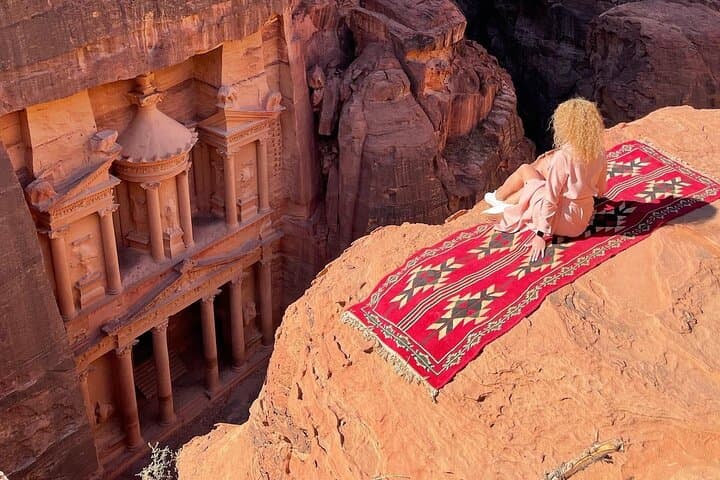
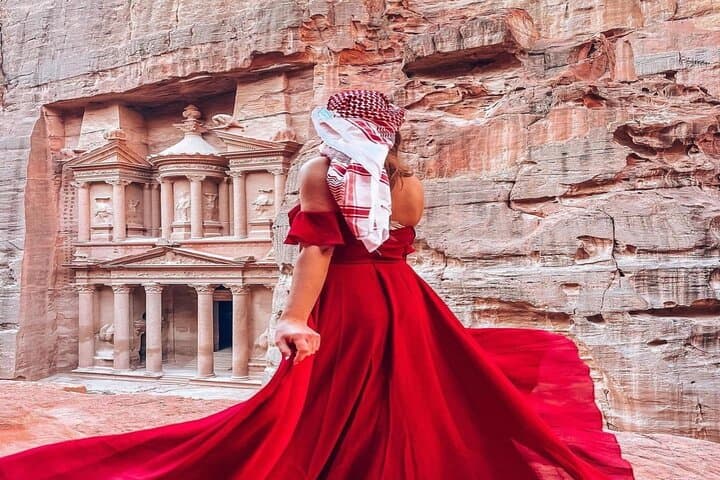
You turn a corner and the narrow Siq exhales light: a sliver of sun slides across rose-red sandstone and Al Khazneh—Petra’s iconic Treasury—blooms into view. The city seems to hold its breath; wind scratches the carved facades as if to remind you these cliffs were once a living map for traders and caravans. Over the next 48 hours the landscape will do the opposite of stillness: the desert will open, the stars will press close in Wadi Rum, and the Dead Sea will refuse to let you sink.
Verified experiences and guided adventures in the surrounding area.
Operated by Explore Jordan · Wadi Musa, Ma'an Governorate
You turn a corner and the narrow Siq exhales light: a sliver of sun slides across rose-red sandstone and Al Khazneh—Petra’s iconic Treasury—blooms into view. The city seems to hold its breath; wind scratches the carved facades as if to remind you these cliffs were once a living map for traders and caravans. Over the next 48 hours the landscape will do the opposite of stillness: the desert will open, the stars will press close in Wadi Rum, and the Dead Sea will refuse to let you sink.
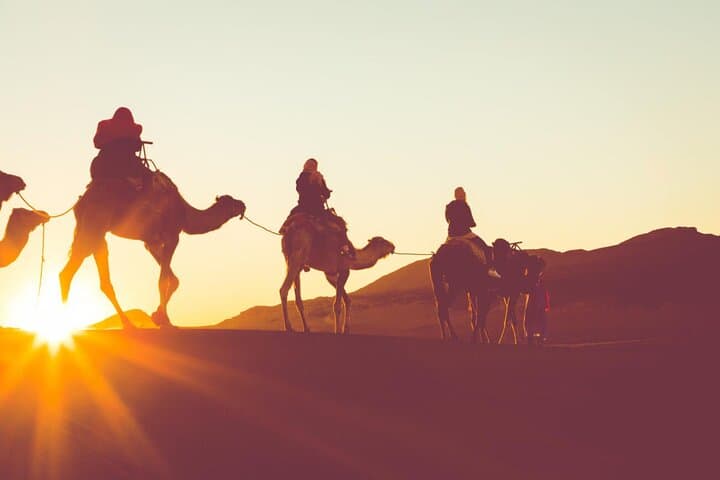
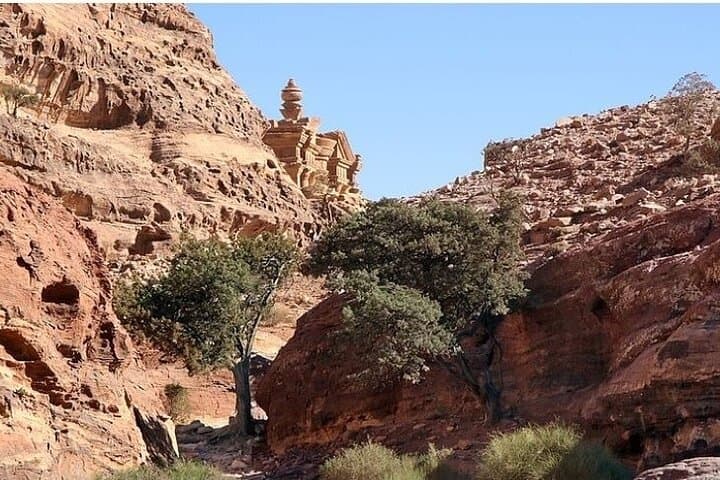
This private two-day loop from Amman stitches together Jordan’s most magnetic places. Petra is Nabatean craftsmanship hewn into Cambrian sandstone—strata bent and streaked by millions of years of deposition and erosion. Driving out of Petra toward Wadi Rum, limestone gives way to a mixed palette of granite and aeolian sandstone; the famous wind-sculpted towers owe their shapes to thermal stress and sand-driven abrasion. Wadi Rum’s red plains, with elevations around 700–1,000 m, feel like a place time left unfinished: Bedouin camps still host zarb barbecues and tea ceremonies beneath rock faces that wear petroglyphs like signatures. Then, incongruously, the road drops toward the Dead Sea, the planet’s lowest exposed point at roughly -430 m, where mineral-thick water holds your body like a buoy and salt crystals glitter on the shore.
Local culture threads the trip: Wadi Musa (Petra’s town) is practical and tour-ready; Bedouin guides in Wadi Rum share stories of survival and hospitality over charcoal and lamb. Expect straightforward service—air-conditioned transport, an English-speaking driver, and a night in a Bedouin tent with a communal dinner are included on most private itineraries—while entrance fees to national sites and hotel Dead Sea entries are typically additional.
Practicalities: Amman to Petra is about 230 km (≈3 hours); Petra to Wadi Rum roughly 120 km (≈2 hours); Wadi Rum to the Dead Sea is the longest leg—plan 3.5–4 hours on the road—then a final hour back to Amman depending on traffic. Petra’s main walking loop includes uneven stone steps and loose sand; allow 3–4 hours to move at a steady pace. Wadi Rum’s jeep tour covers soft sand and rocky tracks—bring sun protection and closed shoes.
Timing is everything: spring and fall offer mild temperatures and clearer skies; summer brings intense heat and strong sun; winter nights in the desert get cold. Bring layers, stay hydrated (operators often supply bottled water), and carry the right documents—passport details are required at booking. Finally, be mindful of fragile sites: stick to paths in Petra, respect Bedouin customs, and avoid taking salt-slick beach samples from the Dead Sea. With a bit of preparation, this compressed itinerary delivers archaeology, geologic spectacle, and the kind of wide-open night sky that reorders priorities.
moderate.
2 days.
Suitable for travelers in average physical condition who can handle several hours of walking and short hikes; some uneven terrain and stairs.
No—most private tours do not include Petra entrance fees or the Jordan Pass. Purchase tickets in advance or confirm with the operator.
Expect traditional tents with simple bedding and shared facilities; some camps offer upgraded options—check what level is booked.
Generally yes; jeep rides cover bumpy desert tracks. Inform the operator about young children or mobility concerns so they can adapt stops.
Yes—there are public beaches, but many travelers opt for hotel beach access (often not included). Public options vary in facilities and fee structure.
Operators often require passport full name, nationality, passport number and expiry for permits—have those ready when you book.
Expect several hours on the road: Amman→Petra ≈3 hours, Petra→Wadi Rum ≈2 hours, Wadi Rum→Dead Sea ≈3.5–4 hours, then Dead Sea→Amman ≈1 hour, depending on traffic.
Petra was the Nabatean capital (1st century BCE–1st century CE), a trading hub that controlled caravan routes between Arabia and the Mediterranean.
Sites are sensitive to erosion and tourism pressure—stay on marked paths, avoid touching carvings, and support local operators practicing low-impact camping.
Explore Jordan operates guided outdoor trips and adventures with an emphasis on safety, stewardship, and memorable experiences.
You turn a corner and the narrow Siq exhales light: a sliver of sun slides across rose-red sandstone and Al Khazneh—Petra’s iconic Treasury—blooms into view. The city seems to hold its breath; wind scratches the carved facades as if to remind you these cliffs were once a living map for traders and caravans. Over the next 48 hours the landscape will do the opposite of stillness: the desert will open, the stars will press close in Wadi Rum, and the Dead Sea will refuse to let you sink.
You turn a corner and the narrow Siq exhales light: a sliver of sun slides across rose-red sandstone and Al Khazneh—Petra’s iconic Treasury—blooms into view. The city seems to hold its breath; wind scratches the carved facades as if to remind you these cliffs were once a living map for traders and caravans. Over the next 48 hours the landscape will do the opposite of stillness: the desert will open, the stars will press close in Wadi Rum, and the Dead Sea will refuse to let you sink.
This private two-day loop from Amman stitches together Jordan’s most magnetic places. Petra is Nabatean craftsmanship hewn into Cambrian sandstone—strata bent and streaked by millions of years of deposition and erosion. Driving out of Petra toward Wadi Rum, limestone gives way to a mixed palette of granite and aeolian sandstone; the famous wind-sculpted towers owe their shapes to thermal stress and sand-driven abrasion. Wadi Rum’s red plains, with elevations around 700–1,000 m, feel like a place time left unfinished: Bedouin camps still host zarb barbecues and tea ceremonies beneath rock faces that wear petroglyphs like signatures. Then, incongruously, the road drops toward the Dead Sea, the planet’s lowest exposed point at roughly -430 m, where mineral-thick water holds your body like a buoy and salt crystals glitter on the shore.
Local culture threads the trip: Wadi Musa (Petra’s town) is practical and tour-ready; Bedouin guides in Wadi Rum share stories of survival and hospitality over charcoal and lamb. Expect straightforward service—air-conditioned transport, an English-speaking driver, and a night in a Bedouin tent with a communal dinner are included on most private itineraries—while entrance fees to national sites and hotel Dead Sea entries are typically additional.
Practicalities: Amman to Petra is about 230 km (≈3 hours); Petra to Wadi Rum roughly 120 km (≈2 hours); Wadi Rum to the Dead Sea is the longest leg—plan 3.5–4 hours on the road—then a final hour back to Amman depending on traffic. Petra’s main walking loop includes uneven stone steps and loose sand; allow 3–4 hours to move at a steady pace. Wadi Rum’s jeep tour covers soft sand and rocky tracks—bring sun protection and closed shoes.
Timing is everything: spring and fall offer mild temperatures and clearer skies; summer brings intense heat and strong sun; winter nights in the desert get cold. Bring layers, stay hydrated (operators often supply bottled water), and carry the right documents—passport details are required at booking. Finally, be mindful of fragile sites: stick to paths in Petra, respect Bedouin customs, and avoid taking salt-slick beach samples from the Dead Sea. With a bit of preparation, this compressed itinerary delivers archaeology, geologic spectacle, and the kind of wide-open night sky that reorders priorities.