THE ADVENTURE COLLECTIVE® · Independent discovery and booking for outdoor travel

Two days of classical grandeur and stone spires: wander Delphi’s oracle terraces, taste authentic mountain lunch, then settle under Meteora’s towering monasteries. A practical, private itinerary that balances history, geology, and local dining.
Two days of classical grandeur and stone spires: wander Delphi’s oracle terraces, taste authentic mountain lunch, then settle under Meteora’s towering monasteries. A practical, private itinerary that balances history, geology, and local dining.
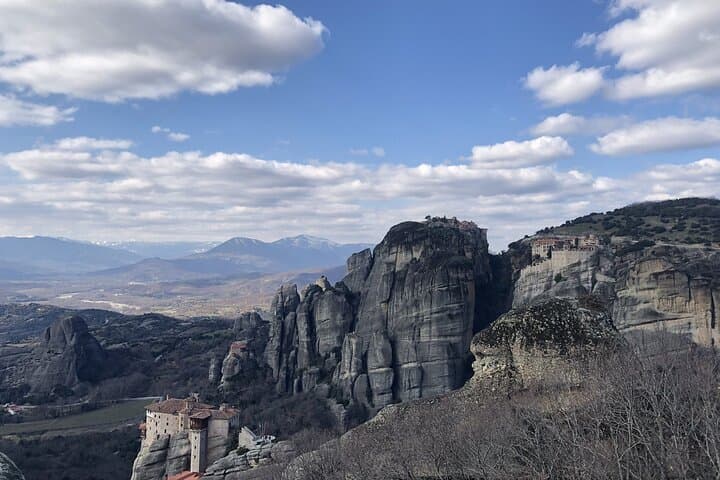
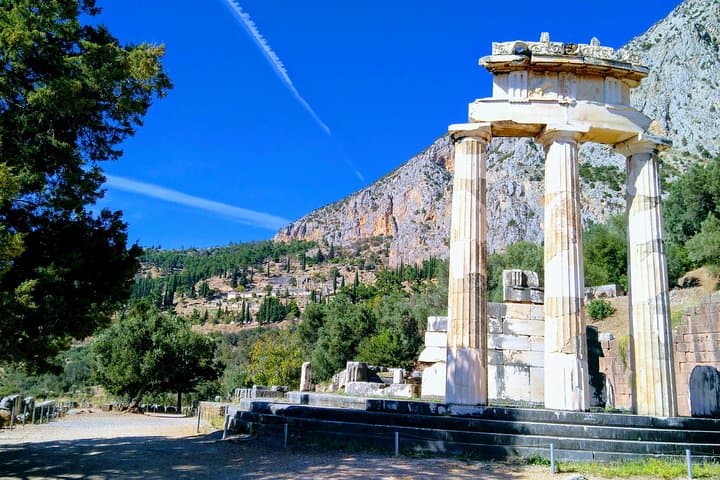
You step out of the car onto a slope of Mount Parnassus with wind that seems to push history forward — the stone colonnades of Delphi sitting above a steep valley, the omphalos once thought to mark the world’s centre. Later that afternoon the road bends and the horizon is broken by Meteora’s towering sandstone pillars; the rocks loom like islands of stone, inviting a quieter kind of pilgrimage.
Verified experiences and guided adventures in the surrounding area.
Operated by EUDAIMONIA Private Tours · Kalambaka, Thessaly
You step out of the car onto a slope of Mount Parnassus with wind that seems to push history forward — the stone colonnades of Delphi sitting above a steep valley, the omphalos once thought to mark the world’s centre. Later that afternoon the road bends and the horizon is broken by Meteora’s towering sandstone pillars; the rocks loom like islands of stone, inviting a quieter kind of pilgrimage.
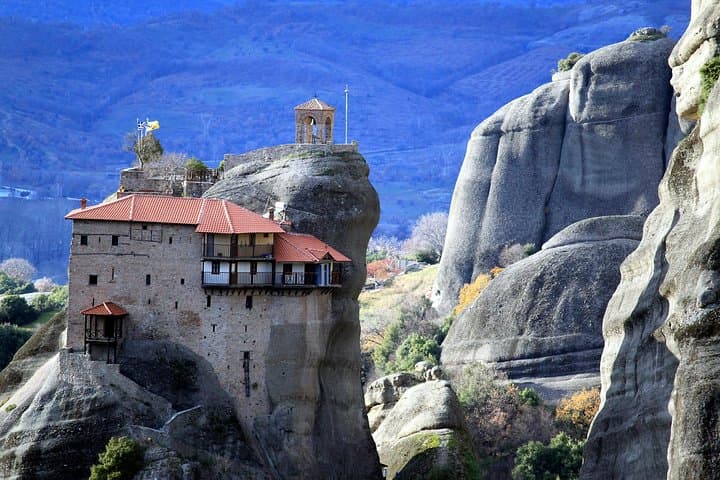
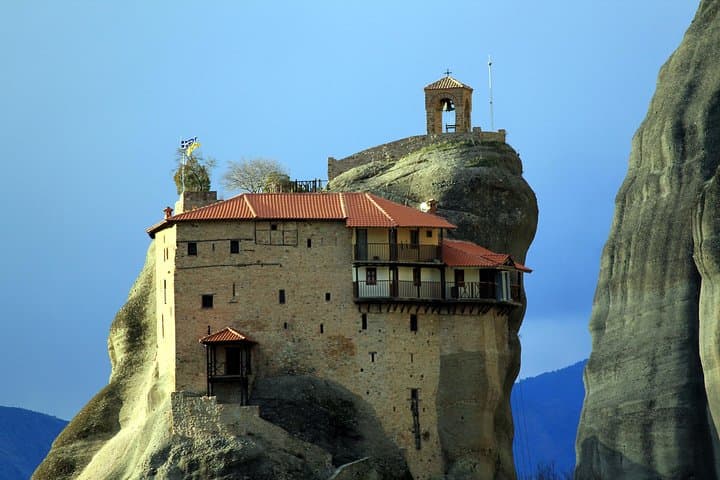
Delphi and Meteora are contrasts of sacred geography: Delphi, an ancient pan‑Hellenic sanctuary dominated by the Temple of Apollo, sits at roughly 600–650 m elevation with terraced ruins and a compact archaeological museum showcasing finds like the Charioteer. Meteora’s cliffs are conglomerate and sandstone formed by sedimentation and uplift over tens of millions of years; monasteries perch up to several hundred metres above the plain, built by monks seeking solitude and security from invaders.
Culturally the trip threads Orthodox monastic life, classical Greek ritual, and modern village culture — expect a non-touristy tavern lunch in a mountain town and a small, well-appointed hotel overlooking the rocks.
Practically: travel time is about 2 days (48 hours) with roughly 4–6 hours of guided walking spread over the trip. Wear sturdy shoes — many monastery approaches require steps and uneven stone paths — and bring water, sun protection and a light jacket for breezy ridgelines. Plan your visit early or late in the day at Meteora for cooler light and fewer crowds. If you have limited mobility, ask about lower‑impact routes; some monasteries require climbing steep staircases and modest clothing for entry.
moderate.
2 days (≈48 hours).
Moderate fitness—able to walk on uneven terrain, climb stairs, and stand for museum viewpoints.
This private tour includes guided visits, but entrance fees to specific monasteries may be paid on site—confirm with the operator before travel.
Round-trip driving covers several hundred kilometres; expect long driving blocks on day one and return to Athens around late afternoon on day two (roughly 5–6 hours each way, with stops).
Only a subset are open to visitors on any given day and some require steep climbs; the guide will plan 2–3 accessible monasteries based on opening hours and your fitness.
Yes — the tour includes one night at a 4–5 star hotel near Meteora with breakfast, as noted in the itinerary.
Delphi was the pan‑Hellenic sanctuary of Apollo and home to the famous oracle; Meteora’s monasteries were established by ascetics who sought refuge on sandstone pillars and flourished in Byzantine and Ottoman periods.
Both sites face visitor‑pressure: stick to marked paths, avoid touching fragile archeological ruins, and support local businesses that follow sustainable practices.
EUDAIMONIA Private Tours operates guided outdoor trips and adventures with an emphasis on safety, stewardship, and memorable experiences.
You step out of the car onto a slope of Mount Parnassus with wind that seems to push history forward — the stone colonnades of Delphi sitting above a steep valley, the omphalos once thought to mark the world’s centre. Later that afternoon the road bends and the horizon is broken by Meteora’s towering sandstone pillars; the rocks loom like islands of stone, inviting a quieter kind of pilgrimage.
You step out of the car onto a slope of Mount Parnassus with wind that seems to push history forward — the stone colonnades of Delphi sitting above a steep valley, the omphalos once thought to mark the world’s centre. Later that afternoon the road bends and the horizon is broken by Meteora’s towering sandstone pillars; the rocks loom like islands of stone, inviting a quieter kind of pilgrimage.
Delphi and Meteora are contrasts of sacred geography: Delphi, an ancient pan‑Hellenic sanctuary dominated by the Temple of Apollo, sits at roughly 600–650 m elevation with terraced ruins and a compact archaeological museum showcasing finds like the Charioteer. Meteora’s cliffs are conglomerate and sandstone formed by sedimentation and uplift over tens of millions of years; monasteries perch up to several hundred metres above the plain, built by monks seeking solitude and security from invaders.
Culturally the trip threads Orthodox monastic life, classical Greek ritual, and modern village culture — expect a non-touristy tavern lunch in a mountain town and a small, well-appointed hotel overlooking the rocks.
Practically: travel time is about 2 days (48 hours) with roughly 4–6 hours of guided walking spread over the trip. Wear sturdy shoes — many monastery approaches require steps and uneven stone paths — and bring water, sun protection and a light jacket for breezy ridgelines. Plan your visit early or late in the day at Meteora for cooler light and fewer crowds. If you have limited mobility, ask about lower‑impact routes; some monasteries require climbing steep staircases and modest clothing for entry.