THE ADVENTURE COLLECTIVE® · Independent discovery and booking for outdoor travel

Spend two full days moving through the heart of the Khmer Empire: Angkor Wat at dawn, Ta Prohm’s tree-swathed galleries, and lesser‑visited stoneworks like Banteay Srei. This private tour balances deep dives into history with practical logistics so you maximize time on the ground.
Spend two full days moving through the heart of the Khmer Empire: Angkor Wat at dawn, Ta Prohm’s tree-swathed galleries, and lesser‑visited stoneworks like Banteay Srei. This private tour balances deep dives into history with practical logistics so you maximize time on the ground.
You arrive just as the air is changing—heat rising from the red laterite, birds calling through the trees, and the five towers of Angkor Wat outlined against a pale sky. A local guide waits with cold towels and an air-conditioned vehicle; the day unfolds as a measured circuit through stone, roots, and carved bas‑reliefs that record centuries of royal ambition.
Verified experiences and guided adventures in the surrounding area.
Operated by Hidden Angkor Tour · Siem Reap, Siem Reap Province
You arrive just as the air is changing—heat rising from the red laterite, birds calling through the trees, and the five towers of Angkor Wat outlined against a pale sky. A local guide waits with cold towels and an air-conditioned vehicle; the day unfolds as a measured circuit through stone, roots, and carved bas‑reliefs that record centuries of royal ambition.
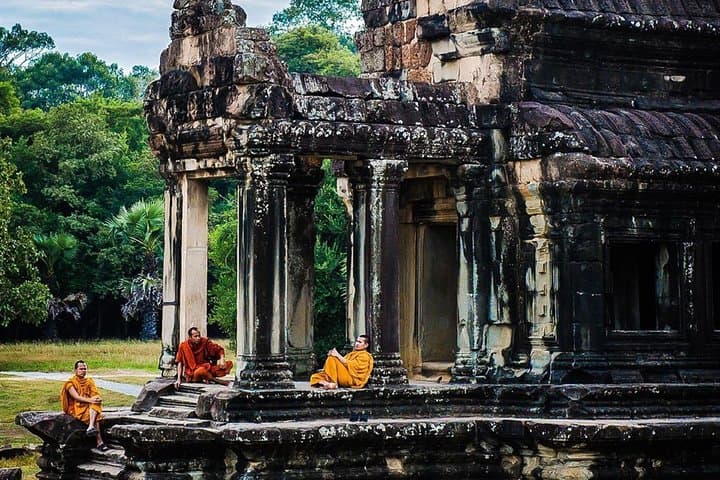
The Khmer Empire (9th–15th centuries) left a landscape of temple‑mountains built from sandstone and laterite, oriented to Hindu cosmology and later repurposed for Buddhism. Geologically, the stone is soft and porous; centuries of monsoon and root growth have sculpted the walls into the weathered reliefs you’ll trace with your camera, not your hands. Cultural notes: many temples still function as places of devotion and local artisans around Siem Reap practice traditional carving and weaving taught through training ateliers.
Practical guidance: each day runs roughly 8–9 hours with 3–6 km of mostly flat walking broken by temple platforms and short stair climbs (some rises of 20–40 steps). Expect dusty compact paths, shaded courtyards, and occasional muddy patches in the rainy season. Angkor Archaeological Park pass is purchased at the ticket center in US dollars (1‑, 3‑, or 7‑day options) and must be shown on request. Dress that covers shoulders and knees for entry to many monuments. Carry 2–3 liters of water per day, sun protection, and cash for market or craft workshops. Aim for early starts to avoid midday heat and late afternoons for softer light at temple façades—sunset at Pre Rup offers wide views with fewer crowds.
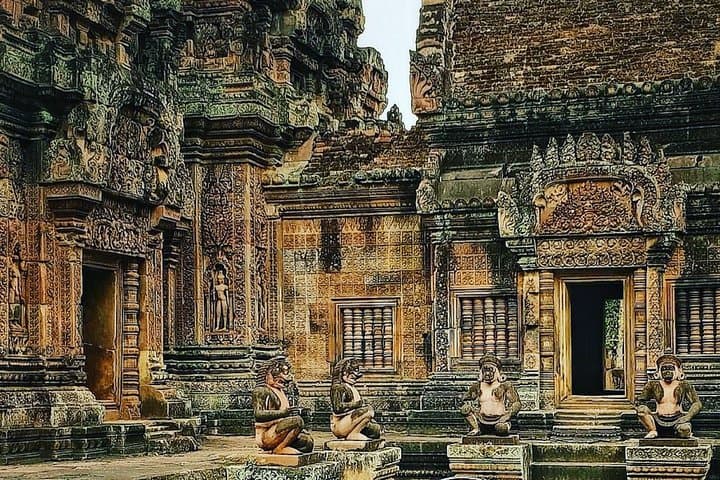
This private route gives time to linger at quieter corners—Banteay Srei’s pink sandstone carvings and Ta Prohm’s root‑entangled galleries—while moving efficiently between the park’s major monuments.
easy.
2 days (approx. 8–9 hours per day).
Suitable for most fitness levels; requires sustained walking on flat and stepped temple terrain and short climbs up platforms.
No, the entrance pass is not included; buy it at the official ticket center in US dollars (1‑, 3‑, or 7‑day passes) before entering the park.
Lunch is not included—your guide can recommend local restaurants in the Angkor area; expect basic meals from about $5 USD upward.
Most sites require walking on uneven surfaces and climbing steps; contact the operator ahead to discuss adjustments—some attractions offer easier approaches.
Photography for personal use is allowed at most temples, but drone use is restricted and usually requires permits—check local regulations and ask your guide.
Angkor was the seat of the Khmer Empire from the 9th to 15th centuries; monumental temples served both religious and state functions and reflect Hindu and later Buddhist cosmology.
The park is under active conservation to manage tourism wear on delicate stone: stay on marked paths, avoid touching carvings, and support local conservation through guided fees and responsible spending.
Hidden Angkor Tour operates guided outdoor trips and adventures with an emphasis on safety, stewardship, and memorable experiences.
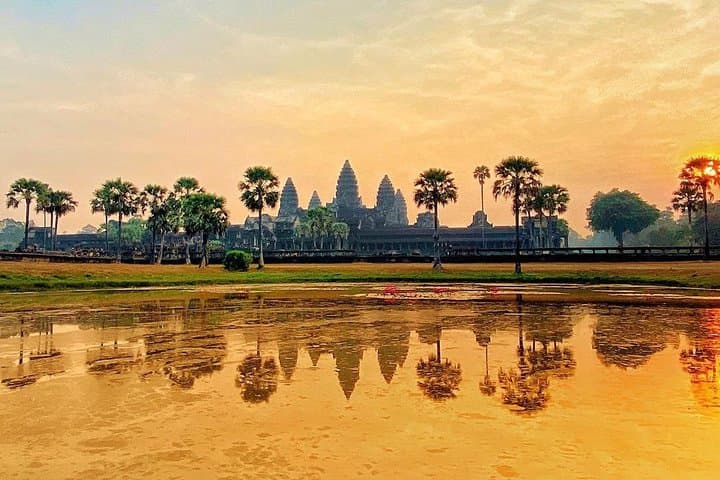
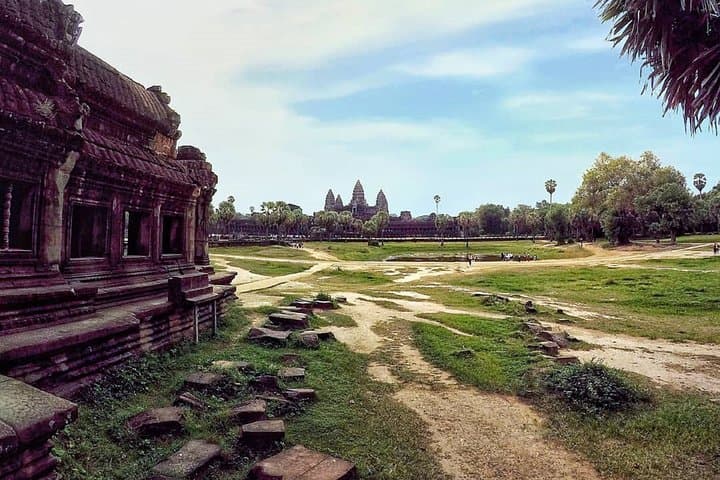
You arrive just as the air is changing—heat rising from the red laterite, birds calling through the trees, and the five towers of Angkor Wat outlined against a pale sky. A local guide waits with cold towels and an air-conditioned vehicle; the day unfolds as a measured circuit through stone, roots, and carved bas‑reliefs that record centuries of royal ambition.
You arrive just as the air is changing—heat rising from the red laterite, birds calling through the trees, and the five towers of Angkor Wat outlined against a pale sky. A local guide waits with cold towels and an air-conditioned vehicle; the day unfolds as a measured circuit through stone, roots, and carved bas‑reliefs that record centuries of royal ambition.
The Khmer Empire (9th–15th centuries) left a landscape of temple‑mountains built from sandstone and laterite, oriented to Hindu cosmology and later repurposed for Buddhism. Geologically, the stone is soft and porous; centuries of monsoon and root growth have sculpted the walls into the weathered reliefs you’ll trace with your camera, not your hands. Cultural notes: many temples still function as places of devotion and local artisans around Siem Reap practice traditional carving and weaving taught through training ateliers.
Practical guidance: each day runs roughly 8–9 hours with 3–6 km of mostly flat walking broken by temple platforms and short stair climbs (some rises of 20–40 steps). Expect dusty compact paths, shaded courtyards, and occasional muddy patches in the rainy season. Angkor Archaeological Park pass is purchased at the ticket center in US dollars (1‑, 3‑, or 7‑day options) and must be shown on request. Dress that covers shoulders and knees for entry to many monuments. Carry 2–3 liters of water per day, sun protection, and cash for market or craft workshops. Aim for early starts to avoid midday heat and late afternoons for softer light at temple façades—sunset at Pre Rup offers wide views with fewer crowds.
This private route gives time to linger at quieter corners—Banteay Srei’s pink sandstone carvings and Ta Prohm’s root‑entangled galleries—while moving efficiently between the park’s major monuments.