THE ADVENTURE COLLECTIVE® · Independent discovery and booking for outdoor travel

Experience Angkor’s major temples at a thoughtful pace over two days—sunrise at Angkor Wat, the carved faces of Bayon, Ta Prohm’s root-clad ruins, and the off-grid scramble through Beng Mealea. This private tour blends cultural history with hands-on exploration.
Experience Angkor’s major temples at a thoughtful pace over two days—sunrise at Angkor Wat, the carved faces of Bayon, Ta Prohm’s root-clad ruins, and the off-grid scramble through Beng Mealea. This private tour blends cultural history with hands-on exploration.
You arrive in the dim blue of pre-dawn, cool air pressing against your skin as the silhouette of Angkor Wat rises from the reflection pool like an ancient hull breaking the surface. Sunrise here is a practical ritual: fewer people, gentler heat, and a long day of stone corridors ahead.
Verified experiences and guided adventures in the surrounding area.
Operated by Siem Reap Experience · Siem Reap, Siem Reap
You arrive in the dim blue of pre-dawn, cool air pressing against your skin as the silhouette of Angkor Wat rises from the reflection pool like an ancient hull breaking the surface. Sunrise here is a practical ritual: fewer people, gentler heat, and a long day of stone corridors ahead.
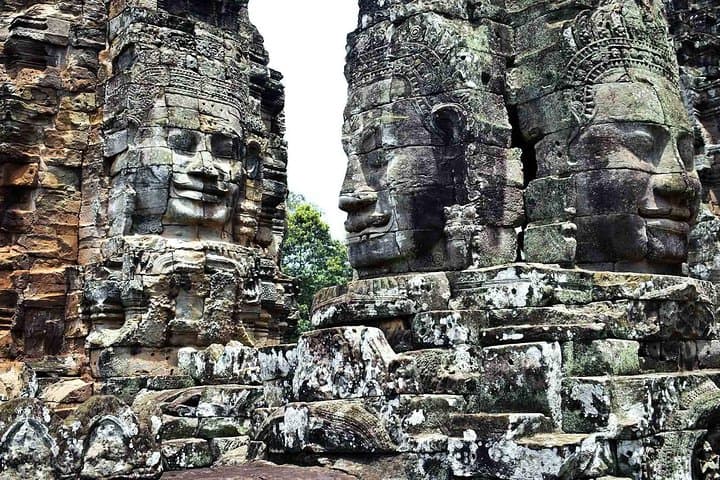
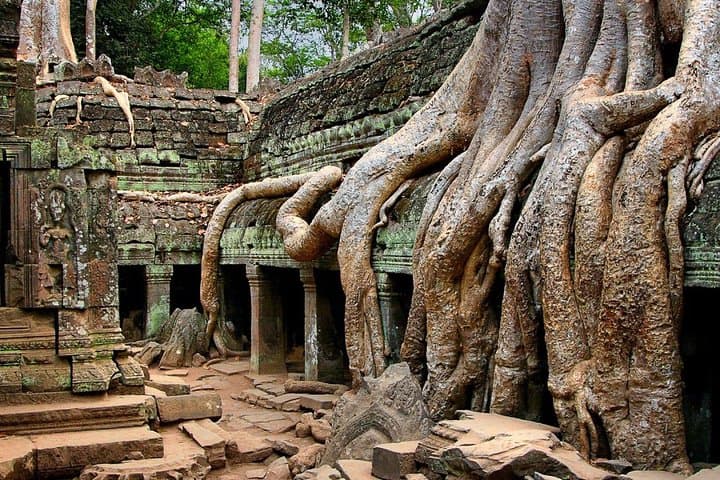
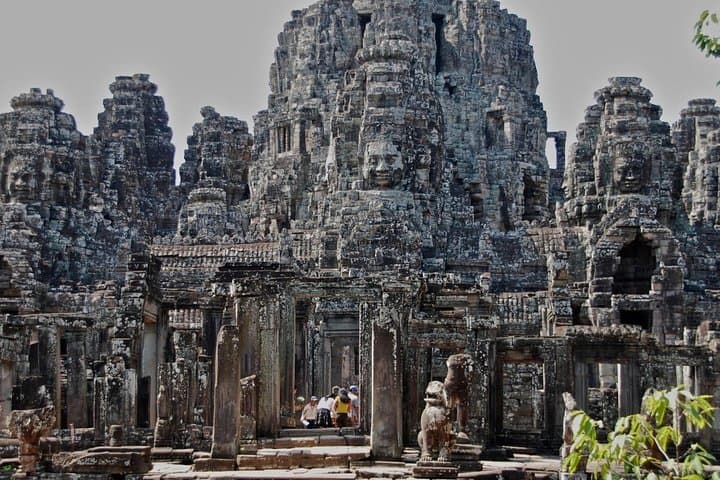
The temples of Angkor were raised during the Khmer Empire—Angkor Wat built in the early 12th century for King Suryavarman II as a Hindu state temple later adapted to Buddhist use. Granite walkways and laterite foundations sit atop a low plain carved by seasonal rivers; geology and water management are part of the site’s engineering story. Bayon’s carved faces and Ta Prohm’s trees—roots threading mortar—show both human intent and jungle persistence.
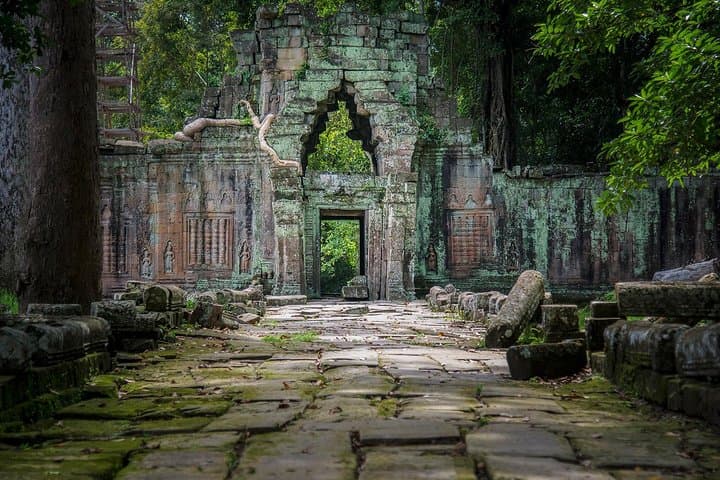
On day two the tour shifts to Beng Mealea, roughly 70 km northeast of Siem Reap, where collapsed galleries and mossed blocks demand scrambling rather than guided queues. The feeling is rawer: stone that resists tidy restoration and invites careful exploration.
Practical guidance: wear sturdy shoes for uneven ruins, bring sun protection and refillable water, and plan for long stretches on foot punctuated by short vehicle transfers in an air‑conditioned car. Angkor Park admission is purchased separately—have cash or a printed pass. Your private guide will pace the route, explain iconography and Khmer history, and avoid the biggest crowds when possible. Respect temple rules: no climbing on fragile carvings and dress modestly. With straightforward logistics handled, the monuments let you move between architecture and wilderness—an archaeological walk that still feels like an expedition.
moderate.
2 days.
You should be able to walk 3–6 hours across uneven surfaces, climb short flights of uneven stone, and handle hot, humid conditions.
No, Angkor Park admission is not included; buy your pass at the official ticket centre in Siem Reap before visiting.
The itinerary notes infants must sit on laps and the pace is adaptable; most sites are family-friendly but Beng Mealea includes scrambling that may be unsuitable for very young children.
Transport is provided in an air‑conditioned vehicle; confirm your pickup point during booking so the operator can arrange collection.
Expect multiple walking segments of 1–3 hours per site with short climbs on steep or uneven steps—comfortable fitness and steady footing help.
Angkor Wat was commissioned by King Suryavarman II in the early 12th century and later became an important Buddhist site; many temples mix Hindu and Buddhist iconography.
Heavy tourism stresses masonry and vegetation; stick to marked paths, avoid touching bas‑reliefs, and follow guides’ directions to minimize impact.
Siem Reap Experience operates guided outdoor trips and adventures with an emphasis on safety, stewardship, and memorable experiences.
You arrive in the dim blue of pre-dawn, cool air pressing against your skin as the silhouette of Angkor Wat rises from the reflection pool like an ancient hull breaking the surface. Sunrise here is a practical ritual: fewer people, gentler heat, and a long day of stone corridors ahead.
You arrive in the dim blue of pre-dawn, cool air pressing against your skin as the silhouette of Angkor Wat rises from the reflection pool like an ancient hull breaking the surface. Sunrise here is a practical ritual: fewer people, gentler heat, and a long day of stone corridors ahead.
The temples of Angkor were raised during the Khmer Empire—Angkor Wat built in the early 12th century for King Suryavarman II as a Hindu state temple later adapted to Buddhist use. Granite walkways and laterite foundations sit atop a low plain carved by seasonal rivers; geology and water management are part of the site’s engineering story. Bayon’s carved faces and Ta Prohm’s trees—roots threading mortar—show both human intent and jungle persistence.
On day two the tour shifts to Beng Mealea, roughly 70 km northeast of Siem Reap, where collapsed galleries and mossed blocks demand scrambling rather than guided queues. The feeling is rawer: stone that resists tidy restoration and invites careful exploration.
Practical guidance: wear sturdy shoes for uneven ruins, bring sun protection and refillable water, and plan for long stretches on foot punctuated by short vehicle transfers in an air‑conditioned car. Angkor Park admission is purchased separately—have cash or a printed pass. Your private guide will pace the route, explain iconography and Khmer history, and avoid the biggest crowds when possible. Respect temple rules: no climbing on fragile carvings and dress modestly. With straightforward logistics handled, the monuments let you move between architecture and wilderness—an archaeological walk that still feels like an expedition.