THE ADVENTURE COLLECTIVE® · Independent discovery and booking for outdoor travel

Head south from Bogotá to the Tatacoa Desert for two days of stony badlands, an optional natural swimming pool, a Magdalena River boat ride and a guided night under vivid southern skies. Expect long transfers, desert heat by day and crisp stargazing after dark.
Head south from Bogotá to the Tatacoa Desert for two days of stony badlands, an optional natural swimming pool, a Magdalena River boat ride and a guided night under vivid southern skies. Expect long transfers, desert heat by day and crisp stargazing after dark.
You arrive before dawn, the van easing out of Bogotá into a band of rice fields and low hills; by mid-afternoon the color of the world shifts—rust-red badlands and silver-gray gullies carve the Tatacoa Desert into a sculpted wilderness that seems to breathe heat.
Verified experiences and guided adventures in the surrounding area.
Operated by transfers & tours Colombia · Villavieja, Huila
You arrive before dawn, the van easing out of Bogotá into a band of rice fields and low hills; by mid-afternoon the color of the world shifts—rust-red badlands and silver-gray gullies carve the Tatacoa Desert into a sculpted wilderness that seems to breathe heat.
This arid zone, Colombia’s second-largest after La Guajira, sits near the town of Villavieja in Huila. Geologically it’s eroded sedimentary terrain: clay and sandstone stripped into canyons and isolated buttes; the contrast between the red Cuzco sector and the gray Los Hoyos is as instructive as it is striking. Culturally the area is tied to rural Huila life—riverine communities along the Magdalena and small mountain towns whose cuisine (try lechona or tamal) marks the route from Bogotá.
By night the desert becomes a planetarium—low humidity and minimal light pollution make stars feel close enough to touch. The trip pairs daytime wildlife checks (birds, lizards, occasional nocturnal mammals) with a guided astronomical session and optional boat ride on the Magdalena or a dip in a natural desert pool.
Practical guidance: expect roughly seven hours of round-trip driving from Bogotá with one overnight at a simple hotel in Villavieja. Bring sun protection, ample water, and sturdy shoes for uneven loose soil and rocky steps. Nights are cool—pack a layer and a headlamp for walks. The itinerary is private and accessible for most fitness levels, but travelers with back or cardiovascular issues should consider the long transfers. With sensible prep, the Tatacoa’s stark horizons and open skies make for an unusually intimate desert experience.
moderate.
2 days.
Suitable for most active travelers; expect walking on uneven desert terrain and a long road transfer—basic mobility and stamina for 2–4 hour excursions per day recommended.
The transfer is approximately 6–8 hours each way depending on traffic and stops—your itinerary includes an early departure to maximize time in the desert.
The tour is private and adaptable, but long transfers and uneven ground make it better suited to children over 8 and adults without serious mobility or cardiovascular issues.
Yes—operators commonly allow swapping the natural pool visit for the boat ride to the Villavieja Paleontological Museum or other local options; confirm at booking.
Expect birds, small reptiles and nocturnal mammals; sightings of larger mammals like ocelots are rare but possible—binoculars increase your chances.
The Tatacoa sits on ancient sedimentary deposits that have preserved fossils; the nearby Villavieja area has long been a rest stop on Magdalena River trade routes.
The desert is fragile—stick to established paths, avoid removing rocks or fossils, and minimize light pollution during astronomy sessions to protect nocturnal wildlife.
transfers & tours Colombia operates guided outdoor trips and adventures with an emphasis on safety, stewardship, and memorable experiences.
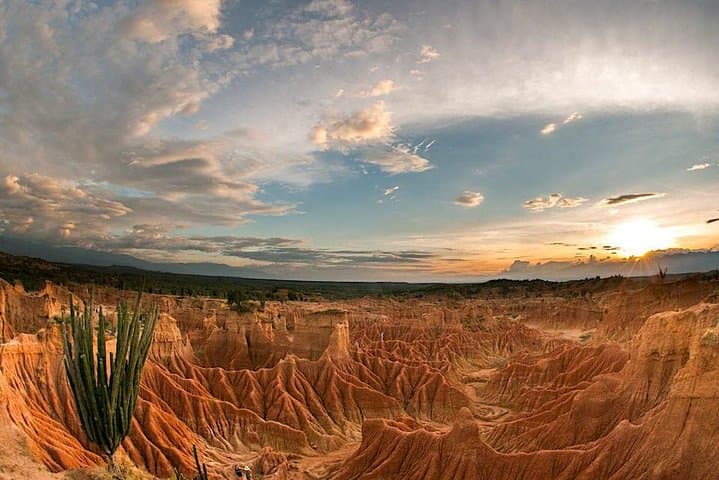
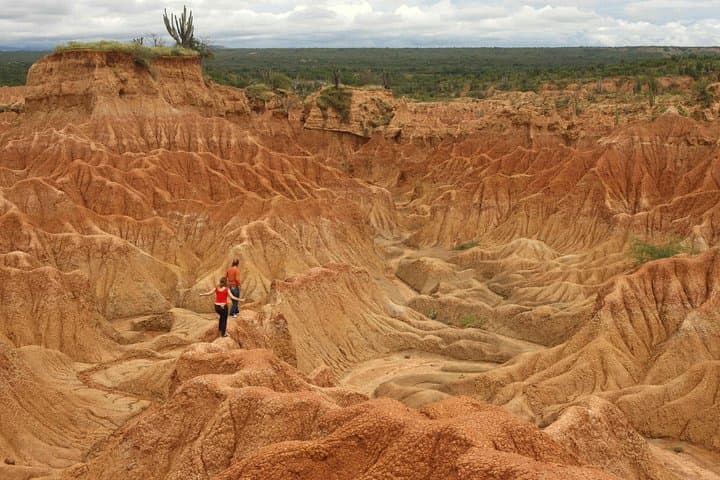
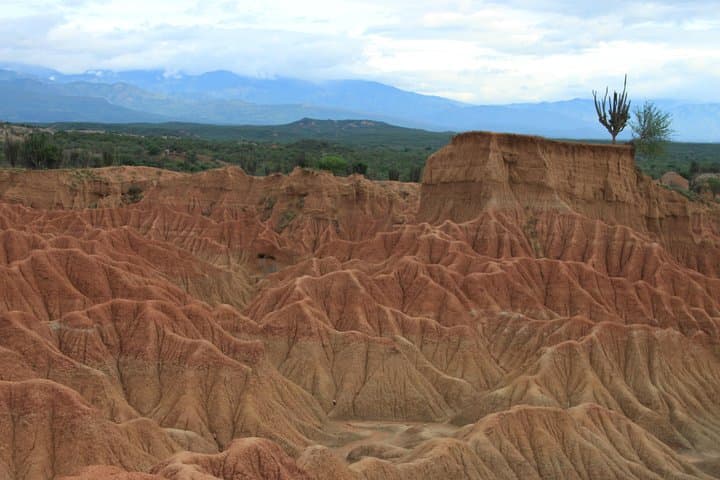
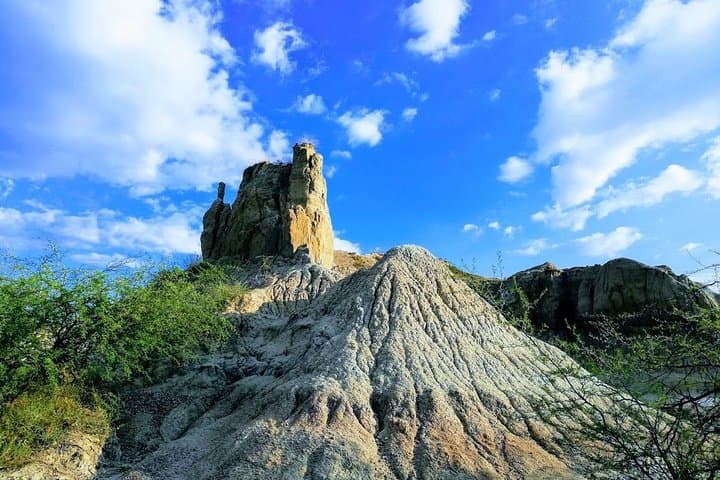
You arrive before dawn, the van easing out of Bogotá into a band of rice fields and low hills; by mid-afternoon the color of the world shifts—rust-red badlands and silver-gray gullies carve the Tatacoa Desert into a sculpted wilderness that seems to breathe heat.
You arrive before dawn, the van easing out of Bogotá into a band of rice fields and low hills; by mid-afternoon the color of the world shifts—rust-red badlands and silver-gray gullies carve the Tatacoa Desert into a sculpted wilderness that seems to breathe heat.
This arid zone, Colombia’s second-largest after La Guajira, sits near the town of Villavieja in Huila. Geologically it’s eroded sedimentary terrain: clay and sandstone stripped into canyons and isolated buttes; the contrast between the red Cuzco sector and the gray Los Hoyos is as instructive as it is striking. Culturally the area is tied to rural Huila life—riverine communities along the Magdalena and small mountain towns whose cuisine (try lechona or tamal) marks the route from Bogotá.
By night the desert becomes a planetarium—low humidity and minimal light pollution make stars feel close enough to touch. The trip pairs daytime wildlife checks (birds, lizards, occasional nocturnal mammals) with a guided astronomical session and optional boat ride on the Magdalena or a dip in a natural desert pool.
Practical guidance: expect roughly seven hours of round-trip driving from Bogotá with one overnight at a simple hotel in Villavieja. Bring sun protection, ample water, and sturdy shoes for uneven loose soil and rocky steps. Nights are cool—pack a layer and a headlamp for walks. The itinerary is private and accessible for most fitness levels, but travelers with back or cardiovascular issues should consider the long transfers. With sensible prep, the Tatacoa’s stark horizons and open skies make for an unusually intimate desert experience.