THE ADVENTURE COLLECTIVE® · Independent discovery and booking for outdoor travel

Fly from Cairo to Luxor for an intensive two-day, private itinerary that hits Karnak, Luxor Temple, the Valley of the Kings, Hatshepsut’s mortuary temple, Medinet Habu and Dendera. This guided overnight tour pairs a domestic flight with a local Egyptologist and one night in Luxor.
Fly from Cairo to Luxor for an intensive two-day, private itinerary that hits Karnak, Luxor Temple, the Valley of the Kings, Hatshepsut’s mortuary temple, Medinet Habu and Dendera. This guided overnight tour pairs a domestic flight with a local Egyptologist and one night in Luxor.
You land in Luxor with desert light cutting across temple columns and the Nile steady and slow beside the city — a different world from Cairo’s bustle. The first morning, an Egyptologist meets you beneath a forest of stone pillars at Karnak; later the West Bank cliffs hold carved tombs with narrow corridors that seem to push time inward.
Verified experiences and guided adventures in the surrounding area.
Operated by Sun Pyramids Tours · Luxor, Luxor Governorate
You land in Luxor with desert light cutting across temple columns and the Nile steady and slow beside the city — a different world from Cairo’s bustle. The first morning, an Egyptologist meets you beneath a forest of stone pillars at Karnak; later the West Bank cliffs hold carved tombs with narrow corridors that seem to push time inward.
Luxor occupies the ancient city of Thebes, a political and religious center from Egypt’s New Kingdom. Geologically, the Nile’s floodplain contrasts sharply with surrounding limestone cliffs on the West Bank where the Valley of the Kings was hand-cut into rock. Culturally, Luxor is still a working city — markets, feluccas and temple rituals thread past archaeological sites that were used for millennia.
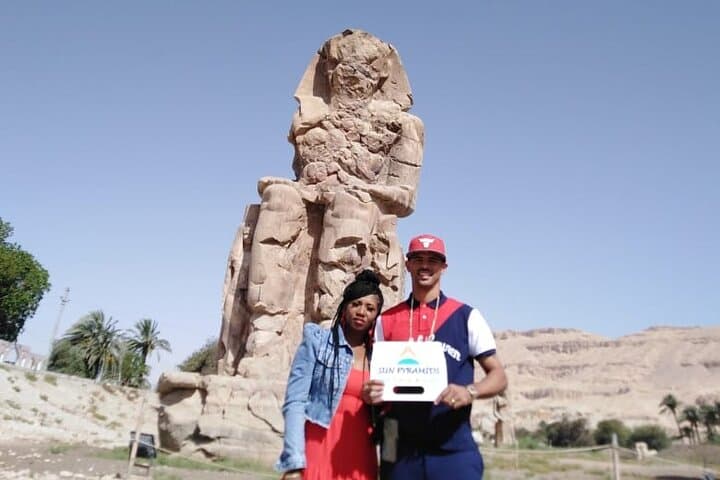
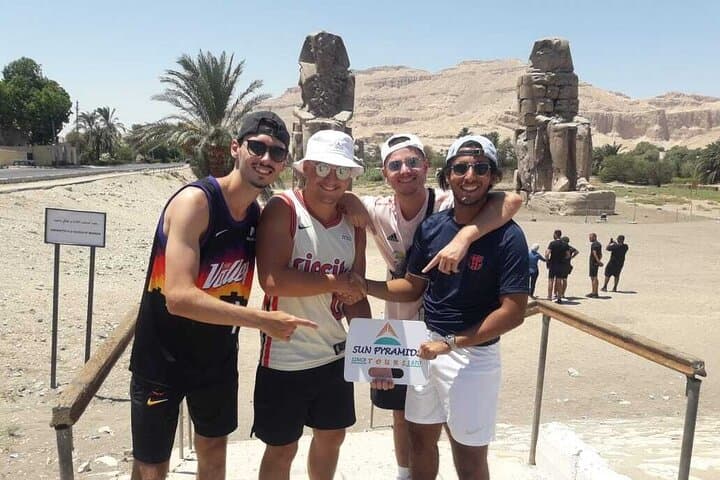
Over two days the itinerary typically covers Karnak, Luxor Temple, the Colossi of Memnon, several royal tombs, Hatshepsut’s terraced mortuary temple, Medinet Habu and a longer drive to Dendera’s Hathor Temple. A domestic flight links Cairo and Luxor and one night’s accommodation in Luxor is standard.
Practical edge: start early to avoid heat and crowds, and wear closed-toe walking shoes—tomb floors are uneven and sandy. Bring sun protection and a scarf for sporadic wind-blown sand. Confirm which admissions and flights are included with your operator; carry your passport for domestic air travel and hotel check-in. Expect short walks, stairs in tombs, and low-light interiors where flash photography is often restricted. Pace yourself: the sites are concentrated but dense with detail — give each place time to read the reliefs, feel the stone, and plan for slow, deliberate exploration rather than rapid checklist tourism.
easy.
2 days.
Suitable for most travelers; requires short to moderate walks, stairs inside tombs, and standing during guided explanations.
Yes — the tour includes round-trip domestic flights Cairo–Luxor–Cairo as part of the itinerary; confirm exact flight times at booking.
Many major site admissions listed are included, but verify with the operator which specific tombs or optional sites require additional fees.
The operator lists wheelchair accessibility, but many tombs have steps and narrow passages; check accessibility for specific sites in advance.
Private Egyptologist guides commonly speak English; request language preferences when booking to ensure a compatible guide.
Luxor was the heart of ancient Thebes; the Karnak complex grew over two millennia under successive pharaohs, and the Valley of the Kings contains tightly cut rock tombs from the New Kingdom.
Many tomb paintings are vulnerable to humidity and light; follow guide rules and avoid flash photography. Support responsible tourism by minimizing plastic and following marked paths.
Sun Pyramids Tours operates guided outdoor trips and adventures with an emphasis on safety, stewardship, and memorable experiences.
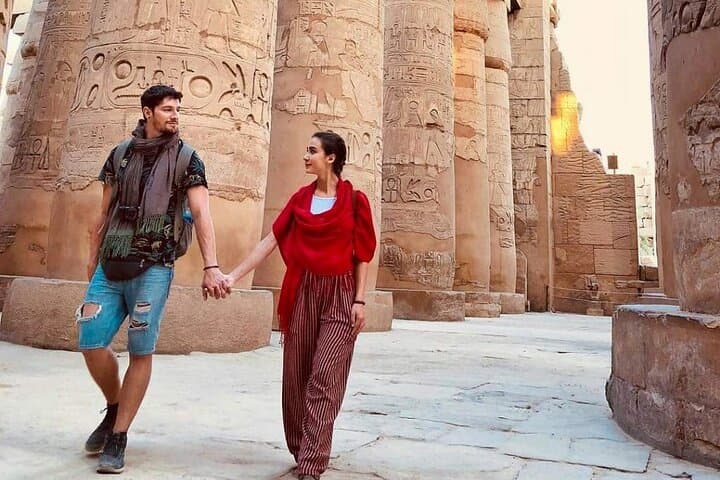
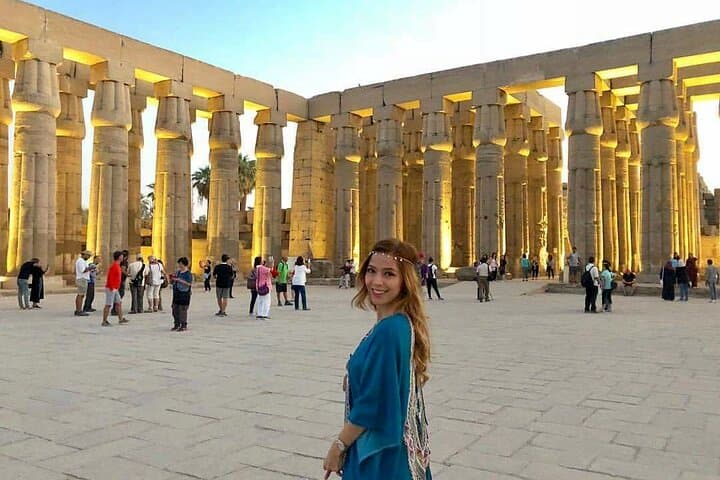
You land in Luxor with desert light cutting across temple columns and the Nile steady and slow beside the city — a different world from Cairo’s bustle. The first morning, an Egyptologist meets you beneath a forest of stone pillars at Karnak; later the West Bank cliffs hold carved tombs with narrow corridors that seem to push time inward.
You land in Luxor with desert light cutting across temple columns and the Nile steady and slow beside the city — a different world from Cairo’s bustle. The first morning, an Egyptologist meets you beneath a forest of stone pillars at Karnak; later the West Bank cliffs hold carved tombs with narrow corridors that seem to push time inward.
Luxor occupies the ancient city of Thebes, a political and religious center from Egypt’s New Kingdom. Geologically, the Nile’s floodplain contrasts sharply with surrounding limestone cliffs on the West Bank where the Valley of the Kings was hand-cut into rock. Culturally, Luxor is still a working city — markets, feluccas and temple rituals thread past archaeological sites that were used for millennia.
Over two days the itinerary typically covers Karnak, Luxor Temple, the Colossi of Memnon, several royal tombs, Hatshepsut’s terraced mortuary temple, Medinet Habu and a longer drive to Dendera’s Hathor Temple. A domestic flight links Cairo and Luxor and one night’s accommodation in Luxor is standard.
Practical edge: start early to avoid heat and crowds, and wear closed-toe walking shoes—tomb floors are uneven and sandy. Bring sun protection and a scarf for sporadic wind-blown sand. Confirm which admissions and flights are included with your operator; carry your passport for domestic air travel and hotel check-in. Expect short walks, stairs in tombs, and low-light interiors where flash photography is often restricted. Pace yourself: the sites are concentrated but dense with detail — give each place time to read the reliefs, feel the stone, and plan for slow, deliberate exploration rather than rapid checklist tourism.