THE ADVENTURE COLLECTIVE® · Independent discovery and booking for outdoor travel

Two intense days of guided hiking that pair a summit of Carrauntoohil with thoughtful walks through Killarney National Park. Expect demanding terrain on day one, restorative lakeside trails on day two, and a local guide who knows the land intimately.
Two intense days of guided hiking that pair a summit of Carrauntoohil with thoughtful walks through Killarney National Park. Expect demanding terrain on day one, restorative lakeside trails on day two, and a local guide who knows the land intimately.
A gray morning hangs over the car park outside Killarney like a held breath. Brendan, a native of the valley and an experienced mountain leader, checks boots and maps with the efficiency of someone who reads the weather as easily as other people read body language. By the time the group moves off, loughs and ridgelines appear through the mist, and the land—rock, peat and heather—seems to push back with a slow, patient momentum.
Verified experiences and guided adventures in the surrounding area.
Operated by Tour Ireland Today · Killarney, County Kerry
A gray morning hangs over the car park outside Killarney like a held breath. Brendan, a native of the valley and an experienced mountain leader, checks boots and maps with the efficiency of someone who reads the weather as easily as other people read body language. By the time the group moves off, loughs and ridgelines appear through the mist, and the land—rock, peat and heather—seems to push back with a slow, patient momentum.
Day one climbs into the MacGillycuddy's Reeks to Carrauntoohil, Ireland’s highest peak. The route climbs roughly 1,000 metres and covers about 12–15 km round-trip depending on approach, shifting from soft peat and turf to exposed scree and occasional scrambling near the summit. Geology here is blunt: Old Red Sandstone cut by glacial bowls and steep corries that remember the last ice age. Wind scours the shoulder lines; when the cloud lifts, the Atlantic and neighboring valleys appear like seams in a faded map.
On day two the rhythm changes. Trails in Killarney National Park are gentler—woodlands, open bog, and the chain of Upper, Middle and Lower Lakes framed by mature oak and yew. There's human history at every bend: medieval ringforts, the stately Muckross House, and a landscape shaped by generations of small-scale peat cutting and seasonal grazing. Brendan points out old boundary stones, ogham fragments in museum displays, and the local reverence for the deer that still move through the shadow of the trees.
This private two-day tour balances ambition with stewardship. The guide-led summit reduces navigation risk but the mountains demand respect: sudden weather changes, wet underfoot sections, and exposed scrambling. The second day offers restorative lines—waterfalls, hidden viewpoints, and the chance to watch peregrines quarrel above steep cliffs.
Practical guidance: aim for two full days with high fitness; allow 8–10 hours for the summit day and 4–6 hours for national park walking. Waterproof boots with good ankle support, layered clothing, and a solid waterproof shell are essential. Bring 2–3 liters of water, high-energy snacks, and a basic first-aid kit. Leave no trace—stick to paths and avoid trampling regenerating peat.
For photographers, early summit light or late-afternoon lakeside reflections are most rewarding. For culture seekers, combine the tour with an evening in Killarney town to sample local music and hearty regional fare. This is hiking shaped by mountain physics and old human care—challenging, direct, and unmistakably Irish.
challenging.
2 days (8–10 hours hiking day 1; 4–6 hours day 2).
High level of cardiovascular fitness and leg endurance; comfortable on sustained steep ascents and rough terrain.
You should have good endurance and experience with sustained ascents; expect 8–10 hours with roughly 1,000 m of elevation gain—training hikes with long climbs will help.
The guided nature helps novices, but the summit day is challenging; beginners should be confident on rough terrain and prepared for variable weather.
The guide will assess conditions and may alter the route or postpone the summit for safety; day two’s park walks are more resilient to weather changes.
The tour meets in the designated car park in Killarney (guide provides exact meeting coordinates upon booking).
The tour includes guiding only; meals and lodging are not included—Killarney town offers a range of B&Bs and hotels nearby.
Children may join on the park day, but the summit day is only appropriate for fit, experienced older teens—check with the operator when booking.
The Reeks and Killarney landscape bear marks of medieval settlement and estate-era landscaping; nearby Muckross House reflects 19th-century landed history.
Killarney National Park is a protected area—stick to marked trails to prevent peat erosion and support local conservation efforts by following Leave No Trace principles.
Tour Ireland Today operates guided outdoor trips and adventures with an emphasis on safety, stewardship, and memorable experiences.
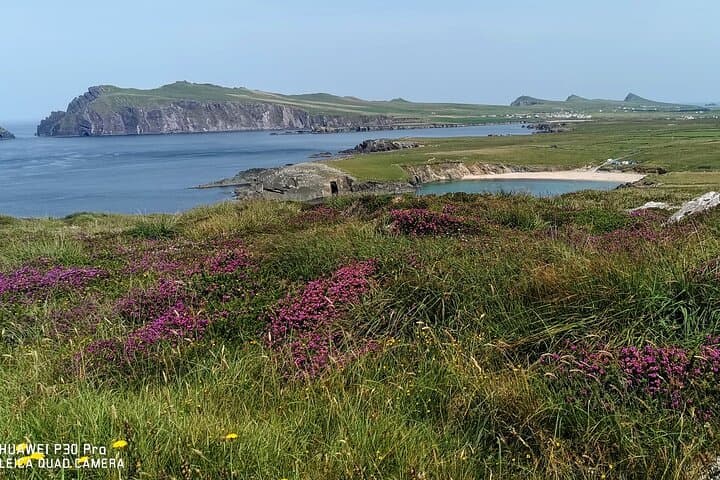
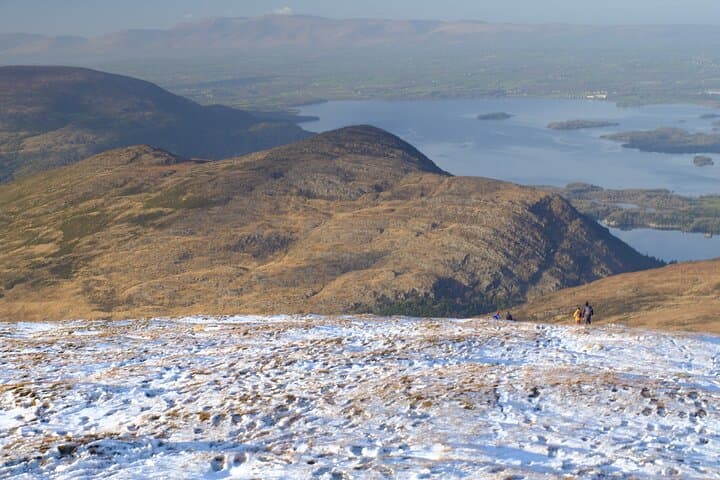
A gray morning hangs over the car park outside Killarney like a held breath. Brendan, a native of the valley and an experienced mountain leader, checks boots and maps with the efficiency of someone who reads the weather as easily as other people read body language. By the time the group moves off, loughs and ridgelines appear through the mist, and the land—rock, peat and heather—seems to push back with a slow, patient momentum.
A gray morning hangs over the car park outside Killarney like a held breath. Brendan, a native of the valley and an experienced mountain leader, checks boots and maps with the efficiency of someone who reads the weather as easily as other people read body language. By the time the group moves off, loughs and ridgelines appear through the mist, and the land—rock, peat and heather—seems to push back with a slow, patient momentum.
Day one climbs into the MacGillycuddy's Reeks to Carrauntoohil, Ireland’s highest peak. The route climbs roughly 1,000 metres and covers about 12–15 km round-trip depending on approach, shifting from soft peat and turf to exposed scree and occasional scrambling near the summit. Geology here is blunt: Old Red Sandstone cut by glacial bowls and steep corries that remember the last ice age. Wind scours the shoulder lines; when the cloud lifts, the Atlantic and neighboring valleys appear like seams in a faded map.
On day two the rhythm changes. Trails in Killarney National Park are gentler—woodlands, open bog, and the chain of Upper, Middle and Lower Lakes framed by mature oak and yew. There's human history at every bend: medieval ringforts, the stately Muckross House, and a landscape shaped by generations of small-scale peat cutting and seasonal grazing. Brendan points out old boundary stones, ogham fragments in museum displays, and the local reverence for the deer that still move through the shadow of the trees.
This private two-day tour balances ambition with stewardship. The guide-led summit reduces navigation risk but the mountains demand respect: sudden weather changes, wet underfoot sections, and exposed scrambling. The second day offers restorative lines—waterfalls, hidden viewpoints, and the chance to watch peregrines quarrel above steep cliffs.
Practical guidance: aim for two full days with high fitness; allow 8–10 hours for the summit day and 4–6 hours for national park walking. Waterproof boots with good ankle support, layered clothing, and a solid waterproof shell are essential. Bring 2–3 liters of water, high-energy snacks, and a basic first-aid kit. Leave no trace—stick to paths and avoid trampling regenerating peat.
For photographers, early summit light or late-afternoon lakeside reflections are most rewarding. For culture seekers, combine the tour with an evening in Killarney town to sample local music and hearty regional fare. This is hiking shaped by mountain physics and old human care—challenging, direct, and unmistakably Irish.