THE ADVENTURE COLLECTIVE® · Independent discovery and booking for outdoor travel

See Egypt’s greatest monuments in two days: Giza’s pyramids, the Egyptian Museum, then fly to Luxor to explore Karnak and the Valley of the Kings. This private itinerary pairs efficient transfers with an Egyptologist guide so you get context as well as access.
See Egypt’s greatest monuments in two days: Giza’s pyramids, the Egyptian Museum, then fly to Luxor to explore Karnak and the Valley of the Kings. This private itinerary pairs efficient transfers with an Egyptologist guide so you get context as well as access.
You step off the morning flight into Cairo and the desert opens like a page of living history — limestone blocks, wind-creased sand, and the low rumble of traffic beyond. In two compact days you move from the shadow of the Giza pyramids to the colonnaded courts of Karnak and the painted chambers of the Valley of the Kings. The pace is purposeful: long walks through stone corridors, short transfers by private vehicle, and an overnight that resets you for Luxor’s river-side monuments.
Verified experiences and guided adventures in the surrounding area.
Operated by Your Egypt Tours · Dahab, South Sinai
You step off the morning flight into Cairo and the desert opens like a page of living history — limestone blocks, wind-creased sand, and the low rumble of traffic beyond. In two compact days you move from the shadow of the Giza pyramids to the colonnaded courts of Karnak and the painted chambers of the Valley of the Kings. The pace is purposeful: long walks through stone corridors, short transfers by private vehicle, and an overnight that resets you for Luxor’s river-side monuments.
Egypt’s story here is visible in stone. Giza’s pyramids and the Sphinx mark Old Kingdom ambition; Saqqara’s Step Pyramid shows the move from mastaba to monumental tomb-building; Luxor and Karnak reflect millennia of New Kingdom religious power. Geology matters — Sinai limestone and Nile sandstone weather differently, leaving tall columns and smooth-faced blocks that still catch light at sunset. Local culture threads through Coptic Cairo’s churches and the souks where traders still haggle over spices and textiles.
Practical guide: expect full days with several hours on foot on uneven ground and in heat. Entrance fees and expert Egyptologist guidance are included; flights between Cairo and Luxor are arranged for you. Bring sun protection, comfortable walking shoes with grip, and a small daypack for water and camera gear. Time visits for early morning or late afternoon light to avoid both crowds and the strongest sun. Keep hydrated, move at a steady pace through tombs, and follow your guide’s advice about restricted areas — preservation is ongoing and fragile.
moderate.
2 days.
Suitable for travelers with a moderate fitness level who can walk 3–6 miles across uneven terrain over the course of a day.
Some pyramids allow access to interior chambers but availability and extra fees can vary; your guide will confirm options on the day.
Expect several hours of walking each day across uneven surfaces, steps, and short hikes between sites; moderate fitness is recommended.
Some sites have limited accessibility due to ancient steps and uneven ground; portions are wheelchair accessible but check specific needs ahead of booking.
Yes — round-trip domestic flights between Cairo and Luxor are arranged as part of the private itinerary.
These sites span Egypt’s millennia: Old Kingdom pyramids at Giza, Saqqara’s proto-pyramid innovation, and Luxor’s New Kingdom temple complexes tied to pharaonic state religion.
Archaeological conservation is active; large visitor numbers stress fragile pigments and structures, so staying on paths and following guide rules helps protect the sites.
Your Egypt Tours operates guided outdoor trips and adventures with an emphasis on safety, stewardship, and memorable experiences.
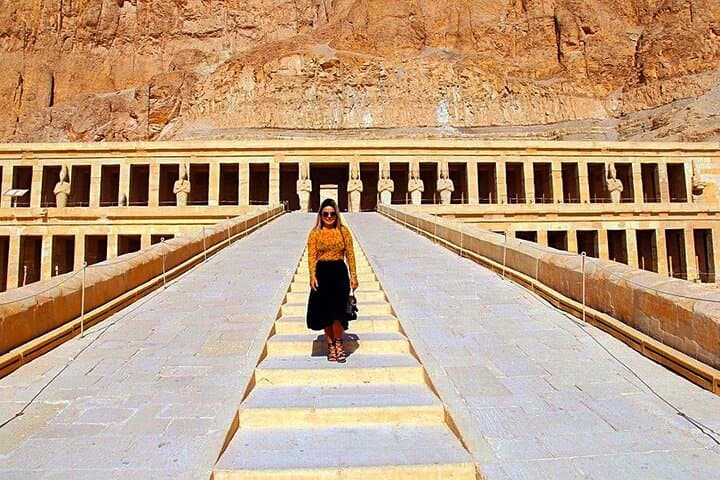
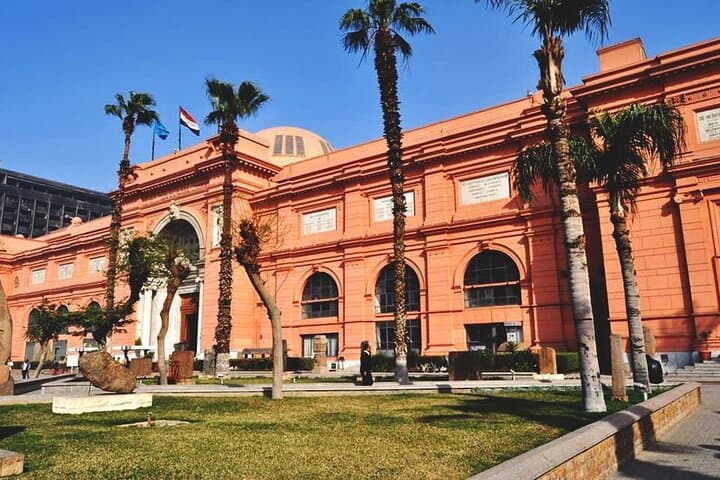
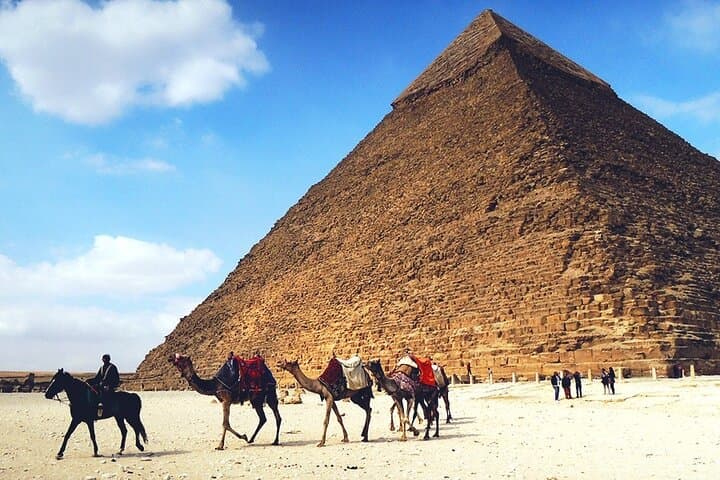
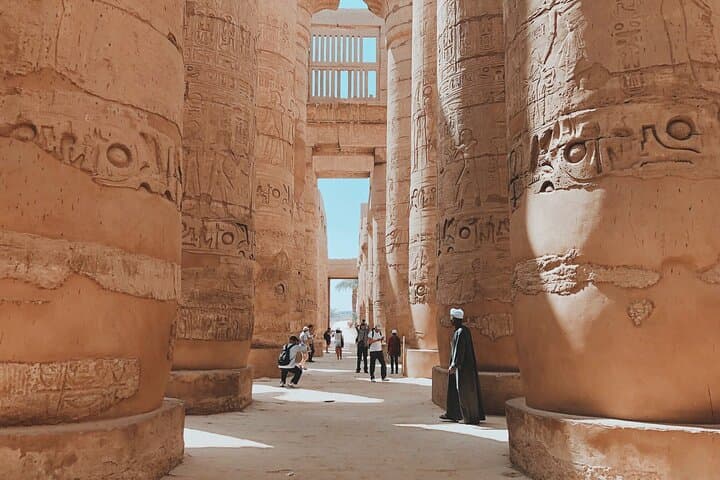
You step off the morning flight into Cairo and the desert opens like a page of living history — limestone blocks, wind-creased sand, and the low rumble of traffic beyond. In two compact days you move from the shadow of the Giza pyramids to the colonnaded courts of Karnak and the painted chambers of the Valley of the Kings. The pace is purposeful: long walks through stone corridors, short transfers by private vehicle, and an overnight that resets you for Luxor’s river-side monuments.
You step off the morning flight into Cairo and the desert opens like a page of living history — limestone blocks, wind-creased sand, and the low rumble of traffic beyond. In two compact days you move from the shadow of the Giza pyramids to the colonnaded courts of Karnak and the painted chambers of the Valley of the Kings. The pace is purposeful: long walks through stone corridors, short transfers by private vehicle, and an overnight that resets you for Luxor’s river-side monuments.
Egypt’s story here is visible in stone. Giza’s pyramids and the Sphinx mark Old Kingdom ambition; Saqqara’s Step Pyramid shows the move from mastaba to monumental tomb-building; Luxor and Karnak reflect millennia of New Kingdom religious power. Geology matters — Sinai limestone and Nile sandstone weather differently, leaving tall columns and smooth-faced blocks that still catch light at sunset. Local culture threads through Coptic Cairo’s churches and the souks where traders still haggle over spices and textiles.
Practical guide: expect full days with several hours on foot on uneven ground and in heat. Entrance fees and expert Egyptologist guidance are included; flights between Cairo and Luxor are arranged for you. Bring sun protection, comfortable walking shoes with grip, and a small daypack for water and camera gear. Time visits for early morning or late afternoon light to avoid both crowds and the strongest sun. Keep hydrated, move at a steady pace through tombs, and follow your guide’s advice about restricted areas — preservation is ongoing and fragile.