THE ADVENTURE COLLECTIVE® · Independent discovery and booking for outdoor travel

A compact, two-day private tour that combines Angkor Wat’s iconic sunrise with the quieter drama of the Grand Circuit temples. Ideal for travelers who want guided context, AC transport, and a manageable pace through Cambodia’s monumental ruins.
A compact, two-day private tour that combines Angkor Wat’s iconic sunrise with the quieter drama of the Grand Circuit temples. Ideal for travelers who want guided context, AC transport, and a manageable pace through Cambodia’s monumental ruins.
You step out of the air-conditioned van into a humid pre-dawn that smells faintly of jasmine and diesel. Lantern-lit paths lead toward the silhouette of Angkor Wat; the moat reflects the first pale light as vendors set up coffee and sticky rice.
Verified experiences and guided adventures in the surrounding area.
Operated by Easy Angkor Trip · Siem Reap, Siem Reap Province
You step out of the air-conditioned van into a humid pre-dawn that smells faintly of jasmine and diesel. Lantern-lit paths lead toward the silhouette of Angkor Wat; the moat reflects the first pale light as vendors set up coffee and sticky rice.
The two-day route pairs the concentrated drama of the Small Circuit—Angkor Wat, Bayon and Ta Prohm—with the quieter, wider-spaced sites on the Grand Circuit: Preah Khan, Neak Pean, Ta Som and the island-like East Mebon. Angkor’s sandstone blocks tell a layered history: built by Khmer kings between the 9th and 13th centuries, temples flipped from Hindu to Buddhist use, and centuries of monsoon weather and tropical growth have left roots and carvings in close negotiation.
Geology matters here—soft sandstone, laterite foundations and once-massive baray reservoirs shaped both construction and ruin. Culturally, the park is active: monks maintain rituals, local guides interpret iconography, and villagers sell handicrafts near the entrance.
Practical guidance: arrive early for sunrise at Angkor Wat, buy your Angkor pass at the official ticket center (not included), and expect uneven steps and tree roots at Ta Prohm. The tour includes pickup, drop-off, cold water, an English-speaking guide and an AC vehicle, which makes transit across scattered sites comfortable.
Wear closed, grippy shoes; cover shoulders and knees out of respect; carry a refillable water bottle and sun protection. Pace your day—temples reward slow observation as much as fast photographs—and leave no litter: the stones survive better when visitors do.
easy.
2 days (full days).
Suitable for most fitness levels; expect several hours of walking and standing with occasional steep or uneven steps.
No. Angkor Park passes are usually purchased at the official ticket center near Siem Reap; bring cash and your passport for the pass.
Typical stops range from 30 minutes to two hours depending on the site; this private tour allocates longer visits to major highlights like Angkor Wat and Ta Prohm.
Meals are not specified as included; guides commonly recommend nearby restaurants or roadside stalls—plan to budget for lunches and snacks.
Yes; the tour is listed as suitable for all fitness levels, though families should plan for heat, walking distances and some uneven steps.
Angkor was the capital of the Khmer Empire from roughly the 9th to 15th centuries; Angkor Wat itself was constructed in the early 12th century and later accommodated both Hindu and Buddhist worship.
Visitor pressure and tropical weather threaten fragile carvings—stick to marked paths, avoid touching bas-reliefs, and support local guides who practice responsible tourism.
Easy Angkor Trip operates guided outdoor trips and adventures with an emphasis on safety, stewardship, and memorable experiences.
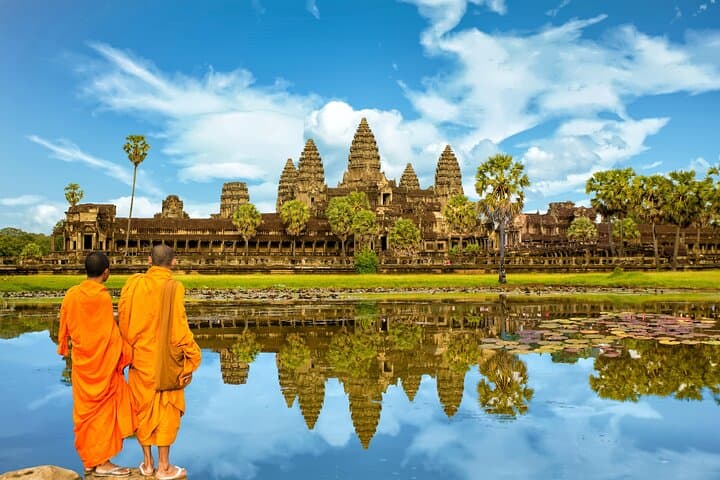
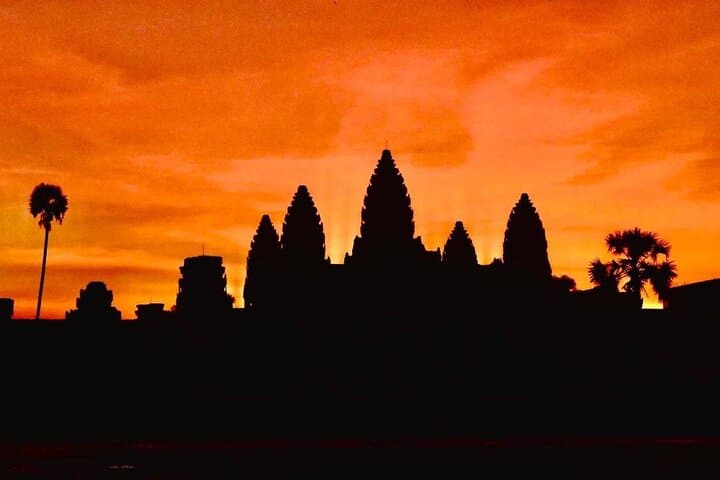
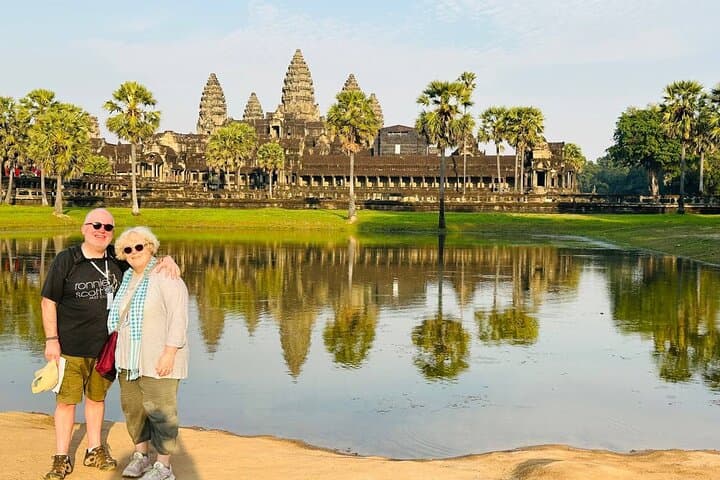
You step out of the air-conditioned van into a humid pre-dawn that smells faintly of jasmine and diesel. Lantern-lit paths lead toward the silhouette of Angkor Wat; the moat reflects the first pale light as vendors set up coffee and sticky rice.
You step out of the air-conditioned van into a humid pre-dawn that smells faintly of jasmine and diesel. Lantern-lit paths lead toward the silhouette of Angkor Wat; the moat reflects the first pale light as vendors set up coffee and sticky rice.
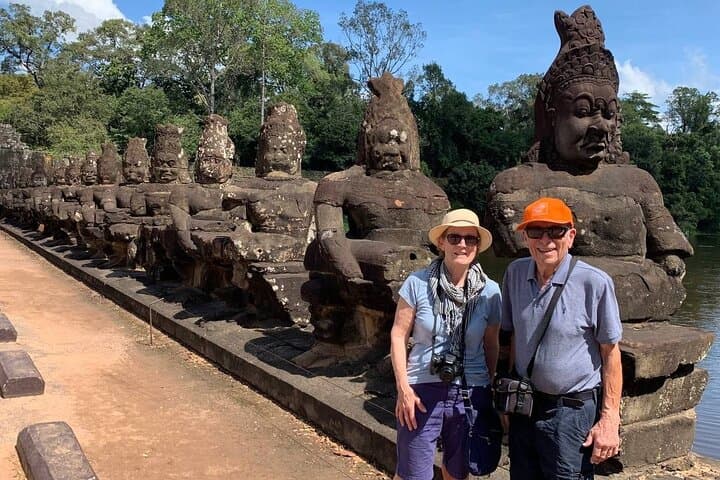
The two-day route pairs the concentrated drama of the Small Circuit—Angkor Wat, Bayon and Ta Prohm—with the quieter, wider-spaced sites on the Grand Circuit: Preah Khan, Neak Pean, Ta Som and the island-like East Mebon. Angkor’s sandstone blocks tell a layered history: built by Khmer kings between the 9th and 13th centuries, temples flipped from Hindu to Buddhist use, and centuries of monsoon weather and tropical growth have left roots and carvings in close negotiation.
Geology matters here—soft sandstone, laterite foundations and once-massive baray reservoirs shaped both construction and ruin. Culturally, the park is active: monks maintain rituals, local guides interpret iconography, and villagers sell handicrafts near the entrance.
Practical guidance: arrive early for sunrise at Angkor Wat, buy your Angkor pass at the official ticket center (not included), and expect uneven steps and tree roots at Ta Prohm. The tour includes pickup, drop-off, cold water, an English-speaking guide and an AC vehicle, which makes transit across scattered sites comfortable.
Wear closed, grippy shoes; cover shoulders and knees out of respect; carry a refillable water bottle and sun protection. Pace your day—temples reward slow observation as much as fast photographs—and leave no litter: the stones survive better when visitors do.