THE ADVENTURE COLLECTIVE® · Independent discovery and booking for outdoor travel

Spend two compact days chasing sunrise reflections at Angkor Wat and exploring the Bayon, Banteay Srei and lesser-known island temples. This private tour pairs early starts and private transport with licensed-guide commentary to make the most of Angkor’s major sites.
Spend two compact days chasing sunrise reflections at Angkor Wat and exploring the Bayon, Banteay Srei and lesser-known island temples. This private tour pairs early starts and private transport with licensed-guide commentary to make the most of Angkor’s major sites.
You stand at the edge of a still moat before dawn, the silhouette of Angkor Wat cutting the sky into stepped towers as the first light edges over laterite and sandstone. The tour wakes you before 4:30 a.m., moves quietly through the soft hum of tuk-tuks, and places you at the classic sunrise viewpoint where stone and reflection meet.
Verified experiences and guided adventures in the surrounding area.
Operated by About Cambodia Travel & Tours · Siem Reap, Siem Reap Province
You stand at the edge of a still moat before dawn, the silhouette of Angkor Wat cutting the sky into stepped towers as the first light edges over laterite and sandstone. The tour wakes you before 4:30 a.m., moves quietly through the soft hum of tuk-tuks, and places you at the classic sunrise viewpoint where stone and reflection meet.
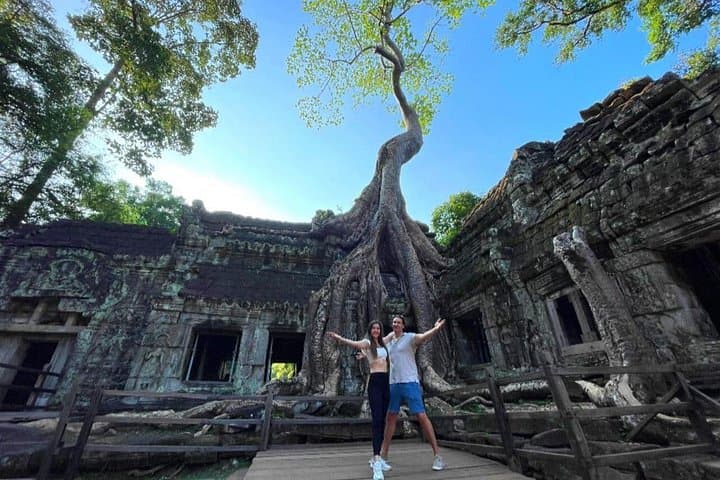
The next 48 hours trace the arc of the Khmer Empire: Angkor Wat’s 12th-century sandstone galleries, Bayon’s enigmatic smiling faces from Jayavarman VII’s reign, the intimate, finely carved pink sandstone of Banteay Srei, and quieter sites like Neak Pean set on its artificial island. Geology matters here—soft laterite and dense sandstone shaped construction and the slow creep of roots into masonry. Culturally, temples are both archaeological relics and living places of devotion; respectful dress and quiet are required.
Practical guidance is straightforward. Expect long days on uneven stairways and compacted paths—good walking shoes and steady hydration are essential. Sunrise crowds disperse into smaller groups by midmorning; plan your camera moments early. The tour runs by private air-conditioned vehicle with hotel pickup and an English-speaking licensed guide who handles logistics and explains inscriptions, iconography, and restoration stories.
Bring small local currency for temple donations and shaded water breaks. If you want fewer crowds, ask the guide to shift the small or grand circuit order. With basic fitness and sensible pacing, this is a compact, intensely rewarding immersion into Angkor’s architecture, history, and living culture.
moderate.
2 days.
Should be able to walk 2–4 miles (3–6 km) per day on uneven stone steps and paths; comfortable with standing for extended periods.
Most private tours exclude the Angkor Archaeological Park pass; purchase a park pass at the ticket center near Siem Reap before entering the temples.
Expect a 4:00–4:30 a.m. pickup for the Angkor Wat sunrise viewpoint so you can arrive before dawn and avoid later crowds.
Yes—infant seats are available and the itinerary is suitable for families, though early starts and long walking may be tiring for very young children.
Wear lightweight clothing that covers shoulders and knees; comfortable closed or grippy sandals or shoes are best for uneven steps.
Angkor was the capital of the Khmer Empire from the 9th to 15th centuries; Angkor Wat was built in the early 12th century by Suryavarman II and later adapted to Buddhist use.
Visitor numbers and natural weathering stress the monuments—entrance fees support the APSARA Authority and ongoing conservation; stick to marked paths and avoid touching carvings.
About Cambodia Travel & Tours operates guided outdoor trips and adventures with an emphasis on safety, stewardship, and memorable experiences.
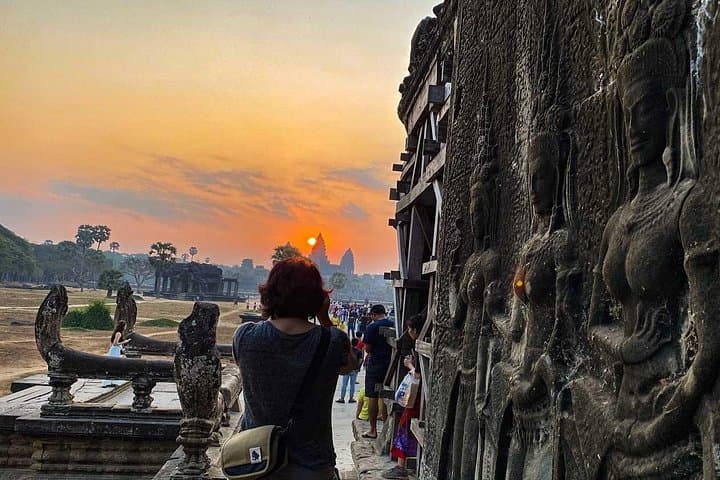
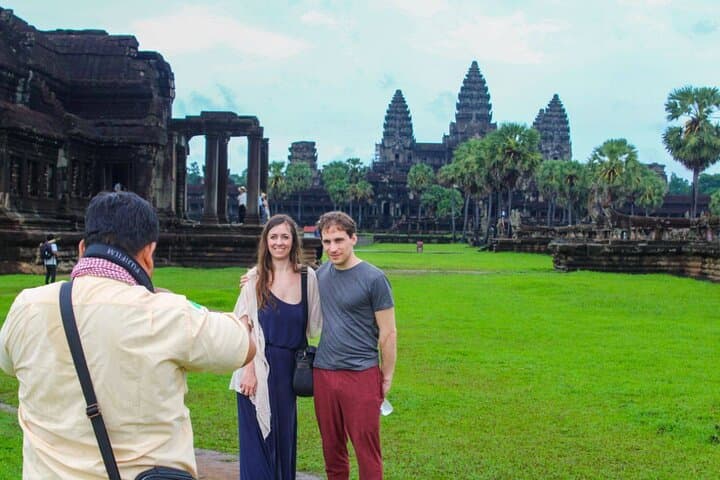
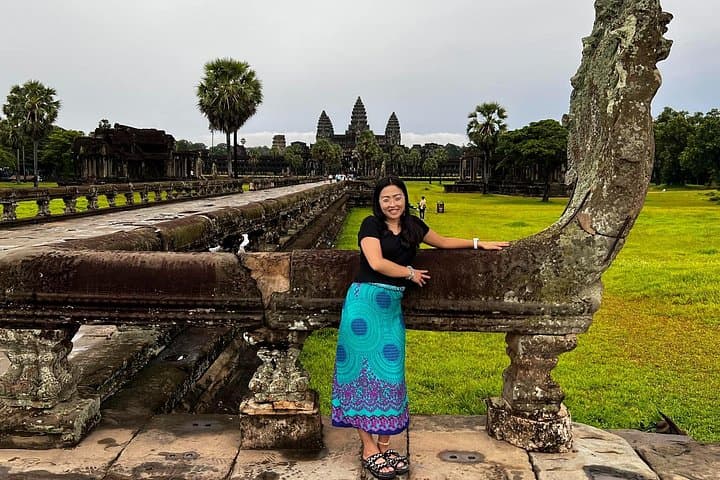
You stand at the edge of a still moat before dawn, the silhouette of Angkor Wat cutting the sky into stepped towers as the first light edges over laterite and sandstone. The tour wakes you before 4:30 a.m., moves quietly through the soft hum of tuk-tuks, and places you at the classic sunrise viewpoint where stone and reflection meet.
You stand at the edge of a still moat before dawn, the silhouette of Angkor Wat cutting the sky into stepped towers as the first light edges over laterite and sandstone. The tour wakes you before 4:30 a.m., moves quietly through the soft hum of tuk-tuks, and places you at the classic sunrise viewpoint where stone and reflection meet.
The next 48 hours trace the arc of the Khmer Empire: Angkor Wat’s 12th-century sandstone galleries, Bayon’s enigmatic smiling faces from Jayavarman VII’s reign, the intimate, finely carved pink sandstone of Banteay Srei, and quieter sites like Neak Pean set on its artificial island. Geology matters here—soft laterite and dense sandstone shaped construction and the slow creep of roots into masonry. Culturally, temples are both archaeological relics and living places of devotion; respectful dress and quiet are required.
Practical guidance is straightforward. Expect long days on uneven stairways and compacted paths—good walking shoes and steady hydration are essential. Sunrise crowds disperse into smaller groups by midmorning; plan your camera moments early. The tour runs by private air-conditioned vehicle with hotel pickup and an English-speaking licensed guide who handles logistics and explains inscriptions, iconography, and restoration stories.
Bring small local currency for temple donations and shaded water breaks. If you want fewer crowds, ask the guide to shift the small or grand circuit order. With basic fitness and sensible pacing, this is a compact, intensely rewarding immersion into Angkor’s architecture, history, and living culture.