THE ADVENTURE COLLECTIVE® · Independent discovery and booking for outdoor travel

Walk the Siq to the Treasury, sleep under a vast desert sky, and traverse Bedouin country by jeep on this private two-day loop from Amman. Ideal for travelers who want archaeology, geology, and a night in the desert without the logistics stress.
Walk the Siq to the Treasury, sleep under a vast desert sky, and traverse Bedouin country by jeep on this private two-day loop from Amman. Ideal for travelers who want archaeology, geology, and a night in the desert without the logistics stress.
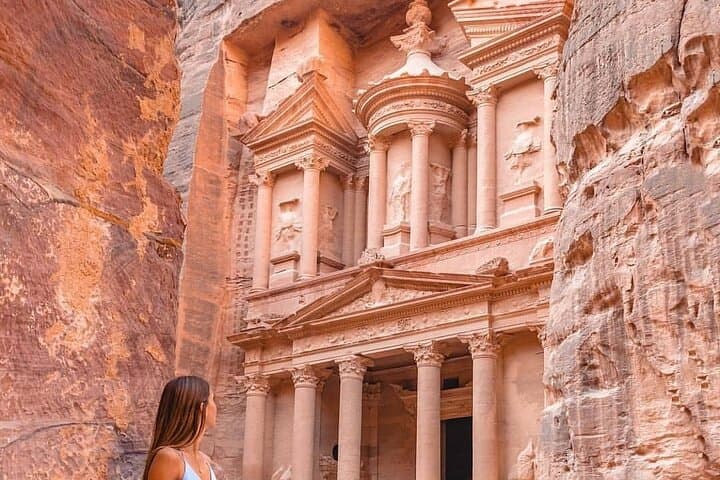
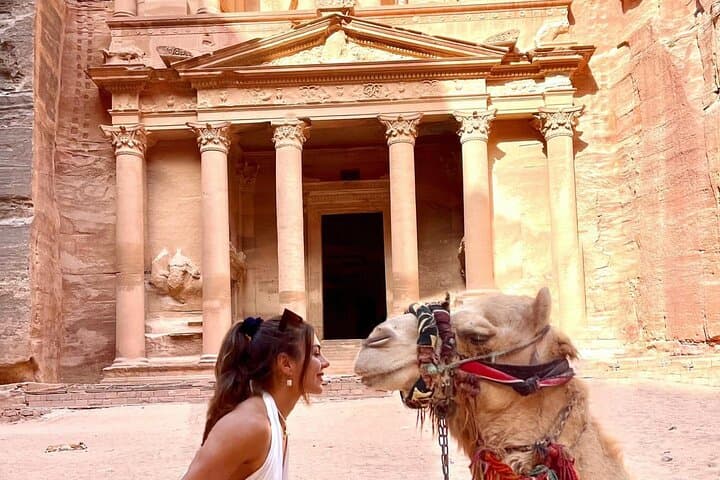
You approach Petra through a fissure in the rock and the canyon narrows until the world behind you falls away. The Siq’s sandstone walls lean close, veins of rust and cream glowing as the morning sun crawls across them, until the Treasury winks into view—an entire façade carved from living stone, holding its silence like a story passed down for centuries.
Verified experiences and guided adventures in the surrounding area.
Operated by Elite Tours · Wadi Musa, Ma'an Governorate
You approach Petra through a fissure in the rock and the canyon narrows until the world behind you falls away. The Siq’s sandstone walls lean close, veins of rust and cream glowing as the morning sun crawls across them, until the Treasury winks into view—an entire façade carved from living stone, holding its silence like a story passed down for centuries.
This private two-day itinerary pairs Petra’s archaeological grandeur with the raw sweep of Wadi Rum, a desert that seems to move in light. On day one, a local guide leads you along paved passages and worn rock staircases: the Street of Facades, the Royal Tombs, the Roman theatre. Each cut in the stone records Nabataean engineering, the empire that redirected seasonal water into cisterns and channels to tame an arid landscape.
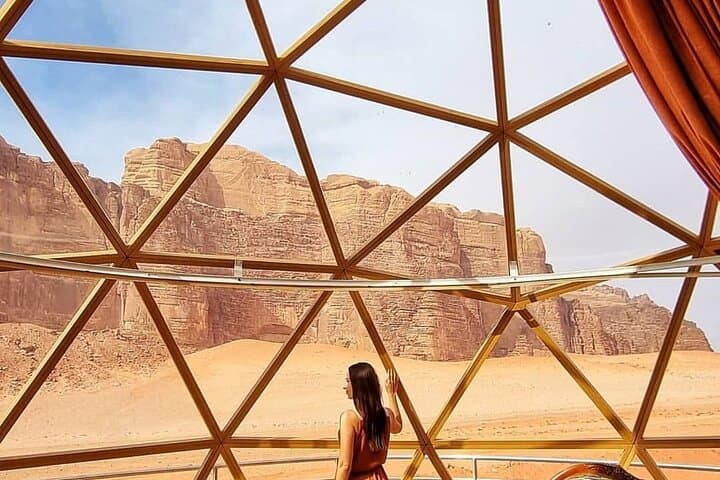
Geologically, Petra and Wadi Rum are cousins of sandstone and wind. Petra’s layered cliffs tell a history of marine sediments lifted and sculpted; Wadi Rum stretches outward in broad planes, its granite and sandstone monoliths standing like quiet challenges to the sky. The desert’s dunes and narrow canyons have been home to Bedouin communities for millennia — in camps tonight you’ll share stories and a Jordanian dinner, and wake to the desert’s slow exhale.
Culturally, the route threads modern Jordanian hospitality with deep histories: Nabataeans, Romans, Ottoman-era trade, and the more recent legend of Lawrence of Arabia, whose maps and reports helped introduce the region to the wider world.
Practical guidance: plan for long walking on uneven stone in Petra and short off-road rides in Wadi Rum. Early starts avoid the midday heat and provide the best light for photography. Hydrate constantly — desert air will rob you of moisture even before you feel thirsty — and bring a light layer for night temperatures that can drop sharply in the desert.
On logistics: pickup from Amman or Queen Alia International, private transport in air-conditioned vehicles, dinner and overnight in a desert camp (options include deluxe tents). The second day includes a morning desert exploration by 4x4 before transfers back to Amman or the airport.
To get the most out of both sites, ask your guide about water-management systems in Petra and seek out Nabataean inscriptions; in Wadi Rum, consider a short walk to an alcove or small dune away from the main jeep tracks to experience the desert’s quieter rhythms. This two-day loop rewards travelers who want history with landscape — and the kind of desert night that makes constellations feel close enough to touch.
moderate.
2 days.
Moderate fitness: comfortable walking 3–6 miles with stairs and uneven surfaces; short off-road rides in Wadi Rum.
The tour listing notes admission is not included; purchase Petra entry tickets separately or ask the operator to add them at booking.
Expect roughly a three-hour drive from Amman or Queen Alia International Airport to Petra under normal traffic conditions.
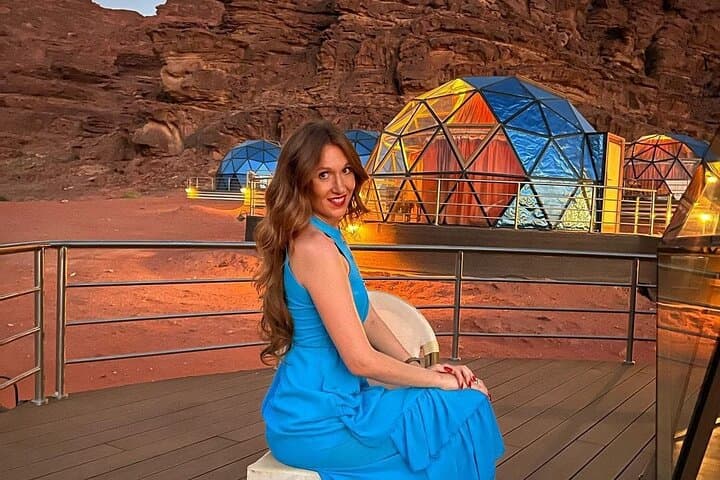
Camps vary by option; deluxe tents offer beds and private facilities, while standard camps provide shared amenities—check your chosen option.
The itinerary typically visits Petra first, then Wadi Rum, but private tours can often be adjusted—confirm with the operator when booking.
The operator lists wheelchair-accessible options, but Petra’s terrain limits access in certain areas; notify the supplier of mobility needs in advance.
Guides are English-speaking for this private tour; request other languages at booking if needed.
Petra was the Nabataean capital, an early trade hub that engineered sophisticated water-capture systems; Wadi Rum has been inhabited since prehistoric times and later featured in Lawrence of Arabia’s accounts.
Both sites face pressure from tourism; stick to marked paths, avoid touching carved surfaces, and support local Bedouin-run camps to channel benefits to communities.
Elite Tours operates guided outdoor trips and adventures with an emphasis on safety, stewardship, and memorable experiences.
You approach Petra through a fissure in the rock and the canyon narrows until the world behind you falls away. The Siq’s sandstone walls lean close, veins of rust and cream glowing as the morning sun crawls across them, until the Treasury winks into view—an entire façade carved from living stone, holding its silence like a story passed down for centuries.
You approach Petra through a fissure in the rock and the canyon narrows until the world behind you falls away. The Siq’s sandstone walls lean close, veins of rust and cream glowing as the morning sun crawls across them, until the Treasury winks into view—an entire façade carved from living stone, holding its silence like a story passed down for centuries.
This private two-day itinerary pairs Petra’s archaeological grandeur with the raw sweep of Wadi Rum, a desert that seems to move in light. On day one, a local guide leads you along paved passages and worn rock staircases: the Street of Facades, the Royal Tombs, the Roman theatre. Each cut in the stone records Nabataean engineering, the empire that redirected seasonal water into cisterns and channels to tame an arid landscape.
Geologically, Petra and Wadi Rum are cousins of sandstone and wind. Petra’s layered cliffs tell a history of marine sediments lifted and sculpted; Wadi Rum stretches outward in broad planes, its granite and sandstone monoliths standing like quiet challenges to the sky. The desert’s dunes and narrow canyons have been home to Bedouin communities for millennia — in camps tonight you’ll share stories and a Jordanian dinner, and wake to the desert’s slow exhale.
Culturally, the route threads modern Jordanian hospitality with deep histories: Nabataeans, Romans, Ottoman-era trade, and the more recent legend of Lawrence of Arabia, whose maps and reports helped introduce the region to the wider world.
Practical guidance: plan for long walking on uneven stone in Petra and short off-road rides in Wadi Rum. Early starts avoid the midday heat and provide the best light for photography. Hydrate constantly — desert air will rob you of moisture even before you feel thirsty — and bring a light layer for night temperatures that can drop sharply in the desert.
On logistics: pickup from Amman or Queen Alia International, private transport in air-conditioned vehicles, dinner and overnight in a desert camp (options include deluxe tents). The second day includes a morning desert exploration by 4x4 before transfers back to Amman or the airport.
To get the most out of both sites, ask your guide about water-management systems in Petra and seek out Nabataean inscriptions; in Wadi Rum, consider a short walk to an alcove or small dune away from the main jeep tracks to experience the desert’s quieter rhythms. This two-day loop rewards travelers who want history with landscape — and the kind of desert night that makes constellations feel close enough to touch.