THE ADVENTURE COLLECTIVE® · Independent discovery and booking for outdoor travel

Compress Jordan’s highlights into 48 hours: walk the Siq to Petra’s Treasury, sleep under Wadi Rum’s starlit vault, then float in the mineral‑rich Dead Sea. This private tour pairs efficient transfers with local Bedouin‑led desert exploration.
Compress Jordan’s highlights into 48 hours: walk the Siq to Petra’s Treasury, sleep under Wadi Rum’s starlit vault, then float in the mineral‑rich Dead Sea. This private tour pairs efficient transfers with local Bedouin‑led desert exploration.
You step out of the air-conditioned van and the canyon narrows: the Siq funnels light and sand into thin bands, and the sandstone walls begin to hum with history. After a 3‑hour drive south from Amman or Queen Alia Airport, Petra opens like a page from an ancient map — carved facades catching late-afternoon sun, columns shadowing narrow alleys, and the Treasury suddenly towering at the end of the cleft.
Verified experiences and guided adventures in the surrounding area.
Operated by Elite Tours · Wadi Musa, Ma'an Governorate
You step out of the air-conditioned van and the canyon narrows: the Siq funnels light and sand into thin bands, and the sandstone walls begin to hum with history. After a 3‑hour drive south from Amman or Queen Alia Airport, Petra opens like a page from an ancient map — carved facades catching late-afternoon sun, columns shadowing narrow alleys, and the Treasury suddenly towering at the end of the cleft.
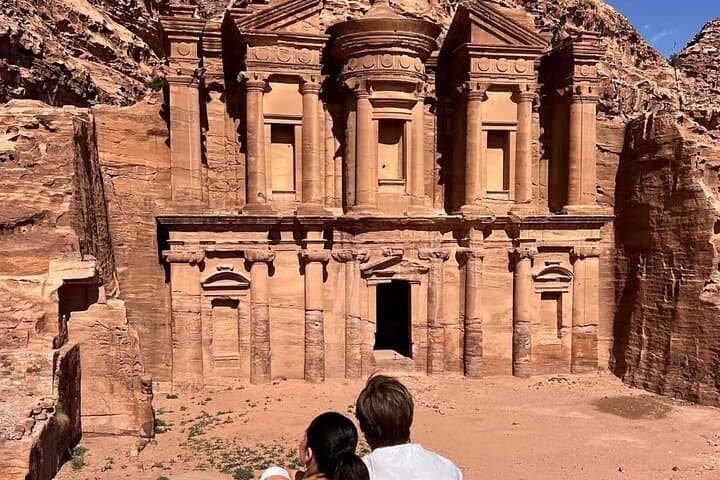
This 48‑hour private route stitches three of Jordan's most iconic landscapes. Petra, the Nabataean capital, still carries the imprint of its engineers — water channels, rock-cut tombs and the Roman theater — evidence of a city that turned desert into a crossroads of trade. The rocks here are Cambrian sandstone; their striations record millennia of wind and water that continue to sculpt the Siq's surface into ridges and alcoves.
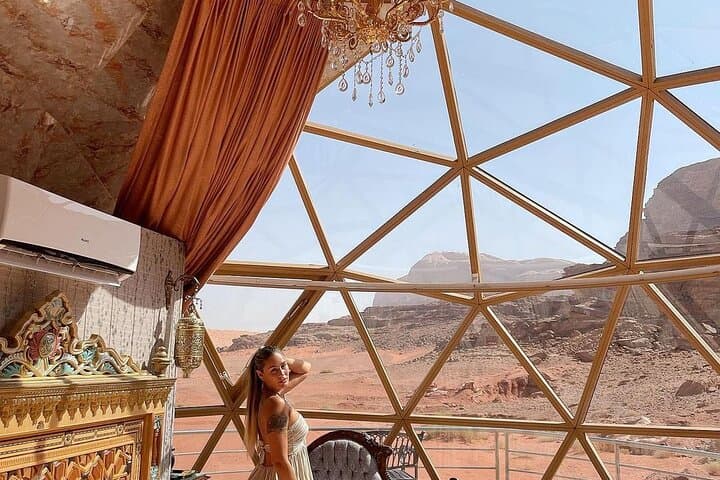
By mid‑afternoon you head for Wadi Rum, a different kind of geography where granite and sandstone forms rise from red sands like islands in a dry sea. The Bedouin have lived here for centuries; guides often recount Lawrence of Arabia’s passage through the valleys and the region’s recent UNESCO recognition. At your desert camp you’ll eat traditional stews, sleep in a deluxe tent, and wake to a desert that reshapes itself every dawn — dunes pushing like slow tides, wind drafting new patterns across the rock.
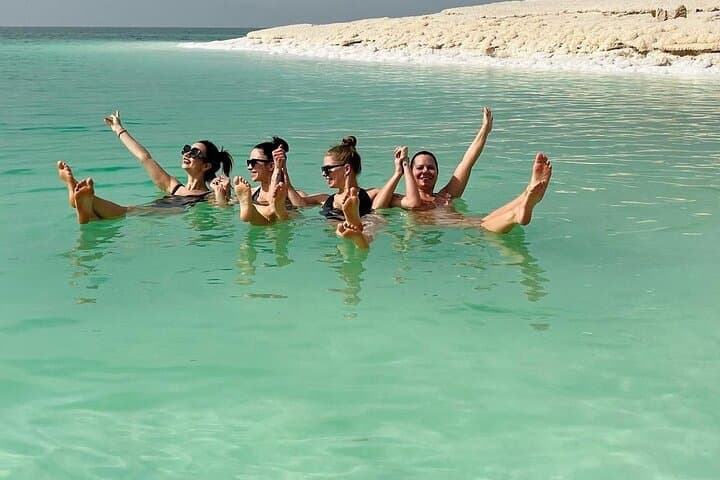
On day two, local 4x4s take you on a 2–3 hour jeep tour through rumbling washes, narrow canyons and high viewpoints where you can see the scar of the Great Rift. Then the van drives north toward the Dead Sea — a four‑hour transfer — where the water, heavy with dissolved salts, insists you float. The shoreline’s black mud has long been used as a skin therapy; a smear and a half‑hour in the sun is the ritual.
Practical edge: Petra’s main walk through the Siq to the Treasury is about 1.2 km and mostly flat but crowded; allow 3–4 hours to cover the main sites mentioned in your itinerary. Wadi Rum tours are bumpy — choose closed footwear and layers — and the Dead Sea can be harsh on cuts and eyes, so rinse thoroughly after floating.
Plan for sun and rapid temperature swings: mornings in Wadi Rum can be cool, afternoons hot; Petra’s shade is limited. Bring a refillable water bottle, sturdy walking shoes, a sun hat and swim essentials. If you want a balloon ride over Wadi Rum, arrange it before the trip; it’s not included and depends on weather.
This private circuit is compact but richly varied: carved cities, desert horizons, and a sea that won’t let you sink — a concentrated taste of Jordan’s geological and cultural range with the logistics handled for you.
moderate.
2 days.
Moderate fitness required: you should be comfortable walking 3–5 hours total across uneven surfaces and stepping on stone stairways.
Yes — private, air‑conditioned transportation is included for the full itinerary from pickup in Amman or QAIA.
The tour description notes admission is not included; check with the operator about Petra entry fees and arrange tickets in advance if required.
Yes — pickups are available from Queen Alia International Airport or Amman hotels; provide flight details when booking.
The vehicles and terrain are bumpy; while the tour is family-friendly, discuss any mobility concerns with the supplier to confirm accessibility and vehicle options.
Balloon rides are optional and not included — they must be booked in advance and are weather dependent, with separate charges.
The itinerary allows approximately 2–3 hours at a Dead Sea resort beach for floating, mud applications and relaxing before the return transfer.
Petra was the Nabataean capital that controlled incense and spice routes; Wadi Rum later gained fame during the Arab Revolt and Lawrence of Arabia’s campaigns.
Stay on marked paths in Petra and avoid collecting stones; support Bedouin-run camps and use provided facilities to reduce impact on fragile desert ecosystems.
Elite Tours operates guided outdoor trips and adventures with an emphasis on safety, stewardship, and memorable experiences.
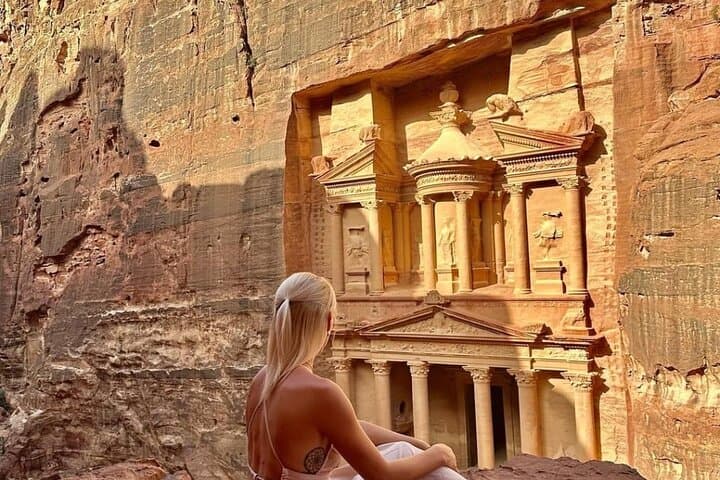
You step out of the air-conditioned van and the canyon narrows: the Siq funnels light and sand into thin bands, and the sandstone walls begin to hum with history. After a 3‑hour drive south from Amman or Queen Alia Airport, Petra opens like a page from an ancient map — carved facades catching late-afternoon sun, columns shadowing narrow alleys, and the Treasury suddenly towering at the end of the cleft.
You step out of the air-conditioned van and the canyon narrows: the Siq funnels light and sand into thin bands, and the sandstone walls begin to hum with history. After a 3‑hour drive south from Amman or Queen Alia Airport, Petra opens like a page from an ancient map — carved facades catching late-afternoon sun, columns shadowing narrow alleys, and the Treasury suddenly towering at the end of the cleft.
This 48‑hour private route stitches three of Jordan's most iconic landscapes. Petra, the Nabataean capital, still carries the imprint of its engineers — water channels, rock-cut tombs and the Roman theater — evidence of a city that turned desert into a crossroads of trade. The rocks here are Cambrian sandstone; their striations record millennia of wind and water that continue to sculpt the Siq's surface into ridges and alcoves.
By mid‑afternoon you head for Wadi Rum, a different kind of geography where granite and sandstone forms rise from red sands like islands in a dry sea. The Bedouin have lived here for centuries; guides often recount Lawrence of Arabia’s passage through the valleys and the region’s recent UNESCO recognition. At your desert camp you’ll eat traditional stews, sleep in a deluxe tent, and wake to a desert that reshapes itself every dawn — dunes pushing like slow tides, wind drafting new patterns across the rock.
On day two, local 4x4s take you on a 2–3 hour jeep tour through rumbling washes, narrow canyons and high viewpoints where you can see the scar of the Great Rift. Then the van drives north toward the Dead Sea — a four‑hour transfer — where the water, heavy with dissolved salts, insists you float. The shoreline’s black mud has long been used as a skin therapy; a smear and a half‑hour in the sun is the ritual.
Practical edge: Petra’s main walk through the Siq to the Treasury is about 1.2 km and mostly flat but crowded; allow 3–4 hours to cover the main sites mentioned in your itinerary. Wadi Rum tours are bumpy — choose closed footwear and layers — and the Dead Sea can be harsh on cuts and eyes, so rinse thoroughly after floating.
Plan for sun and rapid temperature swings: mornings in Wadi Rum can be cool, afternoons hot; Petra’s shade is limited. Bring a refillable water bottle, sturdy walking shoes, a sun hat and swim essentials. If you want a balloon ride over Wadi Rum, arrange it before the trip; it’s not included and depends on weather.
This private circuit is compact but richly varied: carved cities, desert horizons, and a sea that won’t let you sink — a concentrated taste of Jordan’s geological and cultural range with the logistics handled for you.