THE ADVENTURE COLLECTIVE® · Independent discovery and booking for outdoor travel

Fly from Tel Aviv to Eilat, cross the border, and spend two days exploring Petra’s carved streets, tombs, and hilltop viewpoints. This compact itinerary includes transport, a night near the site, guided walks, and time to explore the Monastery and local Bedouin market.
Fly from Tel Aviv to Eilat, cross the border, and spend two days exploring Petra’s carved streets, tombs, and hilltop viewpoints. This compact itinerary includes transport, a night near the site, guided walks, and time to explore the Monastery and local Bedouin market.
You step from the plane into Eilat’s thin desert air, and the world narrows to rock and road—Ramon Airport’s runway pointing the way to a landscape that has long pushed travelers inland. The drive to Petra traces ridgelines and salt-flat basins; the Siq itself nudges you onward, a narrow gorge that opens suddenly onto the rose-red façade of the Treasury.
Verified experiences and guided adventures in the surrounding area.
Operated by Bein Harim Ltd · Wadi Musa, Ma'an Governorate
You step from the plane into Eilat’s thin desert air, and the world narrows to rock and road—Ramon Airport’s runway pointing the way to a landscape that has long pushed travelers inland. The drive to Petra traces ridgelines and salt-flat basins; the Siq itself nudges you onward, a narrow gorge that opens suddenly onto the rose-red façade of the Treasury.
Petra was the Nabataean capital and a hub on ancient incense and caravan routes; its carved tombs and theaters are cut from sandstone whose layers record millions of years of shifting seas and tectonic lift. Local Bedouin still run stalls and offer horses, and small villages like Wadi Musa grew where water and trade intersected. The Monastery (Al Dayr) and the High Place of Sacrifice reveal how the landscape shaped ritual and defense—routes climb where stone offered vantage and shelter.
Practically, this tour compresses border formalities, a short domestic flight to Eilat, and an overnight in a hotel adjacent to the archaeological park to give you two full days inside Petra. Expect uneven paths, stone steps hewn by generations, and midday heat in summer; mornings and late afternoons are best for photos and quieter sections of the site. Carry cash for visa and border fees, keep passport pages accessible, wear sturdy shoes with good traction, and plan for at least a full day of walking to reach the Monastery.
Petra rewards patience: move slowly, follow the worn grooves where chariots once passed, and leave room to listen—the wind still tells the canyon’s history.
moderate.
2 days (approx. 48 hours).
Suitable for travelers with regular mobility who can handle several hours of walking and stone steps; not recommended for those with serious spinal or cardiovascular issues.
Some nationalities require visas in advance; others can pay at the border—confirm with Jordanian consular guidance and have required cash ready for border processing.
Many main areas have uneven terrain and stone steps; some parts can be accessed by carriage or horseback with assistance, but the site is not fully wheelchair accessible.
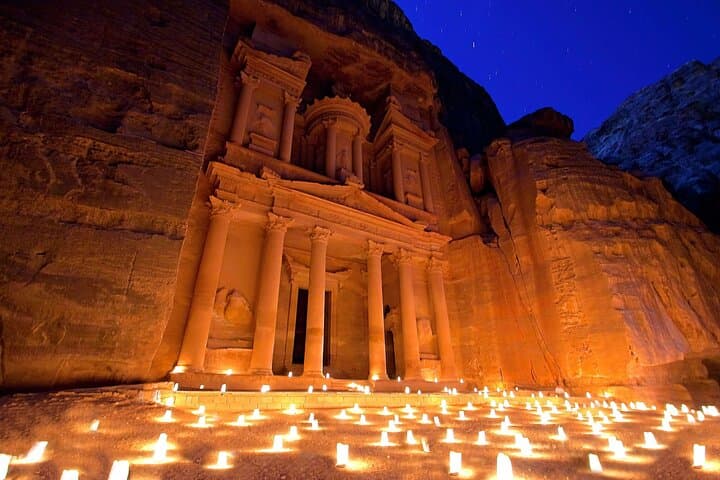
Petra By Night is a separate evening experience held on select nights (Mon/Wed/Thu) and is not included by default; check availability and book separately if desired.
This tour includes a licensed guide and Petra entrance fees, plus airport transfers and an overnight stay next to the archaeological park.
Petra was the seat of the Nabataean kingdom from around the 2nd century BCE and prospered as a crossroads for incense and spice trade routes, its rock-cut architecture reflecting both local skill and foreign influences.
Petra faces wear from foot traffic and tourism; stick to marked paths, avoid touching carved surfaces, carry out trash, and support local Bedouin businesses to help preserve cultural stewardship.
Bein Harim Ltd operates guided outdoor trips and adventures with an emphasis on safety, stewardship, and memorable experiences.
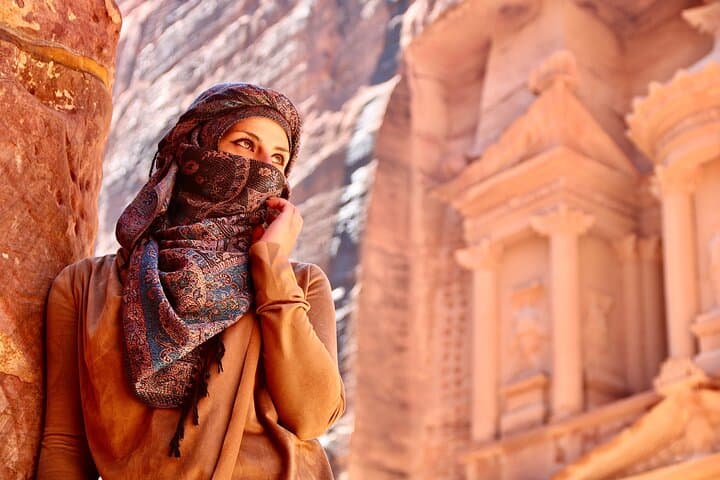
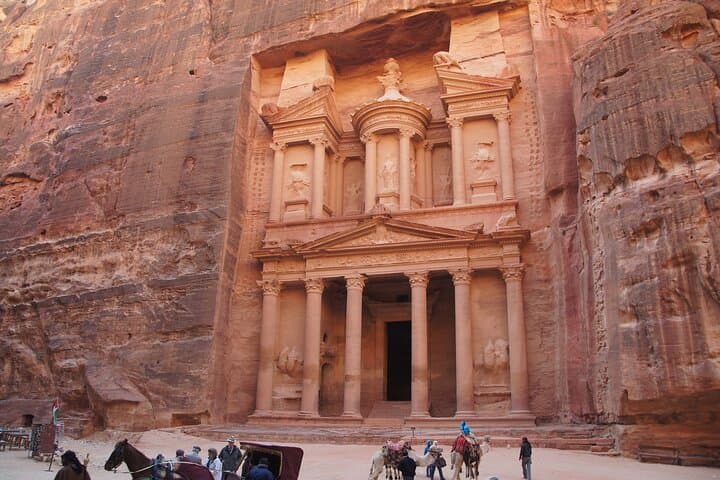
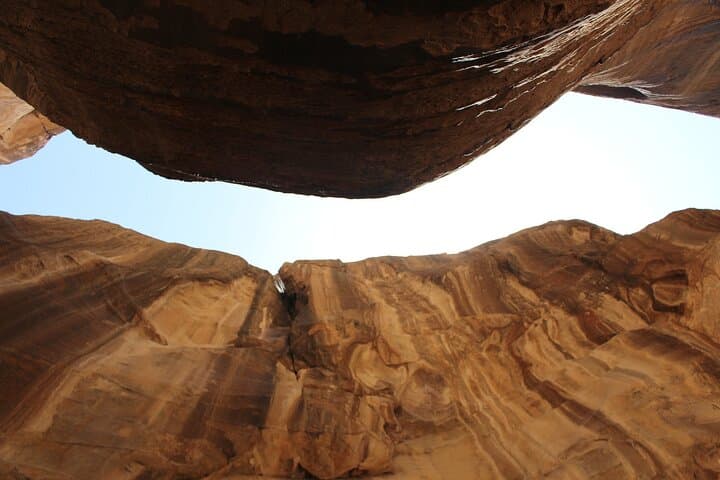
You step from the plane into Eilat’s thin desert air, and the world narrows to rock and road—Ramon Airport’s runway pointing the way to a landscape that has long pushed travelers inland. The drive to Petra traces ridgelines and salt-flat basins; the Siq itself nudges you onward, a narrow gorge that opens suddenly onto the rose-red façade of the Treasury.
You step from the plane into Eilat’s thin desert air, and the world narrows to rock and road—Ramon Airport’s runway pointing the way to a landscape that has long pushed travelers inland. The drive to Petra traces ridgelines and salt-flat basins; the Siq itself nudges you onward, a narrow gorge that opens suddenly onto the rose-red façade of the Treasury.
Petra was the Nabataean capital and a hub on ancient incense and caravan routes; its carved tombs and theaters are cut from sandstone whose layers record millions of years of shifting seas and tectonic lift. Local Bedouin still run stalls and offer horses, and small villages like Wadi Musa grew where water and trade intersected. The Monastery (Al Dayr) and the High Place of Sacrifice reveal how the landscape shaped ritual and defense—routes climb where stone offered vantage and shelter.
Practically, this tour compresses border formalities, a short domestic flight to Eilat, and an overnight in a hotel adjacent to the archaeological park to give you two full days inside Petra. Expect uneven paths, stone steps hewn by generations, and midday heat in summer; mornings and late afternoons are best for photos and quieter sections of the site. Carry cash for visa and border fees, keep passport pages accessible, wear sturdy shoes with good traction, and plan for at least a full day of walking to reach the Monastery.
Petra rewards patience: move slowly, follow the worn grooves where chariots once passed, and leave room to listen—the wind still tells the canyon’s history.