THE ADVENTURE COLLECTIVE® · Independent discovery and booking for outdoor travel

Spend two days moving from Petra’s carved canyons to the red sands of Wadi Rum on a private guided tour. This efficient itinerary pairs sunrise and sunset photography with Bedouin camp culture and air-conditioned transfers—ideal for travelers who want depth without complicated logistics.
Spend two days moving from Petra’s carved canyons to the red sands of Wadi Rum on a private guided tour. This efficient itinerary pairs sunrise and sunset photography with Bedouin camp culture and air-conditioned transfers—ideal for travelers who want depth without complicated logistics.
You arrive before the crowds and step into a canyon that has been shaping travelers for two millennia. The Siq narrows, the light slants across banded sandstone, and the Treasury appears—an impossibly carved façade that reads like a city-sized memory. Over the next 48 hours you move between two of Jordan’s most elemental places: Petra, where human ambition and geology meet, and Wadi Rum, where wind has been the sculptor.
Verified experiences and guided adventures in the surrounding area.
Operated by Tour Experts · Wadi Musa, Ma'an Governorate
You arrive before the crowds and step into a canyon that has been shaping travelers for two millennia. The Siq narrows, the light slants across banded sandstone, and the Treasury appears—an impossibly carved façade that reads like a city-sized memory. Over the next 48 hours you move between two of Jordan’s most elemental places: Petra, where human ambition and geology meet, and Wadi Rum, where wind has been the sculptor.
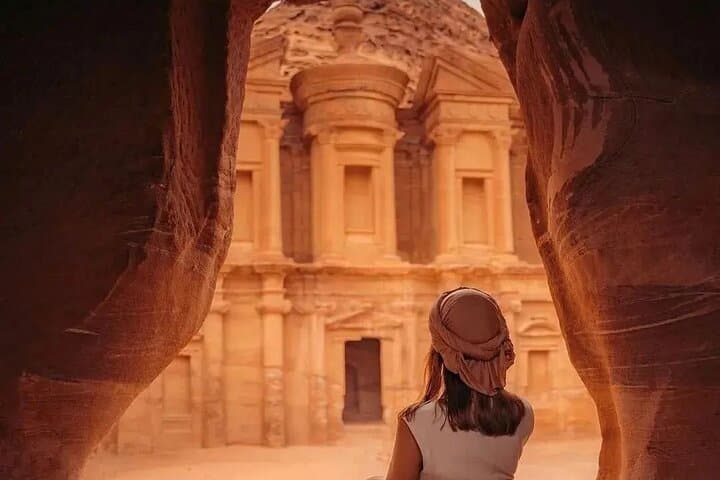
Petra was the capital of the Nabataeans, an oasis of trade carved into rose-colored cliffs. Its water channels and façades reveal a civilization that tamed stone and scarcity; Swiss explorer Johann Ludwig Burckhardt reintroduced the site to Europe in 1812. A few hours’ drive away, Wadi Rum is older in a different sense—an expanse of granite and sandstone shaped by eons of desert weather, where Bedouin camps cluster beneath star-heavy skies and Lawrence of Arabia’s name still surfaces in guidebook lore.
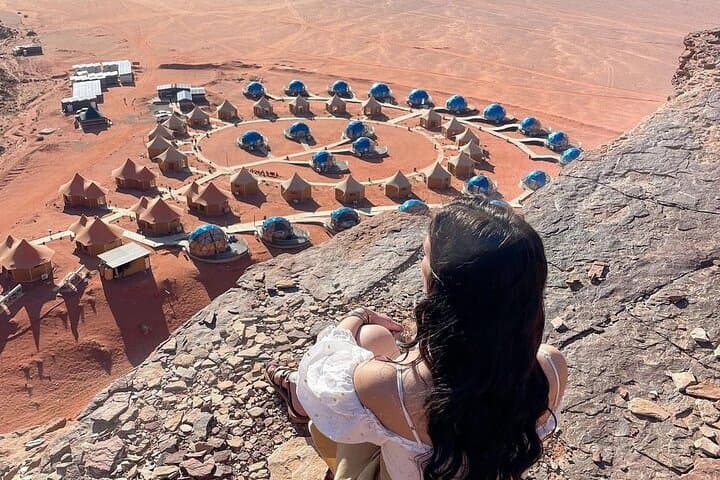
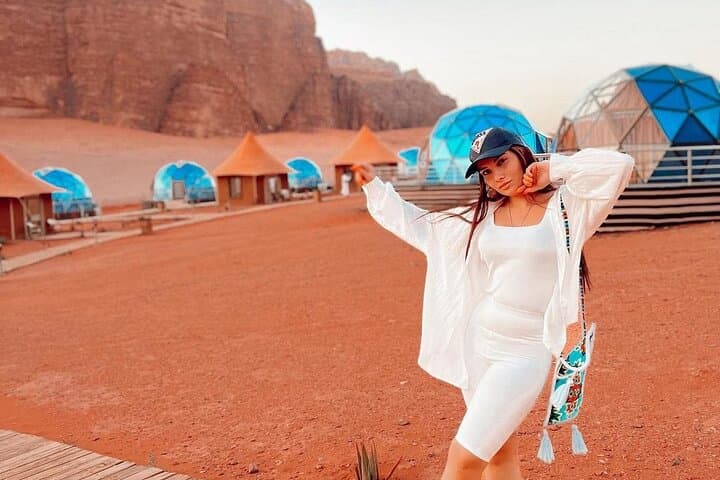
The tour’s rhythm is straightforward: a private, air-conditioned transfer from the Dead Sea or Amman, a guided walk through the Siq into Petra, and an afternoon transfer to Wadi Rum where you spend the night in a desert camp. Expect walking on uneven stone, stair climbs at Petra, and bumpy jeep tracks across Rum’s red sand. The camp options here range from basic Bedouin-style tents to “luxury martian”—comfortable, stargazing-ready sleeping pods that give you shelter without erasing the desert’s rawness.
Culture and logistics intertwine. In Petra, local guides explain Nabataean water engineering and funerary architecture; in Wadi Rum, drivers and guides—almost always Bedouin—share stories of spring grazing, camel travel, and how the desert marks time. Respect is practical: modest dress in Petra and when visiting villages, and a willingness to remove shoes in some sacred spots.
Practically, the tour is an efficient way to combine two big sights without juggling transport or logistics. Bring good walking shoes, sun protection, and a daypack for water and camera gear. If you want quieter photos, plan early starts at Petra and golden-hour outings in Wadi Rum. Weather swings by season—hot days, cool desert nights—so layers matter.
This two-day loop gives you the feel of Jordan’s geology and history in concentrated form: carved façades, hidden water channels, and an ocean of sand where the sky seems to move faster than the earth. It’s not just sightseeing; it’s a short, intense immersion that leaves you with the particular hush of desert night and the echo of steps on sandstone.
moderate.
2 days.
Moderate fitness for sustained walking on uneven terrain and short climbs; basic stamina for long days of sightseeing.
Entrance fees are not included; you will typically purchase the Petra ticket on arrival and any Wadi Rum entry or permit as required by your guide.
Yes, pickup from the Dead Sea area or central Amman hotels is offered—confirm your pickup point when booking.
Options range from traditional Bedouin tents to luxury martian-style tents; the booking lists the camp level you selected for your overnight.
The itinerary is accessible to most ages, but it involves long walking days; the provider notes it is suitable for all physical fitness levels and has accessible transport options.
Tipping is customary; a modest tip for guides, drivers, and camp staff is appreciated and supports local livelihoods.
Expect several kilometers on uneven stone, including stairs and inclines—plan for 3–4 hours of on-foot exploration depending on your pace.
Petra was the Nabataean kingdom’s capital and a pivotal trade hub that controlled incense and spice routes; Wadi Rum has been inhabited since prehistoric times and later became associated with the Arab Revolt and T. E. Lawrence.
Both sites use tourism revenue to support conservation and local communities; visitors can minimize impact by staying on paths, avoiding climbing on ruins, and using local guides.
Tour Experts operates guided outdoor trips and adventures with an emphasis on safety, stewardship, and memorable experiences.
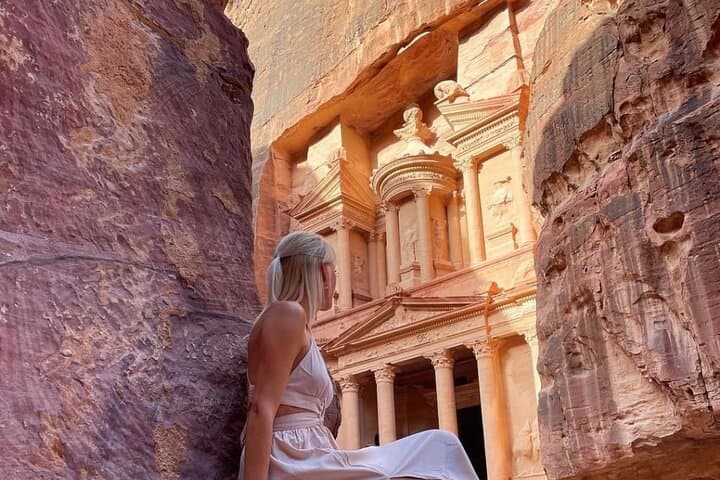
You arrive before the crowds and step into a canyon that has been shaping travelers for two millennia. The Siq narrows, the light slants across banded sandstone, and the Treasury appears—an impossibly carved façade that reads like a city-sized memory. Over the next 48 hours you move between two of Jordan’s most elemental places: Petra, where human ambition and geology meet, and Wadi Rum, where wind has been the sculptor.
You arrive before the crowds and step into a canyon that has been shaping travelers for two millennia. The Siq narrows, the light slants across banded sandstone, and the Treasury appears—an impossibly carved façade that reads like a city-sized memory. Over the next 48 hours you move between two of Jordan’s most elemental places: Petra, where human ambition and geology meet, and Wadi Rum, where wind has been the sculptor.
Petra was the capital of the Nabataeans, an oasis of trade carved into rose-colored cliffs. Its water channels and façades reveal a civilization that tamed stone and scarcity; Swiss explorer Johann Ludwig Burckhardt reintroduced the site to Europe in 1812. A few hours’ drive away, Wadi Rum is older in a different sense—an expanse of granite and sandstone shaped by eons of desert weather, where Bedouin camps cluster beneath star-heavy skies and Lawrence of Arabia’s name still surfaces in guidebook lore.
The tour’s rhythm is straightforward: a private, air-conditioned transfer from the Dead Sea or Amman, a guided walk through the Siq into Petra, and an afternoon transfer to Wadi Rum where you spend the night in a desert camp. Expect walking on uneven stone, stair climbs at Petra, and bumpy jeep tracks across Rum’s red sand. The camp options here range from basic Bedouin-style tents to “luxury martian”—comfortable, stargazing-ready sleeping pods that give you shelter without erasing the desert’s rawness.
Culture and logistics intertwine. In Petra, local guides explain Nabataean water engineering and funerary architecture; in Wadi Rum, drivers and guides—almost always Bedouin—share stories of spring grazing, camel travel, and how the desert marks time. Respect is practical: modest dress in Petra and when visiting villages, and a willingness to remove shoes in some sacred spots.
Practically, the tour is an efficient way to combine two big sights without juggling transport or logistics. Bring good walking shoes, sun protection, and a daypack for water and camera gear. If you want quieter photos, plan early starts at Petra and golden-hour outings in Wadi Rum. Weather swings by season—hot days, cool desert nights—so layers matter.
This two-day loop gives you the feel of Jordan’s geology and history in concentrated form: carved façades, hidden water channels, and an ocean of sand where the sky seems to move faster than the earth. It’s not just sightseeing; it’s a short, intense immersion that leaves you with the particular hush of desert night and the echo of steps on sandstone.