THE ADVENTURE COLLECTIVE® · Independent discovery and booking for outdoor travel

Walk the marble avenues of Ephesus and wade the chalk terraces of Pamukkale on a focused two-day private tour from Kusadasi. Expect archaeological highlights, thermal springs, and practical tips for timing, footwear, and photography.
Walk the marble avenues of Ephesus and wade the chalk terraces of Pamukkale on a focused two-day private tour from Kusadasi. Expect archaeological highlights, thermal springs, and practical tips for timing, footwear, and photography.
You arrive under a high Anatolian sky, stepping from an air-conditioned vehicle onto the worn marble of Ephesus as gulls wheel above the ancient port ruins. The stone streets slope past the Library of Celsus and open into sunlit colonnades; later, steam-softened pools and chalk-white terraces at Pamukkale wait, their thermal waters daring you to trace the water’s slow, mineral-made handwriting.
Verified experiences and guided adventures in the surrounding area.
Operated by High Hill Travel · Kusadasi, Aydın Province
You arrive under a high Anatolian sky, stepping from an air-conditioned vehicle onto the worn marble of Ephesus as gulls wheel above the ancient port ruins. The stone streets slope past the Library of Celsus and open into sunlit colonnades; later, steam-softened pools and chalk-white terraces at Pamukkale wait, their thermal waters daring you to trace the water’s slow, mineral-made handwriting.
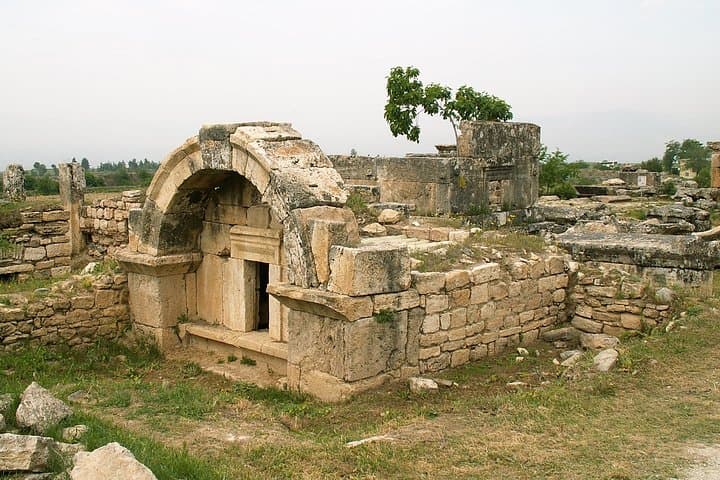
Ephesus and Hierapolis sit at the crossroads of Hellenistic, Roman and early Christian history: the Temple of Artemis once ranked among the Seven Wonders, the theater echoed sermons and civic life, and the archaeological layers reveal centuries of shifting empires. Pamukkale’s travertine terraces form where calcium-rich hot springs cooled and deposited white terraces over millennia—geology visible at walking pace.
Expect mixed terrain: cobbled streets and archaeological paths in Ephesus, then uneven stone steps and slippery wet surfaces on the travertines. Cultural rhythm matters—shops and small markets in nearby Selçuk and Kusadasi reflect modern Aegean life and offer local olive oil and textiles.
Practical guidance: start early to avoid midday heat and crowds; bring sturdy walking shoes and a hat, and carry cash for small purchases and optional entrance fees. Wear a swimsuit if you plan to enter the restored pool at Cleopatra’s Pool; bring a towel and water-resistant sandals for the travertines where shoes are removed. The tour’s private transport covers distances between sites, but be prepared for several hours on foot each day and limited downtime between stops.
easy.
2 days (roughly 8–10 hours total walking combined).
Suitable for most fitness levels but requires comfortable walking for several hours and negotiating steps and uneven surfaces.
This depends on the booking; many private tours require visitors to pay site entrance fees separately—confirm at booking.
Yes—Cleopatra’s Pool (a restored ancient pool) allows bathing for a fee; bring swimwear and a towel and check water temperature seasonally.
Some transport and parts of the tour offer accessibility, but archaeological sites have uneven terrain and steps; check accessibility details in advance if mobility is limited.
Ephesus is about 20–30 minutes from central Kusadasi; Pamukkale is roughly a 3–3.5 hour drive east from Kusadasi, covered by the tour’s private vehicle.
Ephesus flourished under Roman rule as a major port and religious center; Hierapolis rose as a thermal cult city and later a Roman spa town.
The travertines are sensitive—visitors must follow rules about footwear and walking routes to prevent erosion and calcium-destabilizing contaminants.
High Hill Travel operates guided outdoor trips and adventures with an emphasis on safety, stewardship, and memorable experiences.
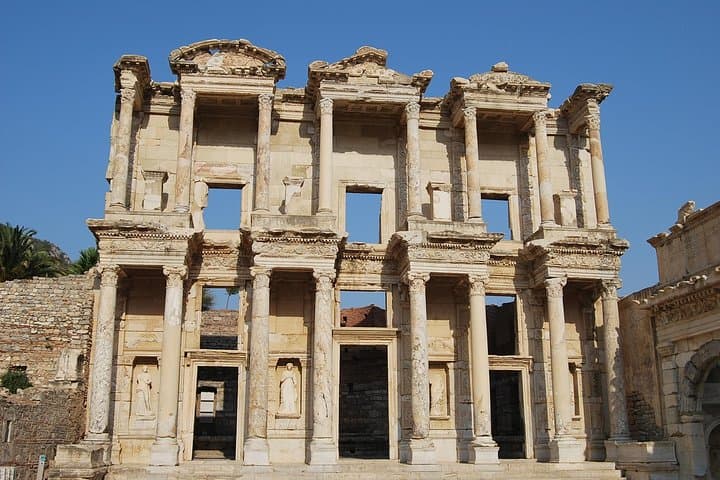
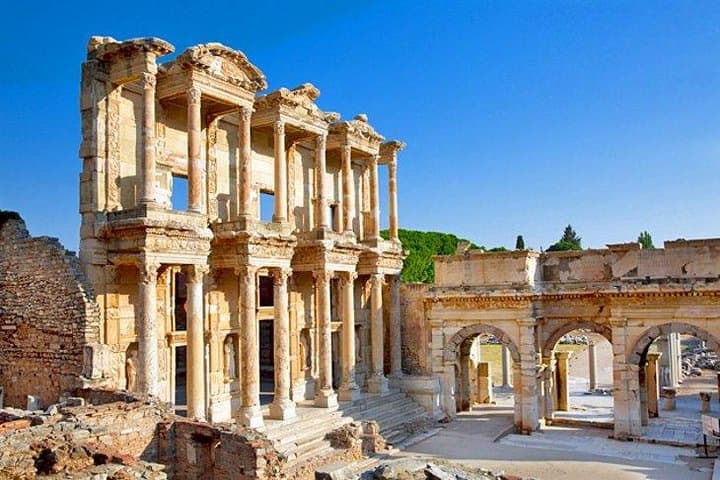
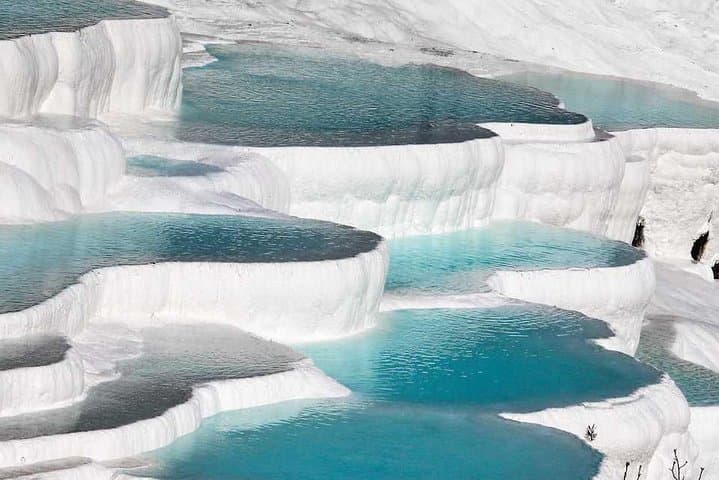
You arrive under a high Anatolian sky, stepping from an air-conditioned vehicle onto the worn marble of Ephesus as gulls wheel above the ancient port ruins. The stone streets slope past the Library of Celsus and open into sunlit colonnades; later, steam-softened pools and chalk-white terraces at Pamukkale wait, their thermal waters daring you to trace the water’s slow, mineral-made handwriting.
You arrive under a high Anatolian sky, stepping from an air-conditioned vehicle onto the worn marble of Ephesus as gulls wheel above the ancient port ruins. The stone streets slope past the Library of Celsus and open into sunlit colonnades; later, steam-softened pools and chalk-white terraces at Pamukkale wait, their thermal waters daring you to trace the water’s slow, mineral-made handwriting.
Ephesus and Hierapolis sit at the crossroads of Hellenistic, Roman and early Christian history: the Temple of Artemis once ranked among the Seven Wonders, the theater echoed sermons and civic life, and the archaeological layers reveal centuries of shifting empires. Pamukkale’s travertine terraces form where calcium-rich hot springs cooled and deposited white terraces over millennia—geology visible at walking pace.
Expect mixed terrain: cobbled streets and archaeological paths in Ephesus, then uneven stone steps and slippery wet surfaces on the travertines. Cultural rhythm matters—shops and small markets in nearby Selçuk and Kusadasi reflect modern Aegean life and offer local olive oil and textiles.
Practical guidance: start early to avoid midday heat and crowds; bring sturdy walking shoes and a hat, and carry cash for small purchases and optional entrance fees. Wear a swimsuit if you plan to enter the restored pool at Cleopatra’s Pool; bring a towel and water-resistant sandals for the travertines where shoes are removed. The tour’s private transport covers distances between sites, but be prepared for several hours on foot each day and limited downtime between stops.