THE ADVENTURE COLLECTIVE® · Independent discovery and booking for outdoor travel

Spend two days in Ol Pejeta Conservancy tracking rhinos, watching lions at dusk and taking a rare night game drive beneath the shadow of Mount Kenya. This concise guide outlines what to expect, how to prepare and where to focus your time for the best wildlife viewing.
Spend two days in Ol Pejeta Conservancy tracking rhinos, watching lions at dusk and taking a rare night game drive beneath the shadow of Mount Kenya. This concise guide outlines what to expect, how to prepare and where to focus your time for the best wildlife viewing.
Dawn breaks cool and thin at the foot of Mount Kenya, and the conservancy wakes with a low, deliberate energy: buffaloes moving through grass, and a lone bull elephant threading between acacia shadows. Ol Pejeta sits on the northern flank of Kenya’s central highlands—open savanna, riverine corridors and patches of indigenous forest—at roughly 1,600–2,100 m above sea level. The land’s volcanic soils and erosion-sculpted ridgelines shape the rolling plains that funnel wildlife toward the Ewaso Nyiro tributaries.
Verified experiences and guided adventures in the surrounding area.
Dawn breaks cool and thin at the foot of Mount Kenya, and the conservancy wakes with a low, deliberate energy: buffaloes moving through grass, and a lone bull elephant threading between acacia shadows. Ol Pejeta sits on the northern flank of Kenya’s central highlands—open savanna, riverine corridors and patches of indigenous forest—at roughly 1,600–2,100 m above sea level. The land’s volcanic soils and erosion-sculpted ridgelines shape the rolling plains that funnel wildlife toward the Ewaso Nyiro tributaries.
Ol Pejeta started as private ranchland and has evolved into one of East Africa’s leading rhino sanctuaries; it now safeguards both black and white rhinos and supports community conservancies around Laikipia. The conservancy’s geology explains the views—ancient volcanic terraces and alluvial flats give way to the taller profile of Mount Kenya to the south. Local pastoral culture remains visible: herders and shrubs marked by fencing, livestock grazing along conservancy edges.
On a two-day safari expect guided game drives across roughly 360 km² of conservancy, early-morning and late-afternoon windows for predator activity, and a standout night game drive that reveals nocturnal life with spotlights and quiet observation. Terrain is mostly tracked dirt roads—low clearance vehicles are fine, but expect dust and occasional ruts after rain.
Practical pointers: pack warm layers for cold mornings, a good pair of binoculars, insect repellent, and a headlamp for night drives. Hydrate at altitude, keep cameras and batteries handy, and follow rangers’ briefings—close encounters with big game demand calm, deliberate movement. This two-day loop balances rich wildlife sightings with the highland light and the shadow of Mount Kenya overhead.
easy.
2 days (approx. 48 hours with guided drives totaling 6–10 hours).
Comfortable with periods of sitting in a vehicle and short walks; no special fitness required
Ol Pejeta is roughly a 3–4 hour drive from Nairobi (about 200–230 km) depending on traffic and your route via Nanyuki.
Ol Pejeta is one of Kenya’s top rhino sanctuaries; guided drives have a high likelihood of rhino sightings, though wildlife can never be guaranteed.
Night drives are conducted by experienced rangers with spotlights and strict safety protocols; follow instructions and remain inside the vehicle unless told otherwise.
Malaria risk is generally lower at Ol Pejeta’s higher elevation, but you should consult a travel health clinic for personalized advice before travel.
Ol Pejeta evolved from private ranches into a conservation-led sanctuary that now protects endangered species while supporting Laikipia communities.
The conservancy operates anti-poaching units and community revenue-sharing programs; visitors help by following park rules and minimizing waste.
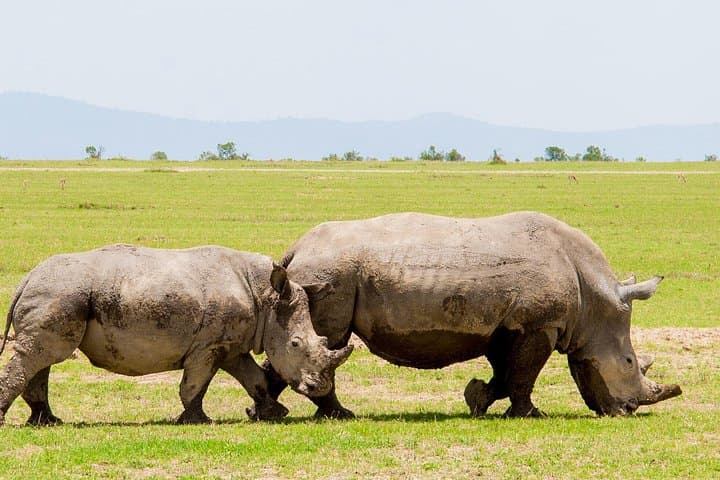
Dawn breaks cool and thin at the foot of Mount Kenya, and the conservancy wakes with a low, deliberate energy: buffaloes moving through grass, and a lone bull elephant threading between acacia shadows. Ol Pejeta sits on the northern flank of Kenya’s central highlands—open savanna, riverine corridors and patches of indigenous forest—at roughly 1,600–2,100 m above sea level. The land’s volcanic soils and erosion-sculpted ridgelines shape the rolling plains that funnel wildlife toward the Ewaso Nyiro tributaries.
Dawn breaks cool and thin at the foot of Mount Kenya, and the conservancy wakes with a low, deliberate energy: buffaloes moving through grass, and a lone bull elephant threading between acacia shadows. Ol Pejeta sits on the northern flank of Kenya’s central highlands—open savanna, riverine corridors and patches of indigenous forest—at roughly 1,600–2,100 m above sea level. The land’s volcanic soils and erosion-sculpted ridgelines shape the rolling plains that funnel wildlife toward the Ewaso Nyiro tributaries.
Ol Pejeta started as private ranchland and has evolved into one of East Africa’s leading rhino sanctuaries; it now safeguards both black and white rhinos and supports community conservancies around Laikipia. The conservancy’s geology explains the views—ancient volcanic terraces and alluvial flats give way to the taller profile of Mount Kenya to the south. Local pastoral culture remains visible: herders and shrubs marked by fencing, livestock grazing along conservancy edges.
On a two-day safari expect guided game drives across roughly 360 km² of conservancy, early-morning and late-afternoon windows for predator activity, and a standout night game drive that reveals nocturnal life with spotlights and quiet observation. Terrain is mostly tracked dirt roads—low clearance vehicles are fine, but expect dust and occasional ruts after rain.
Practical pointers: pack warm layers for cold mornings, a good pair of binoculars, insect repellent, and a headlamp for night drives. Hydrate at altitude, keep cameras and batteries handy, and follow rangers’ briefings—close encounters with big game demand calm, deliberate movement. This two-day loop balances rich wildlife sightings with the highland light and the shadow of Mount Kenya overhead.