THE ADVENTURE COLLECTIVE® · Independent discovery and booking for outdoor travel

A compact two-day trip that pairs boat rides through limestone caves with a steep viewpoint climb at Mua Cave and a visit to Hoa Lư, Vietnam’s first imperial capital. Ideal for travelers who want varied terrain—cycling, hiking, and easy paddled river time—without rough camping.
A compact two-day trip that pairs boat rides through limestone caves with a steep viewpoint climb at Mua Cave and a visit to Hoa Lư, Vietnam’s first imperial capital. Ideal for travelers who want varied terrain—cycling, hiking, and easy paddled river time—without rough camping.
The morning light carves the limestone ribs of Tam Coc into sharp silhouettes as a small group slips away from Hanoi and into a landscape that feels older than time. Rice fields flatten to the horizon; the Ngo Dong river threads between karst towers while sampan oars tap a steady, encouraging rhythm. By late morning the party is on foot, climbing the stepped approach to Mua Cave for a vantage that lays the valley open like a folded map.
Verified experiences and guided adventures in the surrounding area.
Operated by Local Tours ASIA · Ninh Binh, Ninh Binh Province
The morning light carves the limestone ribs of Tam Coc into sharp silhouettes as a small group slips away from Hanoi and into a landscape that feels older than time. Rice fields flatten to the horizon; the Ngo Dong river threads between karst towers while sampan oars tap a steady, encouraging rhythm. By late morning the party is on foot, climbing the stepped approach to Mua Cave for a vantage that lays the valley open like a folded map.
This route moves through history and geology at once. Hoa Lư was Vietnam’s first imperial capital in the 10th–11th centuries, and its compact temples sit amid eroded limestone formed over millions of years. Culturally the area remains agricultural—VAC farming (garden-pond-cage), local markets and village homestays give a clear window into rural life.
Over two days travelers alternate easy hikes, flat country cycling (5–12 km loops on dirt and paved lanes), and calm boat trips through caves and mangrove-edged channels. Thung Nham bird garden adds a wildlife angle: mornings and late afternoons are best for bird activity when egrets and kingfishers take the stage.
Practical guidance: expect 15–30 minutes of steep stone steps at Hang Múa with uneven footing; bring closed shoes, a light rain shell in monsoon months, and a refillable water bottle. Pickup in Hanoi’s Old Quarter is included, and the itinerary covers one night in a bungalow or simple hotel. Aim for early starts to avoid heat and maximize light for photography, and carry small local currency for market purchases and tips.
moderate.
2 days (approx. 48 hours).
Moderate — suitable for travelers comfortable with short steep climbs, 30–90 minutes of walking at a time, and light cycling over 5–12 km on mixed surfaces.
Yes — pickup and drop-off within Hanoi’s Old Quarter are included in the program.
The climb is steep with many stone steps and uneven sections; expect a 15–30 minute ascent at a steady pace.
Sampan boat rides are operated by local rowers; they are calm and suitable for non-swimmers but life vests may not always be provided—ask the operator if you need one.
The tour includes meals—inform the operator at booking about vegetarian, halal, or allergy requirements to allow the guide to arrange appropriate options.
Hoa Lư served as Vietnam’s capital during the 10th–11th centuries under the Dinh and early Le dynasties; compact temple complexes commemorate those rulers.
Tourism pressure rises seasonally—stick to marked paths, avoid single-use plastics, and support local guides and homestays to keep economic benefits local.
Local Tours ASIA operates guided outdoor trips and adventures with an emphasis on safety, stewardship, and memorable experiences.

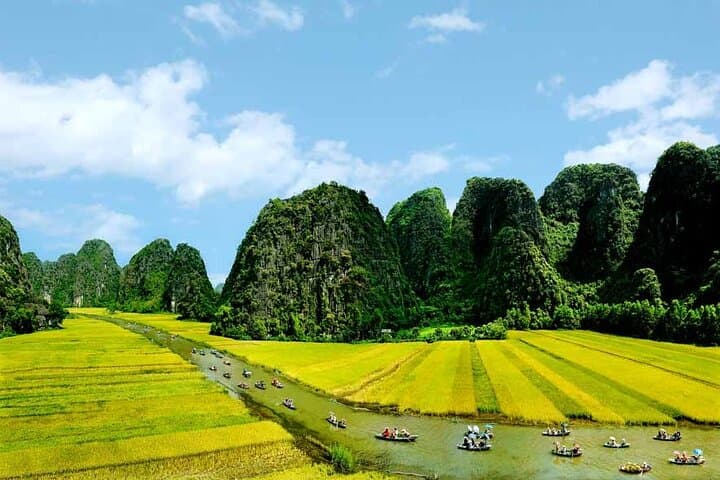
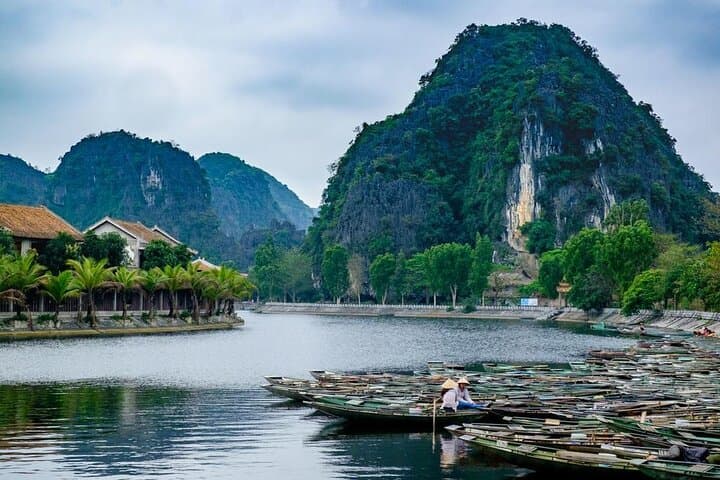

The morning light carves the limestone ribs of Tam Coc into sharp silhouettes as a small group slips away from Hanoi and into a landscape that feels older than time. Rice fields flatten to the horizon; the Ngo Dong river threads between karst towers while sampan oars tap a steady, encouraging rhythm. By late morning the party is on foot, climbing the stepped approach to Mua Cave for a vantage that lays the valley open like a folded map.
The morning light carves the limestone ribs of Tam Coc into sharp silhouettes as a small group slips away from Hanoi and into a landscape that feels older than time. Rice fields flatten to the horizon; the Ngo Dong river threads between karst towers while sampan oars tap a steady, encouraging rhythm. By late morning the party is on foot, climbing the stepped approach to Mua Cave for a vantage that lays the valley open like a folded map.
This route moves through history and geology at once. Hoa Lư was Vietnam’s first imperial capital in the 10th–11th centuries, and its compact temples sit amid eroded limestone formed over millions of years. Culturally the area remains agricultural—VAC farming (garden-pond-cage), local markets and village homestays give a clear window into rural life.
Over two days travelers alternate easy hikes, flat country cycling (5–12 km loops on dirt and paved lanes), and calm boat trips through caves and mangrove-edged channels. Thung Nham bird garden adds a wildlife angle: mornings and late afternoons are best for bird activity when egrets and kingfishers take the stage.
Practical guidance: expect 15–30 minutes of steep stone steps at Hang Múa with uneven footing; bring closed shoes, a light rain shell in monsoon months, and a refillable water bottle. Pickup in Hanoi’s Old Quarter is included, and the itinerary covers one night in a bungalow or simple hotel. Aim for early starts to avoid heat and maximize light for photography, and carry small local currency for market purchases and tips.