THE ADVENTURE COLLECTIVE® · Independent discovery and booking for outdoor travel

A compact two-day trek from Marrakech to the summit of Jebel Toubkal (≈4,167 m) that pairs high-mountain scenery with Berber village culture. Expect steep rocky trails, an overnight at the Neltner refuge, and an early predawn summit push.
A compact two-day trek from Marrakech to the summit of Jebel Toubkal (≈4,167 m) that pairs high-mountain scenery with Berber village culture. Expect steep rocky trails, an overnight at the Neltner refuge, and an early predawn summit push.
Morning light strips across the Atlas ridgelines as your minivan drops you in Imlil and the air cools with altitude. You push off through stone-paved lanes, past stacked flat-roofed Berber houses, and begin the pull up toward the Neltner refuge—your base for a predawn summit bid. The second-day climb starts in the dark; headlamps pick out rocky ledges and loose scree while the sky hardens into an Iberian-blue sunrise over the High Atlas.
Verified experiences and guided adventures in the surrounding area.
Operated by EASYGO TOURS · Imlil, Marrakech-Safi
Morning light strips across the Atlas ridgelines as your minivan drops you in Imlil and the air cools with altitude. You push off through stone-paved lanes, past stacked flat-roofed Berber houses, and begin the pull up toward the Neltner refuge—your base for a predawn summit bid. The second-day climb starts in the dark; headlamps pick out rocky ledges and loose scree while the sky hardens into an Iberian-blue sunrise over the High Atlas.
Geology here is granite and metamorphic rock carved by glaciation in the last ice age, giving the range its steep flanks and coarse scree fields. The human story is close at hand: Berber shepherding communities, seasonal shrine sites such as Sidi Chamharouch, and mule tracks that still move supplies to remote refuges. Local guides blend mountaineering know-how with cultural context—expect stories of irrigation terraces and highland life between breathers.
Practically, the climb to Toubkal (≈4,167 m) is non-technical but strenuous: roughly 900–1,000 m of ascent from the refuge, with rocky and sometimes loose terrain. Plan for very early starts, firm boots, and layered clothing for a wide diurnal swing. Water and snacks are essential; mule support commonly carries overnight luggage so you move light.
Timing matters: aim for clear weather windows and allow time to acclimatize if you’ve been at sea level. Whether you’re here for the summit or the cultural passage through highland villages, the route delivers direct mountain travel—simple in equipment, demanding in stamina.
challenging.
2 days (approx. 48 hours).
Good aerobic fitness and prior day-hiking endurance; comfortable walking 6–8 hours on steep terrain.
Non-technical but demanding: expect steep hiking, up to ~1,000 m elevation gain from the refuge and several hours of sustained effort; good fitness is required.
No technical equipment is required in summer routes; crampons/ice axe may be necessary in winter or after fresh snow—your operator will advise seasonally.
Yes—at 4,167 m symptoms can appear; hydrate, ascend at a steady pace, and notify guides immediately if you feel unwell.
Most departures begin in Marrakech with transfers to Imlil; the route returns to Imlil and then drives back to Marrakech the same day after the descent.
Local Berber communities have used these passes and trails for centuries; the refuge system (Neltner refuge) dates to early 20th-century alpine efforts to open Toubkal to mountaineers.
The High Atlas faces erosion from overgrazing and increasing trekking pressure; stick to trails, carry out litter, and use local guides who support sustainable tourism.
EASYGO TOURS operates guided outdoor trips and adventures with an emphasis on safety, stewardship, and memorable experiences.
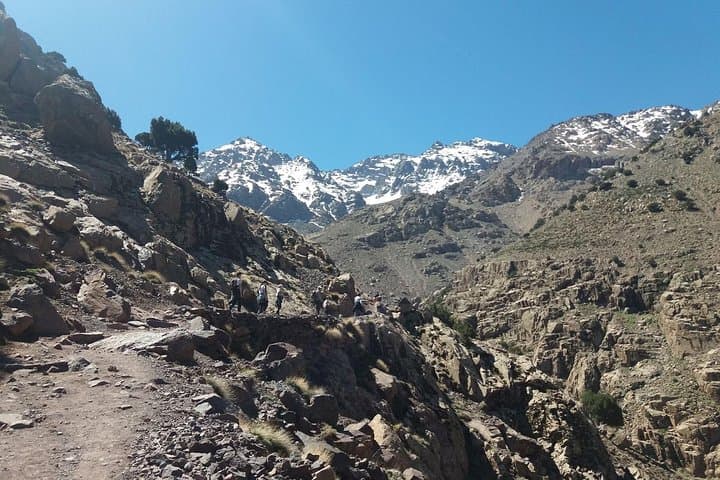
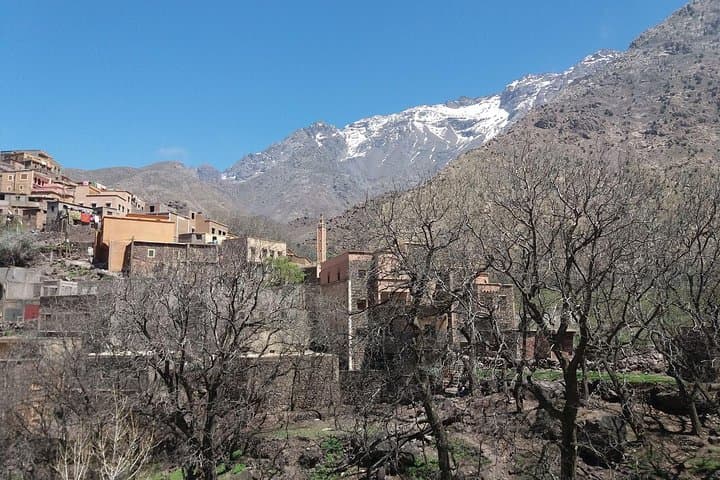
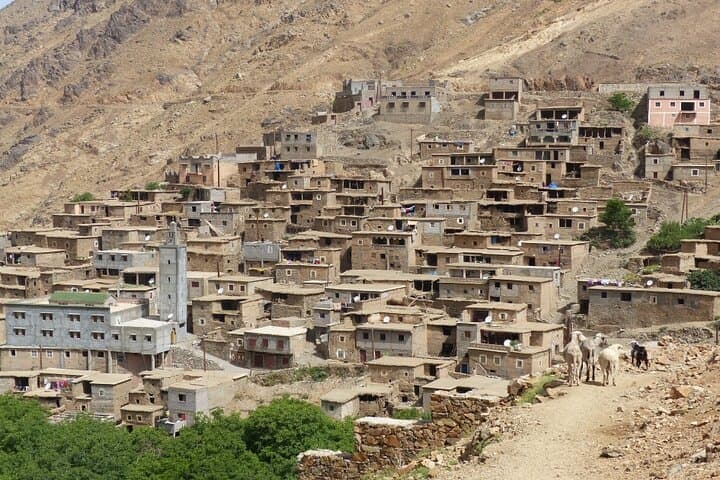
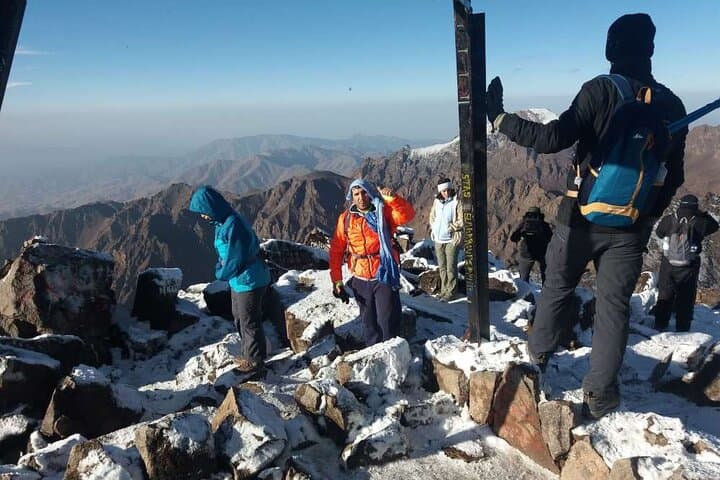
Morning light strips across the Atlas ridgelines as your minivan drops you in Imlil and the air cools with altitude. You push off through stone-paved lanes, past stacked flat-roofed Berber houses, and begin the pull up toward the Neltner refuge—your base for a predawn summit bid. The second-day climb starts in the dark; headlamps pick out rocky ledges and loose scree while the sky hardens into an Iberian-blue sunrise over the High Atlas.
Morning light strips across the Atlas ridgelines as your minivan drops you in Imlil and the air cools with altitude. You push off through stone-paved lanes, past stacked flat-roofed Berber houses, and begin the pull up toward the Neltner refuge—your base for a predawn summit bid. The second-day climb starts in the dark; headlamps pick out rocky ledges and loose scree while the sky hardens into an Iberian-blue sunrise over the High Atlas.
Geology here is granite and metamorphic rock carved by glaciation in the last ice age, giving the range its steep flanks and coarse scree fields. The human story is close at hand: Berber shepherding communities, seasonal shrine sites such as Sidi Chamharouch, and mule tracks that still move supplies to remote refuges. Local guides blend mountaineering know-how with cultural context—expect stories of irrigation terraces and highland life between breathers.
Practically, the climb to Toubkal (≈4,167 m) is non-technical but strenuous: roughly 900–1,000 m of ascent from the refuge, with rocky and sometimes loose terrain. Plan for very early starts, firm boots, and layered clothing for a wide diurnal swing. Water and snacks are essential; mule support commonly carries overnight luggage so you move light.
Timing matters: aim for clear weather windows and allow time to acclimatize if you’ve been at sea level. Whether you’re here for the summit or the cultural passage through highland villages, the route delivers direct mountain travel—simple in equipment, demanding in stamina.