THE ADVENTURE COLLECTIVE® · Independent discovery and booking for outdoor travel

Two days from Marrakech takes you to the roof of North Africa: a challenging but non-technical trek to Mount Toubkal (4,167 m) with one night at the Neltner hut and a pre-dawn summit push. Expect steep scree, strong views, and a dose of Berber mountain culture.
Two days from Marrakech takes you to the roof of North Africa: a challenging but non-technical trek to Mount Toubkal (4,167 m) with one night at the Neltner hut and a pre-dawn summit push. Expect steep scree, strong views, and a dose of Berber mountain culture.
Dawn over the High Atlas slices cool light down a dusty road as the minibus peels away from Marrakech and the city’s heat gives way to shale and stone. By midday the trail narrows into mule tracks, terraces of barley and prickly pear slipping off to the ravine below. You camp one night at the Neltner hut, a stone refuge where wind and stars argue, then set off before dawn for the 4,167 m summit — the peak that commands North Africa.
Verified experiences and guided adventures in the surrounding area.
Operated by Adrar Trips From Marrakech · Imlil, Marrakesh-Safi
Dawn over the High Atlas slices cool light down a dusty road as the minibus peels away from Marrakech and the city’s heat gives way to shale and stone. By midday the trail narrows into mule tracks, terraces of barley and prickly pear slipping off to the ravine below. You camp one night at the Neltner hut, a stone refuge where wind and stars argue, then set off before dawn for the 4,167 m summit — the peak that commands North Africa.
The mountain sits on ancient volcanic and metamorphic foundations carved by glacial action in cooler epochs; Berber villages like Imlil have worked these slopes for centuries, their culture threaded through the terraces, water channels and communal paths. Guides here are usually local Berbers; their knowledge of the route, weather and rock is part map and part oral history.
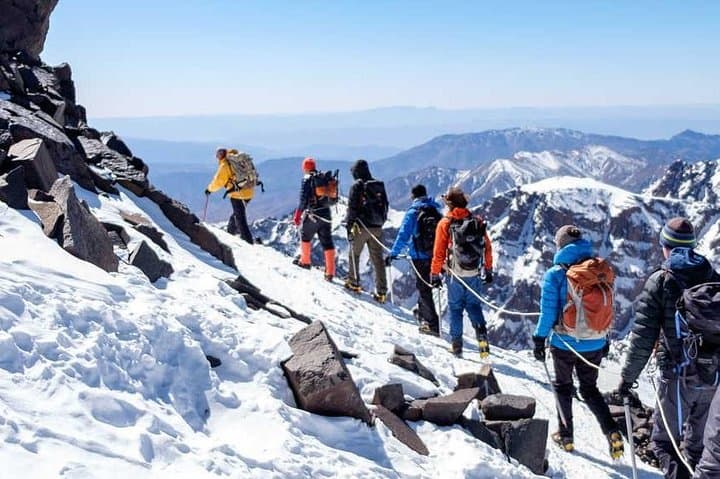
Expect steep scree, exposed ridgelines and thin air on summit morning — altitude is the main challenge rather than technical climbing. On a clear day the summit panorama pushes your view across the Atlas ranges to distant plains and the Atlantic haze.
Practical guidance: arrive with sturdy boots and a layered system for big temperature swings, sleep early before the summit push, and pace your ascent to limit altitude effects. Hydrate steadily — aim for small sips rather than large gulps. If weather turns, the refuge provides a reliable bail-out; turnarounds are common and sensible. With two days you’ll experience both local mountain life and the raw reward of a high alpine summit without technical gear.
challenging.
2 days (approx. 12–14 hours hiking total).
Good cardiovascular fitness and prior multi-day hiking experience recommended; comfortable with sustained uphill hiking.
No — the standard route to Toubkal is a non-technical trek, though it is steep and requires fitness; crampons may be used in winter conditions.
Night temperatures at the Neltner hut can drop below freezing outside summer, and summit temperatures are often well below 0°C, with wind making conditions feel much colder.
Expect about 8–9 hours round-trip from the refuge including breaks; times vary widely with pace and weather.
Guides are strongly recommended for logistics, route-finding, and acclimatization advice; many operators include a local guide and mule support.
Mount Toubkal has long been significant to local Berber communities and was first recorded by European climbers in the 20th century; the High Atlas shaped trade and seasonal pastoralism for centuries.
Trails are vulnerable to erosion and litter; use local guides, avoid creating new paths, and carry out waste — water is limited in summer, so minimize consumption and use refill points sparingly.
Adrar Trips From Marrakech operates guided outdoor trips and adventures with an emphasis on safety, stewardship, and memorable experiences.

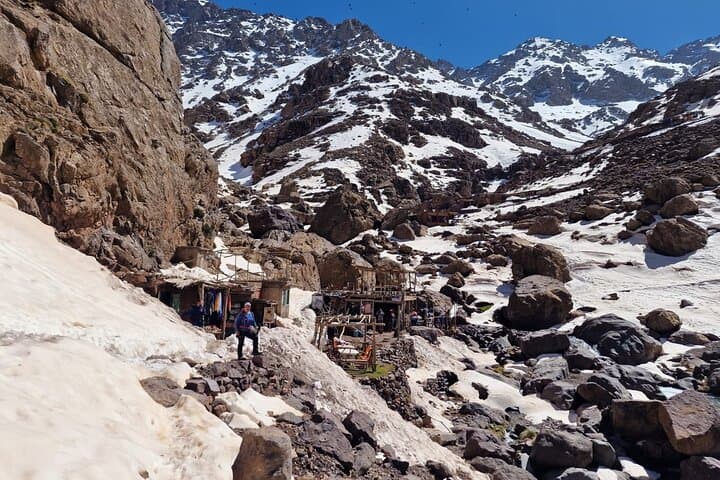
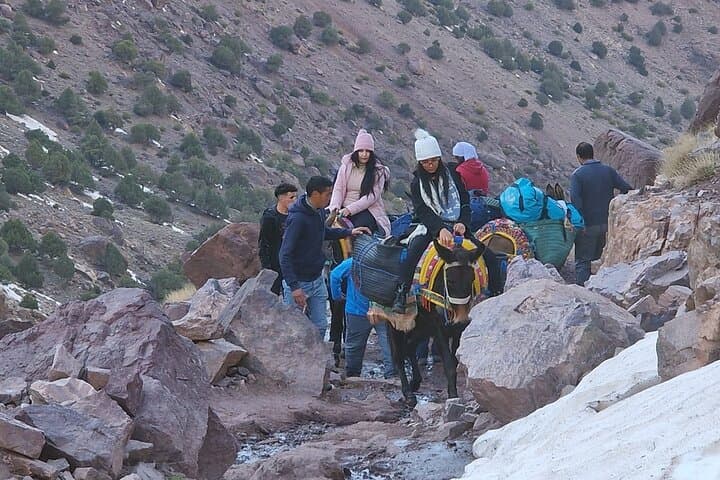
Dawn over the High Atlas slices cool light down a dusty road as the minibus peels away from Marrakech and the city’s heat gives way to shale and stone. By midday the trail narrows into mule tracks, terraces of barley and prickly pear slipping off to the ravine below. You camp one night at the Neltner hut, a stone refuge where wind and stars argue, then set off before dawn for the 4,167 m summit — the peak that commands North Africa.
Dawn over the High Atlas slices cool light down a dusty road as the minibus peels away from Marrakech and the city’s heat gives way to shale and stone. By midday the trail narrows into mule tracks, terraces of barley and prickly pear slipping off to the ravine below. You camp one night at the Neltner hut, a stone refuge where wind and stars argue, then set off before dawn for the 4,167 m summit — the peak that commands North Africa.
The mountain sits on ancient volcanic and metamorphic foundations carved by glacial action in cooler epochs; Berber villages like Imlil have worked these slopes for centuries, their culture threaded through the terraces, water channels and communal paths. Guides here are usually local Berbers; their knowledge of the route, weather and rock is part map and part oral history.
Expect steep scree, exposed ridgelines and thin air on summit morning — altitude is the main challenge rather than technical climbing. On a clear day the summit panorama pushes your view across the Atlas ranges to distant plains and the Atlantic haze.
Practical guidance: arrive with sturdy boots and a layered system for big temperature swings, sleep early before the summit push, and pace your ascent to limit altitude effects. Hydrate steadily — aim for small sips rather than large gulps. If weather turns, the refuge provides a reliable bail-out; turnarounds are common and sensible. With two days you’ll experience both local mountain life and the raw reward of a high alpine summit without technical gear.