THE ADVENTURE COLLECTIVE® · Independent discovery and booking for outdoor travel

Summit North Africa’s highest peak in an intense 2-day trek from Marrakech. This express ascent pairs local guides and mule support with a refuge overnight and a pre-dawn push to 4,167 m.
Summit North Africa’s highest peak in an intense 2-day trek from Marrakech. This express ascent pairs local guides and mule support with a refuge overnight and a pre-dawn push to 4,167 m.
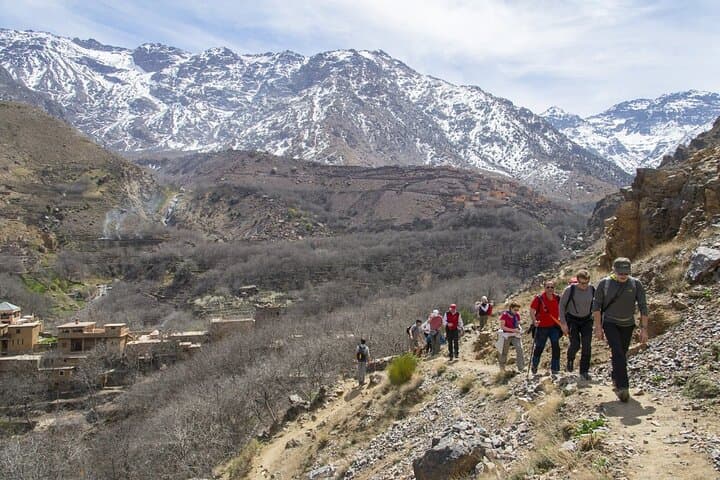
Dawn breaks across the Haouz plain and Marrakech recedes into a ribbon of ochre as the minibus climbs toward Imlil. By midmorning the valley tightens, terraces and stone villages stepping up the slopes, and the summit of Jebel Toubkal—North Africa’s high point at 4,167 m—hovers above like a weathered sentinel.
Verified experiences and guided adventures in the surrounding area.
Operated by Trek Atlas Morocco · Imlil, Marrakech-Safi
Dawn breaks across the Haouz plain and Marrakech recedes into a ribbon of ochre as the minibus climbs toward Imlil. By midmorning the valley tightens, terraces and stone villages stepping up the slopes, and the summit of Jebel Toubkal—North Africa’s high point at 4,167 m—hovers above like a weathered sentinel.
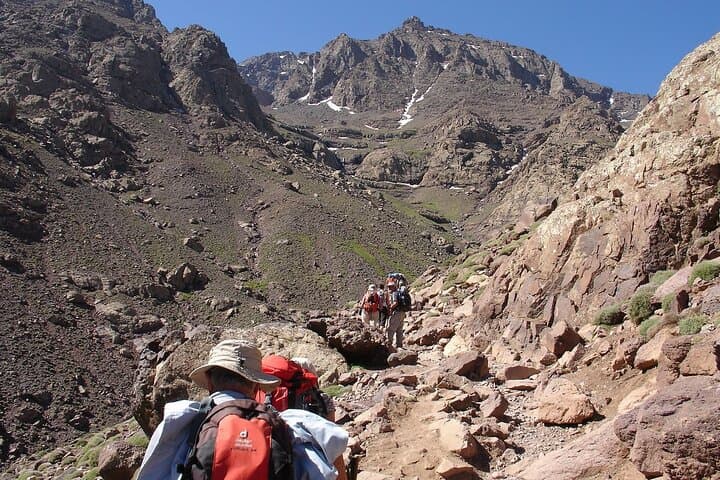
This compact 2-day itinerary threads history and geology into its route: ancient mule tracks, Berber hamlets built on moraine spurs, and the pilgrimage site of Sidi Chamarouch beside a small waterfall. The High Atlas is young in geological terms—folded and uplifted rock sliced by glacial cirques—and the south cirque route rises through steep scree, seasonal snow slopes and short sections of scrambling to reach the ridge and summit plateau.
Culturally the trek is lived-in: local guides, a resident cook, and mules handling heavy loads keep the route efficient and authentic. You overnight at the Toubkal Refuge (≈3,206 m), where clear night skies and alpine cold set the stage for a pre-dawn summit push.
Practically: expect roughly 5 hours of ascent to the refuge on day one and a 6–8 hour summit day with significant altitude gain. Trail underfoot is rocky—good boots, trekking poles and layered clothing matter. Hydrate, sleep early, and move deliberately on the scree; pace beats speed at altitude.
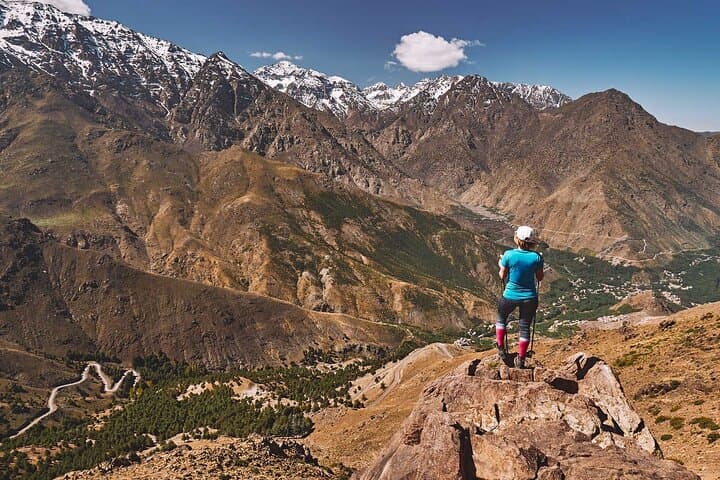
For motivated hikers who can manage sustained uphill trekking and basic scrambling, the reward is sweeping views from the top—Marrakech Plain to the north, the Anti-Atlas and Sahara to the south—and a concentrated, culturally rich mountain experience.
challenging.
2 days (approx. 10–12 hours of trekking).
Good cardiovascular fitness and experience with sustained uphill hiking at altitude; prior high-elevation day hikes recommended.
No technical climbing is required for the normal south cirque route—expect scrambling and steep scree but not rope-required climbing.
The itinerary is compact; if you live at low elevation consider spending a day in Imlil or Marrakech to rest and hydrate before the trek to reduce altitude effects.
Private transfers from Marrakech, local ATLAS guides, all meals, mule support and overnight in the Toubkal Refuge are included per the tour listing.
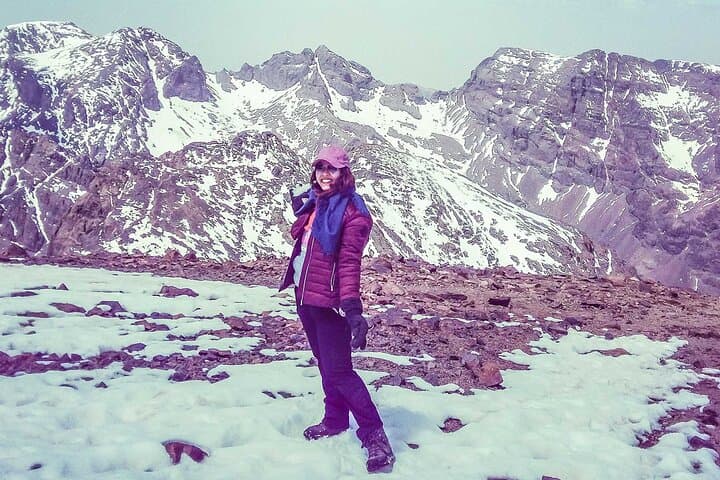
Late spring through early autumn offers the most snow-free conditions, while winter requires snow travel experience and winter gear.
Berber communities have used these mule tracks for centuries; the Toubkal massif also appears in Roman-era descriptions and long-standing trans-Saharan routes.
Erosion from heavy foot traffic and unmanaged waste are local concerns; use local guides, pack out trash and stick to established trails to minimize impact.
Trek Atlas Morocco operates guided outdoor trips and adventures with an emphasis on safety, stewardship, and memorable experiences.
Dawn breaks across the Haouz plain and Marrakech recedes into a ribbon of ochre as the minibus climbs toward Imlil. By midmorning the valley tightens, terraces and stone villages stepping up the slopes, and the summit of Jebel Toubkal—North Africa’s high point at 4,167 m—hovers above like a weathered sentinel.
Dawn breaks across the Haouz plain and Marrakech recedes into a ribbon of ochre as the minibus climbs toward Imlil. By midmorning the valley tightens, terraces and stone villages stepping up the slopes, and the summit of Jebel Toubkal—North Africa’s high point at 4,167 m—hovers above like a weathered sentinel.
This compact 2-day itinerary threads history and geology into its route: ancient mule tracks, Berber hamlets built on moraine spurs, and the pilgrimage site of Sidi Chamarouch beside a small waterfall. The High Atlas is young in geological terms—folded and uplifted rock sliced by glacial cirques—and the south cirque route rises through steep scree, seasonal snow slopes and short sections of scrambling to reach the ridge and summit plateau.
Culturally the trek is lived-in: local guides, a resident cook, and mules handling heavy loads keep the route efficient and authentic. You overnight at the Toubkal Refuge (≈3,206 m), where clear night skies and alpine cold set the stage for a pre-dawn summit push.
Practically: expect roughly 5 hours of ascent to the refuge on day one and a 6–8 hour summit day with significant altitude gain. Trail underfoot is rocky—good boots, trekking poles and layered clothing matter. Hydrate, sleep early, and move deliberately on the scree; pace beats speed at altitude.
For motivated hikers who can manage sustained uphill trekking and basic scrambling, the reward is sweeping views from the top—Marrakech Plain to the north, the Anti-Atlas and Sahara to the south—and a concentrated, culturally rich mountain experience.