THE ADVENTURE COLLECTIVE® · Independent discovery and booking for outdoor travel

A compact, fully guided two-day journey from Queenstown to Aoraki/Mt Cook and Lake Tekapo that balances scenic drives, easy alpine walks and optional glacier flights or stargazing. Ideal for travelers who want maximum views with minimal logistics.
A compact, fully guided two-day journey from Queenstown to Aoraki/Mt Cook and Lake Tekapo that balances scenic drives, easy alpine walks and optional glacier flights or stargazing. Ideal for travelers who want maximum views with minimal logistics.
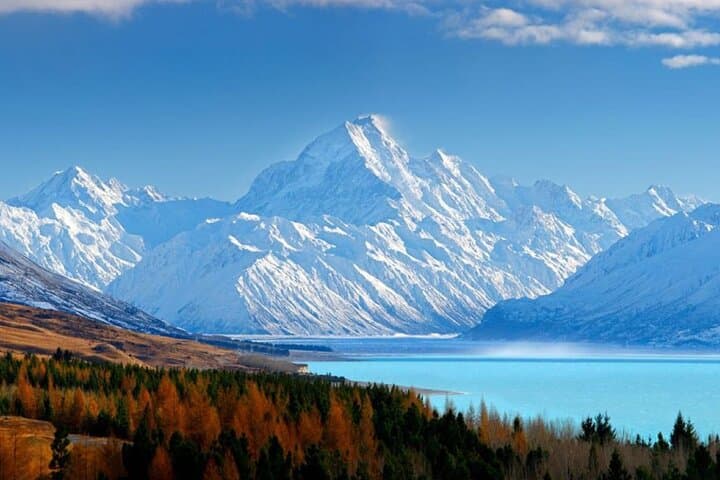
You step onto the minibus in Queenstown and the Southern Alps begin to unfold — a stitched line of snow, rock and braided rivers that seems to move toward Aoraki/Mt Cook itself. Windows frame Kawarau Gorge, the Lindis Pass skyline at 971 m, and the impossible blue of Lake Pukaki before the road drops into Mt Cook Village, where glaciers and wind-carved moraine dominate the horizon.
Verified experiences and guided adventures in the surrounding area.
Operated by Cheeky Kiwi Travel · Mount Cook Village, Canterbury
You step onto the minibus in Queenstown and the Southern Alps begin to unfold — a stitched line of snow, rock and braided rivers that seems to move toward Aoraki/Mt Cook itself. Windows frame Kawarau Gorge, the Lindis Pass skyline at 971 m, and the impossible blue of Lake Pukaki before the road drops into Mt Cook Village, where glaciers and wind-carved moraine dominate the horizon.
This route follows recent glacial history: runoff from the Southern Alps feeds Pukaki and Tekapo, creating the milky-turquoise lakes that define the Mackenzie Basin. Aoraki/Mt Cook (3,724 m) is both a geological summit and a cultural landmark — its Māori name and stories are woven into the park, which forms part of the Te Wāhipounamu World Heritage Area.
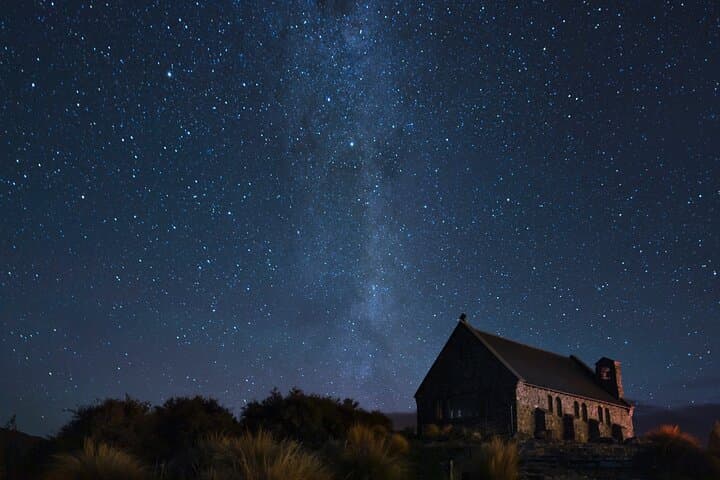
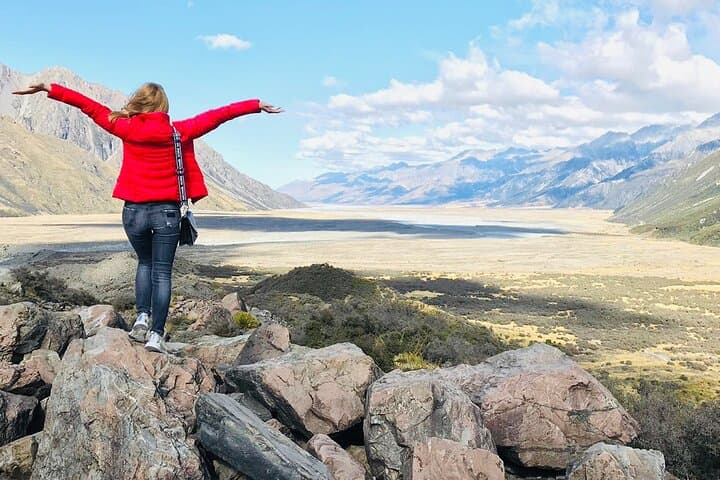
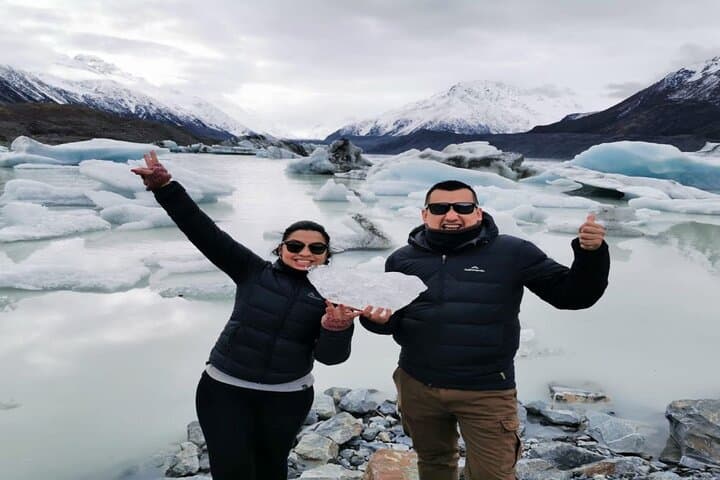
Day one provides photo stops, short lookouts and a 3‑hour Hooker Valley Track option — a relatively flat, well-formed trail (roughly 10 km return, ~100–200 m elevation gain) with swing bridges across glacial streams. Day two moves through Tekapo: the Church of the Good Shepherd, high-country farms and a salmon farm tasting. Optional extras include heli-hikes or scenic flights over the Tasman Glacier and a guided night sky experience — Tekapo is an International Dark Sky Reserve.
Practical edge: expect several hours of scenic driving across variable alpine roads and weather; layers and sturdy footwear are essential. Bring sunscreen and water — UV is high — and plan for short walks, photo stops, and optional activities that may require advance booking.
moderate.
2 days (48 hours total).
Suitable for travelers with basic fitness; able to handle several short to medium-length walks and periods of driving.
No special fitness is required; the tour suits most travelers, though optional walks are best for those comfortable with 1–3 hour hikes.
The tour includes bottled water, snacks and one night 3* twin/double accommodation at Lake Tekapo; dinners are usually self-arranged.
Yes — alpine weather can force changes or cancellations of flights/heli-hikes; guides will offer alternatives or refunds per policy.
No — stargazing is weather-dependent; Tekapo’s dark-sky status improves odds, but visibility depends on cloud cover and moon phase.
Aoraki/Mt Cook holds deep Māori significance; the mountain and Mackenzie Basin were later shaped by glaciation and early European high-country farming.
Aoraki/Mount Cook National Park is part of the Te Wāhipounamu World Heritage Area; visitors are encouraged to stay on tracks and follow Leave No Trace principles to protect fragile alpine and braided-river habitats.
Cheeky Kiwi Travel operates guided outdoor trips and adventures with an emphasis on safety, stewardship, and memorable experiences.
You step onto the minibus in Queenstown and the Southern Alps begin to unfold — a stitched line of snow, rock and braided rivers that seems to move toward Aoraki/Mt Cook itself. Windows frame Kawarau Gorge, the Lindis Pass skyline at 971 m, and the impossible blue of Lake Pukaki before the road drops into Mt Cook Village, where glaciers and wind-carved moraine dominate the horizon.
You step onto the minibus in Queenstown and the Southern Alps begin to unfold — a stitched line of snow, rock and braided rivers that seems to move toward Aoraki/Mt Cook itself. Windows frame Kawarau Gorge, the Lindis Pass skyline at 971 m, and the impossible blue of Lake Pukaki before the road drops into Mt Cook Village, where glaciers and wind-carved moraine dominate the horizon.
This route follows recent glacial history: runoff from the Southern Alps feeds Pukaki and Tekapo, creating the milky-turquoise lakes that define the Mackenzie Basin. Aoraki/Mt Cook (3,724 m) is both a geological summit and a cultural landmark — its Māori name and stories are woven into the park, which forms part of the Te Wāhipounamu World Heritage Area.
Day one provides photo stops, short lookouts and a 3‑hour Hooker Valley Track option — a relatively flat, well-formed trail (roughly 10 km return, ~100–200 m elevation gain) with swing bridges across glacial streams. Day two moves through Tekapo: the Church of the Good Shepherd, high-country farms and a salmon farm tasting. Optional extras include heli-hikes or scenic flights over the Tasman Glacier and a guided night sky experience — Tekapo is an International Dark Sky Reserve.
Practical edge: expect several hours of scenic driving across variable alpine roads and weather; layers and sturdy footwear are essential. Bring sunscreen and water — UV is high — and plan for short walks, photo stops, and optional activities that may require advance booking.