THE ADVENTURE COLLECTIVE® · Independent discovery and booking for outdoor travel

A brisk, guided two-day ascent of Jbel Toubkal (4,167 m) from Marrakech via Imlil. Overnight refuge, mules to carry bags, and a non-technical but physically demanding summit push—ideal for fit hikers who want a quick route to North Africa’s high point.
A brisk, guided two-day ascent of Jbel Toubkal (4,167 m) from Marrakech via Imlil. Overnight refuge, mules to carry bags, and a non-technical but physically demanding summit push—ideal for fit hikers who want a quick route to North Africa’s high point.
You leave Marrakech before dawn, the city lights fading as the road climbs into the High Atlas. By mid-morning the valley of Aït Mizane opens: terraces, stone villages and a livestock bell rhythm that marks the path to Imlil. The trail pushes upward — mule track, switchback, scree — and the mountain begins to feel like a presence that tests your pace and kit.
Verified experiences and guided adventures in the surrounding area.
Operated by Atlas Mountain Travel · Imlil, Marrakesh-Safi
You leave Marrakech before dawn, the city lights fading as the road climbs into the High Atlas. By mid-morning the valley of Aït Mizane opens: terraces, stone villages and a livestock bell rhythm that marks the path to Imlil. The trail pushes upward — mule track, switchback, scree — and the mountain begins to feel like a presence that tests your pace and kit.
Jbel Toubkal (4,167 m) is a volcanic-derived massif carved by glacial ice in the Pleistocene; local Berber communities have shepherded these slopes for centuries and the refuge at 3,207 m carries that practical hospitality. Cultural traces — flat-roofed adobe houses, terraced fields and the sanctuary at Sidi Chamarouch — punctuate the route and link the climb to living mountain traditions.
The itinerary commonly runs: 4–5 hours from Imlil (1,740 m) to the refuge, overnight, then a 6–7 hour summit push and return with significant sections of loose rock and occasional snow above 3,500 m. Expect steep pitches, cairned paths and a final rocky ridge to the cairn.
Practical guidance: pace early on summit day, carry 2–3 liters of water, use layered insulation for wind and cold, and bring sturdy boots and poles. The route is non-technical in summer but demands basic high-altitude trekking fitness and respect for changing mountain weather. Guides and mules reduce logistical load, letting you focus on the climb and the panoramic reward: the plain of Marrakech to the north and the hint of the Sahara to the south.
challenging.
2 days (approx. 9–11 hours hiking on summit day).
Requires good cardiovascular fitness and experience with long day hikes; comfortable on sustained uphill and loose terrain.
No technical mountaineering skills are required in summer; the route is a strenuous hike, though winter conditions may require crampon and ice-axe experience.
Typical inclusions are transfers from Marrakech, guide, refuge accommodation, meals (see itinerary for specifics), mules to carry bags and basic equipment like an ice axe in winter.
Altitude can be significant — expect shortness of breath above 3,000 m; follow your guide’s pacing, stay hydrated, and descend if severe symptoms occur.
Late spring to early autumn offers the most stable conditions; winter brings snow and requires winter mountaineering gear and experience.
Berber (Amazigh) communities have used these paths for trade and seasonal grazing for centuries; the refuge system expanded in the 20th century to support growing trekking traffic.
Toubkal sits within a national park where trail erosion and litter are managed by local cooperatives; practice pack-in, pack-out and minimize campfire use.
Atlas Mountain Travel operates guided outdoor trips and adventures with an emphasis on safety, stewardship, and memorable experiences.
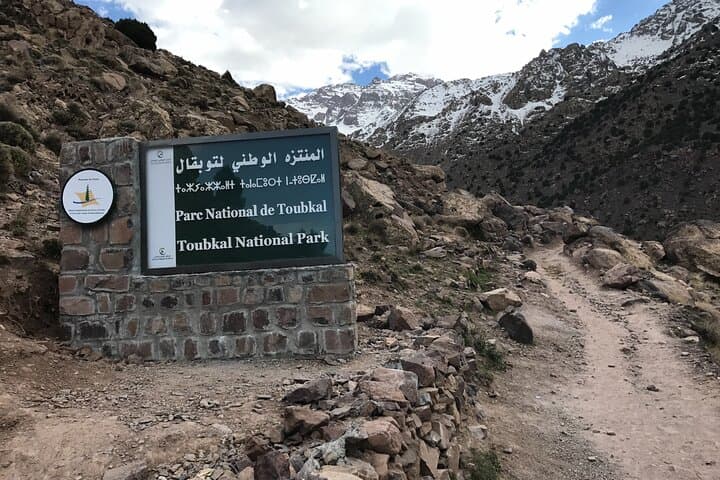


You leave Marrakech before dawn, the city lights fading as the road climbs into the High Atlas. By mid-morning the valley of Aït Mizane opens: terraces, stone villages and a livestock bell rhythm that marks the path to Imlil. The trail pushes upward — mule track, switchback, scree — and the mountain begins to feel like a presence that tests your pace and kit.
You leave Marrakech before dawn, the city lights fading as the road climbs into the High Atlas. By mid-morning the valley of Aït Mizane opens: terraces, stone villages and a livestock bell rhythm that marks the path to Imlil. The trail pushes upward — mule track, switchback, scree — and the mountain begins to feel like a presence that tests your pace and kit.
Jbel Toubkal (4,167 m) is a volcanic-derived massif carved by glacial ice in the Pleistocene; local Berber communities have shepherded these slopes for centuries and the refuge at 3,207 m carries that practical hospitality. Cultural traces — flat-roofed adobe houses, terraced fields and the sanctuary at Sidi Chamarouch — punctuate the route and link the climb to living mountain traditions.
The itinerary commonly runs: 4–5 hours from Imlil (1,740 m) to the refuge, overnight, then a 6–7 hour summit push and return with significant sections of loose rock and occasional snow above 3,500 m. Expect steep pitches, cairned paths and a final rocky ridge to the cairn.
Practical guidance: pace early on summit day, carry 2–3 liters of water, use layered insulation for wind and cold, and bring sturdy boots and poles. The route is non-technical in summer but demands basic high-altitude trekking fitness and respect for changing mountain weather. Guides and mules reduce logistical load, letting you focus on the climb and the panoramic reward: the plain of Marrakech to the north and the hint of the Sahara to the south.