THE ADVENTURE COLLECTIVE® · Independent discovery and booking for outdoor travel

A compact 48‑hour trek from Marrakech to Jbel Toubkal’s summit via Imlil, crossing juniper forests and alpine meadows en route to the 4,167 m peak. Ideal if you want a high-altitude slice of the High Atlas with guided logistics and an overnight at the refuge.
A compact 48‑hour trek from Marrakech to Jbel Toubkal’s summit via Imlil, crossing juniper forests and alpine meadows en route to the 4,167 m peak. Ideal if you want a high-altitude slice of the High Atlas with guided logistics and an overnight at the refuge.
Dawn leaves a thin gold line along the ridges as the minivan rolls out of Marrakech toward the High Atlas. You arrive in Imlil (≈1,740 m) and step off into a sharper air: juniper trunks, the clack of mules, and a trail that immediately pitches uphill. The first day climbs steady through Berber villages and alpine meadows to the Toubkal Refuge (≈3,200 m), where mint tea and a hot dinner readies you for a pre-dawn summit push.
Verified experiences and guided adventures in the surrounding area.
Operated by Atlas Trekkers · Imlil, Marrakesh-Safi
Dawn leaves a thin gold line along the ridges as the minivan rolls out of Marrakech toward the High Atlas. You arrive in Imlil (≈1,740 m) and step off into a sharper air: juniper trunks, the clack of mules, and a trail that immediately pitches uphill. The first day climbs steady through Berber villages and alpine meadows to the Toubkal Refuge (≈3,200 m), where mint tea and a hot dinner readies you for a pre-dawn summit push.
Geology here is hard, folded and uplifted: volcanic and metamorphic rock carved into steep cols and glaciated bowls. Human history is compacted into stone terraces and mule tracks; local Amazigh communities have guided travelers through these passes for generations and the refuge system grew in the 20th century to support modern alpinism.
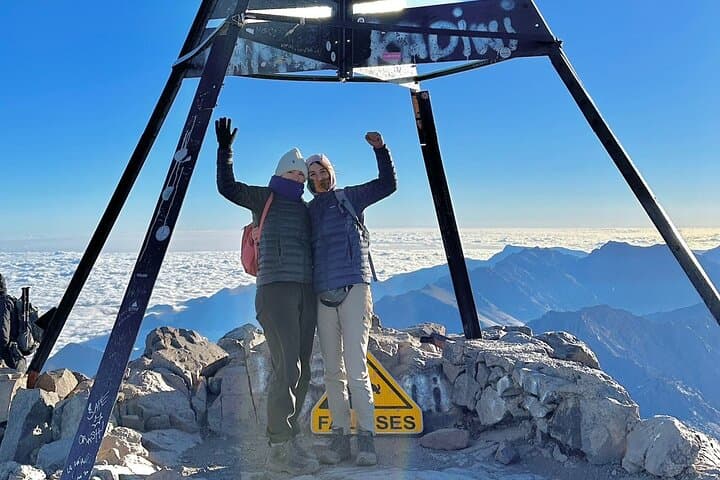
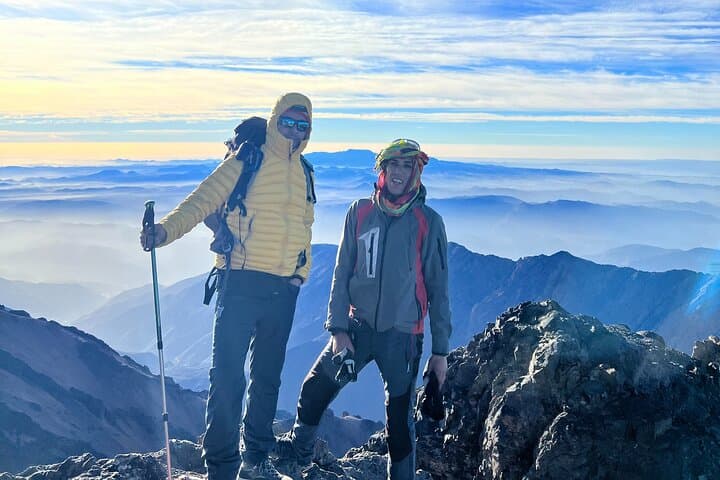
Expect steep, rocky switchbacks, scree near the summit and exposed ridgelines with wide views across Morocco and across to the Sahara on clear days. The summit (Jbel Toubkal, 4,167 m) typically takes 3–5 hours from the refuge; overall hiking distance across the two days is roughly 16–18 km with about 1,400–1,600 m total elevation gain.
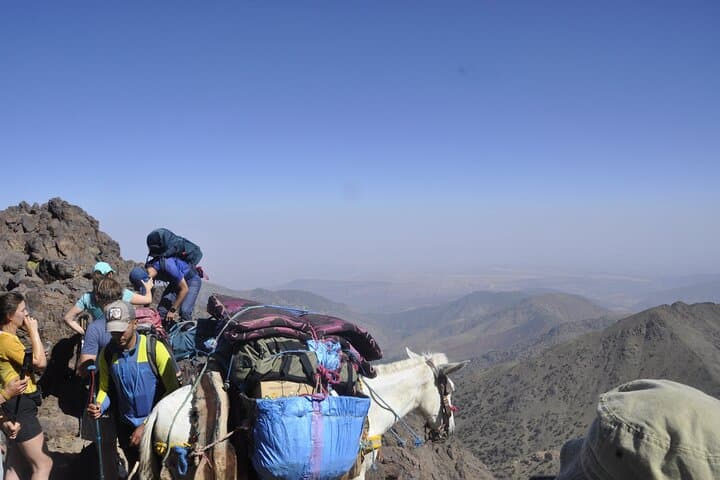
Practical guidance: pace conservatively, drink often to counter altitude, and use trekking poles on the descent. Layers matter — mornings are frigid, afternoons warm. Guides handle logistics, mules carry luggage, and the refuge provides basic board and a bed. Aim to start the summit push before 6:00 am to avoid afternoon weather and to maximize daylight for the return to Imlil and your transfer back to Marrakech.
challenging.
2 days (approx. 8–10 hours hiking total).
Good cardiovascular fitness and comfort with sustained uphill hiking at altitude; prior day‑hike experience recommended.
From the Toubkal Refuge (≈3,200 m) expect 3–5 hours to reach the 4,167 m summit, depending on fitness and trail conditions.
No technical climbing skills are required for the standard route, but you should be comfortable with long uphill hiking and basic high-altitude precautions.
The refuge offers basic dormitory or bunk beds, hot meals, and tea; summer tenting may be used when the refuge is full.
Yes—mules carry luggage to the refuge, so you only need a daypack for the summit push; operators typically include mule service in the package.
The High Atlas has long been home to Amazigh (Berber) communities whose mule tracks and stone terraces predate modern trails; guiding in the region expanded with 20th-century mountaineering and refuge construction.
Rising trekking numbers increase pressure on fragile alpine soils and water; respect local waste rules, travel with licensed guides who support mule management, and follow leave‑no‑trace practices.
Atlas Trekkers operates guided outdoor trips and adventures with an emphasis on safety, stewardship, and memorable experiences.
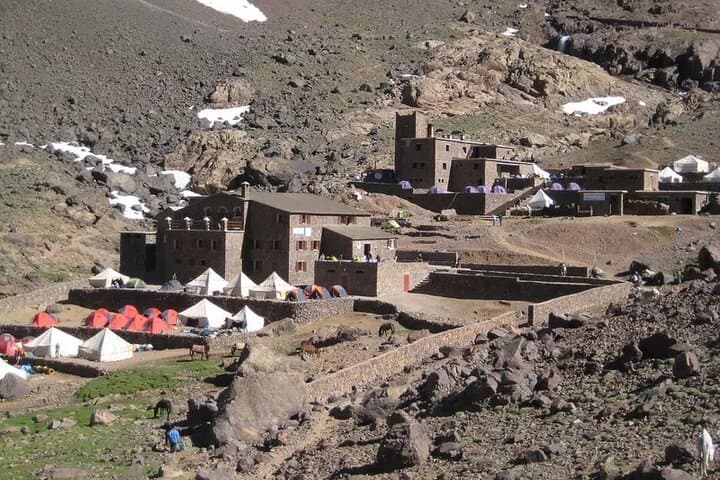
Dawn leaves a thin gold line along the ridges as the minivan rolls out of Marrakech toward the High Atlas. You arrive in Imlil (≈1,740 m) and step off into a sharper air: juniper trunks, the clack of mules, and a trail that immediately pitches uphill. The first day climbs steady through Berber villages and alpine meadows to the Toubkal Refuge (≈3,200 m), where mint tea and a hot dinner readies you for a pre-dawn summit push.
Dawn leaves a thin gold line along the ridges as the minivan rolls out of Marrakech toward the High Atlas. You arrive in Imlil (≈1,740 m) and step off into a sharper air: juniper trunks, the clack of mules, and a trail that immediately pitches uphill. The first day climbs steady through Berber villages and alpine meadows to the Toubkal Refuge (≈3,200 m), where mint tea and a hot dinner readies you for a pre-dawn summit push.
Geology here is hard, folded and uplifted: volcanic and metamorphic rock carved into steep cols and glaciated bowls. Human history is compacted into stone terraces and mule tracks; local Amazigh communities have guided travelers through these passes for generations and the refuge system grew in the 20th century to support modern alpinism.
Expect steep, rocky switchbacks, scree near the summit and exposed ridgelines with wide views across Morocco and across to the Sahara on clear days. The summit (Jbel Toubkal, 4,167 m) typically takes 3–5 hours from the refuge; overall hiking distance across the two days is roughly 16–18 km with about 1,400–1,600 m total elevation gain.
Practical guidance: pace conservatively, drink often to counter altitude, and use trekking poles on the descent. Layers matter — mornings are frigid, afternoons warm. Guides handle logistics, mules carry luggage, and the refuge provides basic board and a bed. Aim to start the summit push before 6:00 am to avoid afternoon weather and to maximize daylight for the return to Imlil and your transfer back to Marrakech.