THE ADVENTURE COLLECTIVE® · Independent discovery and booking for outdoor travel

Leave Hurghada before dawn for a two-day, private Egyptologist-led journey into Luxor’s temples and royal tombs. Visit Karnak, Luxor Temple, Hatshepsut and the Valley of the Kings with one night in Luxor included.
Leave Hurghada before dawn for a two-day, private Egyptologist-led journey into Luxor’s temples and royal tombs. Visit Karnak, Luxor Temple, Hatshepsut and the Valley of the Kings with one night in Luxor included.
A pre-dawn pickup from your Hurghada hotel sets the tone: headlights cut through desert air as the Red Sea retreating behind you becomes a memory and the Nile’s green corridor ahead begins to promise something older. By mid-morning you arrive at Karnak, where the great hypostyle hall’s 134 columns rise like an organized forest and shadow plays across hieroglyphs that still insist on being read.
Verified experiences and guided adventures in the surrounding area.
Operated by Charming Egypt Tours · Luxor, Luxor Governorate
A pre-dawn pickup from your Hurghada hotel sets the tone: headlights cut through desert air as the Red Sea retreating behind you becomes a memory and the Nile’s green corridor ahead begins to promise something older. By mid-morning you arrive at Karnak, where the great hypostyle hall’s 134 columns rise like an organized forest and shadow plays across hieroglyphs that still insist on being read.
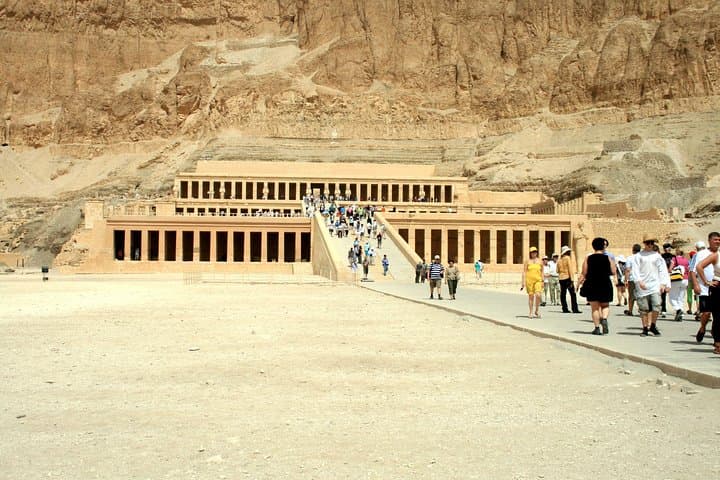
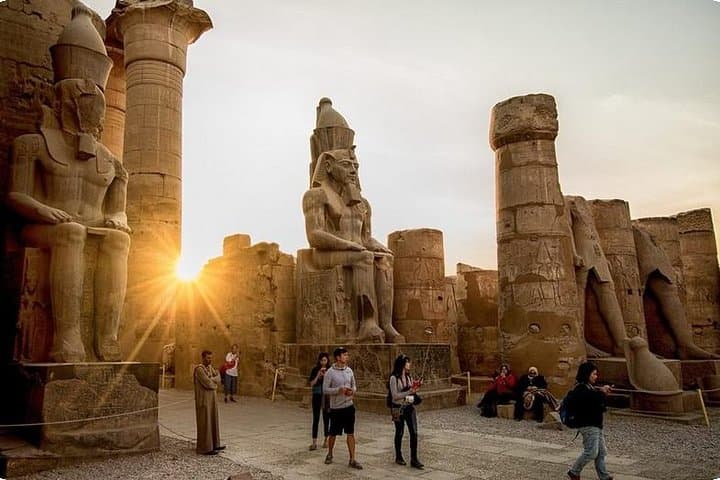
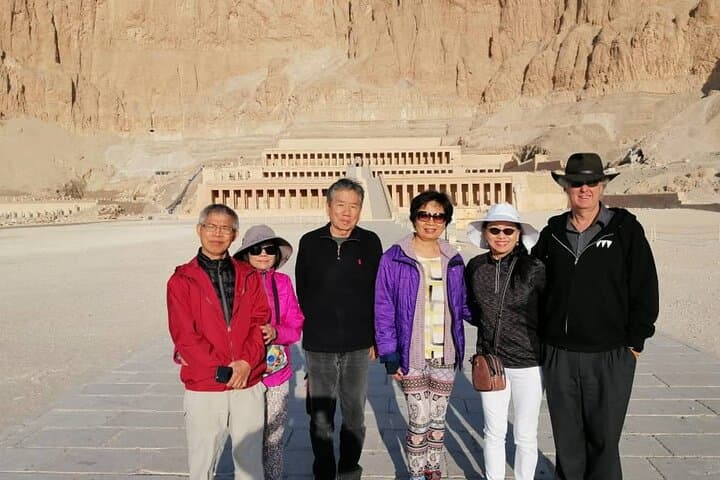
Luxor Temple sits closer to the river, its avenue of sphinxes stretching more than three kilometers and bearing traces of pharaonic, Christian and Islamic layers of use. Cross the Nile to the West Bank on day two and the rocky cliffs open to the Valley of the Kings: tomb entrances sit like closed mouths above the sand, guarding painted corridors and burial chambers. Nearby, Hatshepsut’s terraced mortuary temple cuts a geometric profile into limestone; the Colossi of Memnon loom as two exhausted gatekeepers watching over ruined foundations.
This is an archaeological and cultural immersion more than a strenuous trek — expect cobbled approaches, short stair sections and desert heat that shapes the rhythm of the days. Practical note: a private Egyptologist guide and one-night hotel stay in Luxor are included, as are most site admissions, though special tombs (Tutankhamun) require an extra ticket.
Plan early starts to avoid midday heat, bring sun protection and a refillable water bottle, and wear shoes with solid soles for uneven stone. The trip balances relaxed travel with concentrated exploration, delivering big monuments, layered history and the tactile feel of an ancient capital.
easy.
2 days (approx. 48 hours).
Suitable for most fitness levels; requires walking on uneven terrain and short stair climbs.
Most site admissions are included, but certain tombs—most notably Tutankhamun’s—require an extra ticket purchased on site.
Pickup and return are provided from hotels inside Hurghada; exact pickup point is confirmed at booking.
Yes — one night’s hotel accommodation in Luxor is included as part of the private two-day itinerary.
Yes — a private Egyptologist guide is included and will guide in English; request other languages at booking.
Luxor sits on the site of ancient Thebes, the New Kingdom capital whose temples, mortuary complexes and royal tombs chronicle Egypt’s power between 1550–1070 BCE.
High visitor pressure requires careful site management; stick to marked paths and avoid touching painted surfaces to help preserve delicate reliefs.
Charming Egypt Tours operates guided outdoor trips and adventures with an emphasis on safety, stewardship, and memorable experiences.

A pre-dawn pickup from your Hurghada hotel sets the tone: headlights cut through desert air as the Red Sea retreating behind you becomes a memory and the Nile’s green corridor ahead begins to promise something older. By mid-morning you arrive at Karnak, where the great hypostyle hall’s 134 columns rise like an organized forest and shadow plays across hieroglyphs that still insist on being read.
A pre-dawn pickup from your Hurghada hotel sets the tone: headlights cut through desert air as the Red Sea retreating behind you becomes a memory and the Nile’s green corridor ahead begins to promise something older. By mid-morning you arrive at Karnak, where the great hypostyle hall’s 134 columns rise like an organized forest and shadow plays across hieroglyphs that still insist on being read.
Luxor Temple sits closer to the river, its avenue of sphinxes stretching more than three kilometers and bearing traces of pharaonic, Christian and Islamic layers of use. Cross the Nile to the West Bank on day two and the rocky cliffs open to the Valley of the Kings: tomb entrances sit like closed mouths above the sand, guarding painted corridors and burial chambers. Nearby, Hatshepsut’s terraced mortuary temple cuts a geometric profile into limestone; the Colossi of Memnon loom as two exhausted gatekeepers watching over ruined foundations.
This is an archaeological and cultural immersion more than a strenuous trek — expect cobbled approaches, short stair sections and desert heat that shapes the rhythm of the days. Practical note: a private Egyptologist guide and one-night hotel stay in Luxor are included, as are most site admissions, though special tombs (Tutankhamun) require an extra ticket.
Plan early starts to avoid midday heat, bring sun protection and a refillable water bottle, and wear shoes with solid soles for uneven stone. The trip balances relaxed travel with concentrated exploration, delivering big monuments, layered history and the tactile feel of an ancient capital.