THE ADVENTURE COLLECTIVE® · Independent discovery and booking for outdoor travel

Experience ancient Thebes in two days: sunrise balloon over the Nile, Karnak’s hypostyle halls, Valley of the Kings, a felucca lunch, and a camel ride. Practical transfers from Hurghada and an expert Egyptology guide make the logistics easy so you can focus on the sites.
Experience ancient Thebes in two days: sunrise balloon over the Nile, Karnak’s hypostyle halls, Valley of the Kings, a felucca lunch, and a camel ride. Practical transfers from Hurghada and an expert Egyptology guide make the logistics easy so you can focus on the sites.
You lift before dawn, the desert air cool against your face, and the balloon's envelope inflates like a slow breath over Luxor's palm-lined floodplain. Below, the Nile cuts a dark ribbon through ochre fields; beyond it, temple pylons and colossi begin to silhouette against a brightening sky.
Verified experiences and guided adventures in the surrounding area.
Operated by Here Egypt Tours · Luxor, Luxor Governorate
You lift before dawn, the desert air cool against your face, and the balloon's envelope inflates like a slow breath over Luxor's palm-lined floodplain. Below, the Nile cuts a dark ribbon through ochre fields; beyond it, temple pylons and colossi begin to silhouette against a brightening sky.
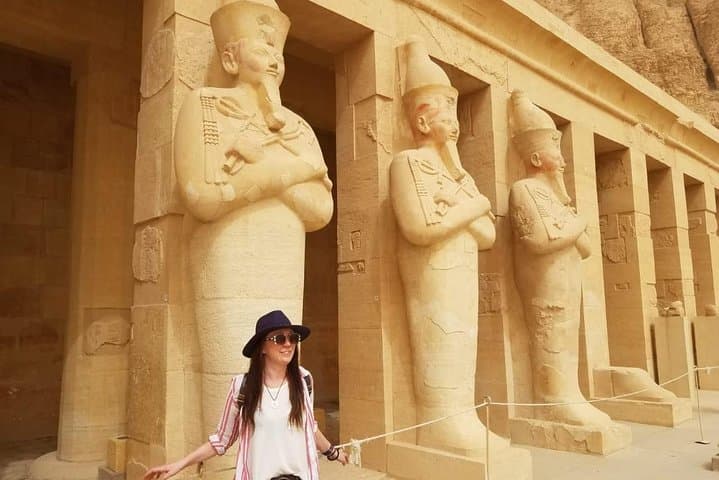
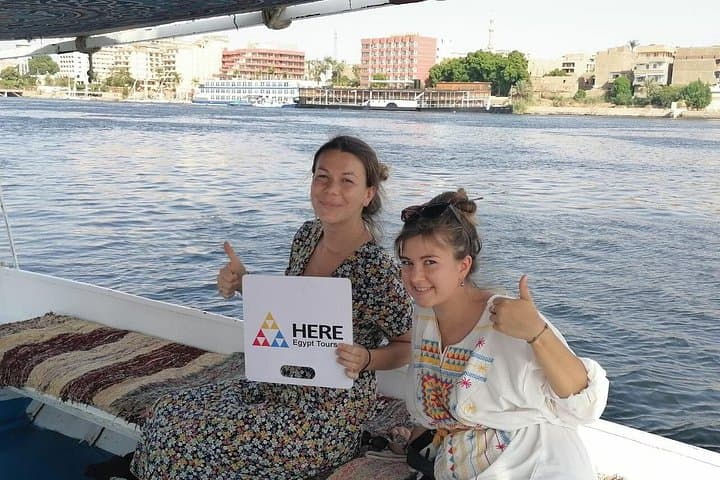
This two-day loop from Hurghada threads modern Red Sea resorts to ancient Thebes. Day one visits the East Bank’s Karnak and Luxor Temples—monumental sandstone, hypostyle halls, and obelisks carved across millennia. Day two concentrates on the West Bank: Valley of the Kings' rock-cut tombs, Hatshepsut’s funerary temple hewn from cliff, then photo stops at the Colossi of Memnon. Between sites, you’ll sail a felucca on the Nile and ride a camel through village edges, each a practical window into local life.
Geologically, Luxor sits on Nile alluvium—flat terraces and soft limestone cliffs that made for easy tomb-cutting but sensitive preservation needs. Culturally, the city is the heart of ancient Egyptian state religion; guides explain hieroglyphic shorthand and burial rites in plain terms.
Practical edge: transfers from Hurghada are ~4–5 hours (≈290 km) by A/C bus; balloon flights launch ~5am and run weather-dependent. Bring sun protection, sturdy walking shoes for uneven temple steps, and a refillable water bottle. Allow extra time for security and photo stops; download an offline map of Luxor to keep bearings during short independent stretches.
moderate.
2 days.
Moderate fitness: able to handle long transfers, several hours of walking on uneven surfaces, and early starts.
The A/C bus transfer is about 4–5 hours depending on traffic and stops—plan for roughly 290 km of driving.
If the balloon is canceled for weather, most operators issue a partial refund (the tour notes a $40 refund per person) or can reschedule subject to availability.
The itinerary lists breakfast and a typical Egyptian lunch on the felucca as included; your Egyptology guide and most site visits are covered—confirm any optional extras at booking.
The trip is advertised as physically easy and family-friendly, but tombs and temples have steps and uneven surfaces—check specific access needs with the operator in advance.
Luxor occupies the site of ancient Thebes, Egypt’s religious and political center during the New Kingdom; the temple complexes and tombs date mainly from the 16th–11th centuries BCE.
Tombs and painted reliefs are fragile—follow guide instructions, avoid touching surfaces, and use refillable bottles to reduce plastic on-site.
Here Egypt Tours operates guided outdoor trips and adventures with an emphasis on safety, stewardship, and memorable experiences.
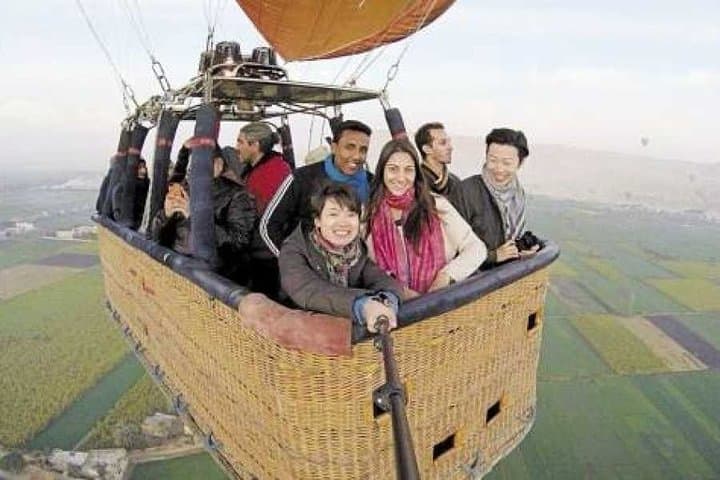
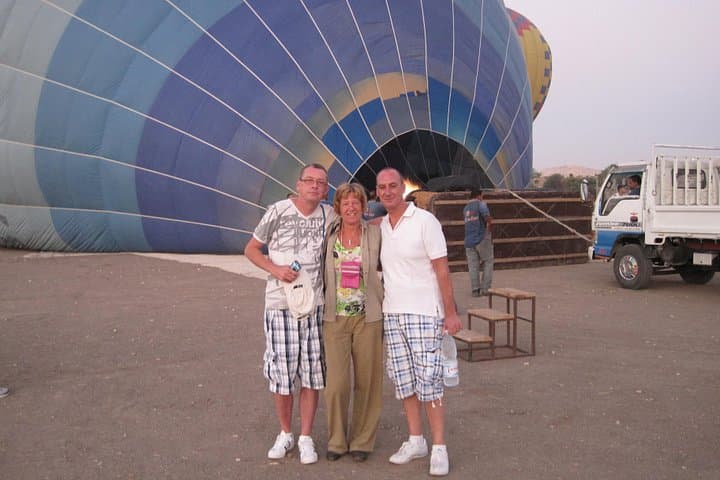
You lift before dawn, the desert air cool against your face, and the balloon's envelope inflates like a slow breath over Luxor's palm-lined floodplain. Below, the Nile cuts a dark ribbon through ochre fields; beyond it, temple pylons and colossi begin to silhouette against a brightening sky.
You lift before dawn, the desert air cool against your face, and the balloon's envelope inflates like a slow breath over Luxor's palm-lined floodplain. Below, the Nile cuts a dark ribbon through ochre fields; beyond it, temple pylons and colossi begin to silhouette against a brightening sky.
This two-day loop from Hurghada threads modern Red Sea resorts to ancient Thebes. Day one visits the East Bank’s Karnak and Luxor Temples—monumental sandstone, hypostyle halls, and obelisks carved across millennia. Day two concentrates on the West Bank: Valley of the Kings' rock-cut tombs, Hatshepsut’s funerary temple hewn from cliff, then photo stops at the Colossi of Memnon. Between sites, you’ll sail a felucca on the Nile and ride a camel through village edges, each a practical window into local life.
Geologically, Luxor sits on Nile alluvium—flat terraces and soft limestone cliffs that made for easy tomb-cutting but sensitive preservation needs. Culturally, the city is the heart of ancient Egyptian state religion; guides explain hieroglyphic shorthand and burial rites in plain terms.
Practical edge: transfers from Hurghada are ~4–5 hours (≈290 km) by A/C bus; balloon flights launch ~5am and run weather-dependent. Bring sun protection, sturdy walking shoes for uneven temple steps, and a refillable water bottle. Allow extra time for security and photo stops; download an offline map of Luxor to keep bearings during short independent stretches.