THE ADVENTURE COLLECTIVE® · Independent discovery and booking for outdoor travel

See Iguassu’s full range: panoramic views from Brazil and the walkways that thrust into the spray on the Argentine side. This two-day itinerary balances big-picture vistas, up-close platforms, and rainforest wildlife.
See Iguassu’s full range: panoramic views from Brazil and the walkways that thrust into the spray on the Argentine side. This two-day itinerary balances big-picture vistas, up-close platforms, and rainforest wildlife.
The first glimpse is sudden: a wall of spray and roar that seems to breathe across the gorge, sunlight cutting prisms through its mist. On the Brazilian rim you stand back from the cascade and the falls spread like a living map; on the Argentine side you move into the spray, platforms running out toward the Devil’s Throat where water hammers the gorge below.
Verified experiences and guided adventures in the surrounding area.
Operated by DGTOUR · Foz do Iguaçu, Paraná
The first glimpse is sudden: a wall of spray and roar that seems to breathe across the gorge, sunlight cutting prisms through its mist. On the Brazilian rim you stand back from the cascade and the falls spread like a living map; on the Argentine side you move into the spray, platforms running out toward the Devil’s Throat where water hammers the gorge below.
Geology here is blunt and old—basalt flows cracked and stepped 200 million years ago, forcing the Paraná River into dramatic drops. Both national parks are UNESCO-protected sites; the modern parks preserve rainforest that indigenous Guarani people long used as hunting and ceremonial grounds. Wildlife is visible in short bursts: coatis threading the boardwalk edges, toucans calling from canopy pockets, butterflies lifting like colored punctuation.
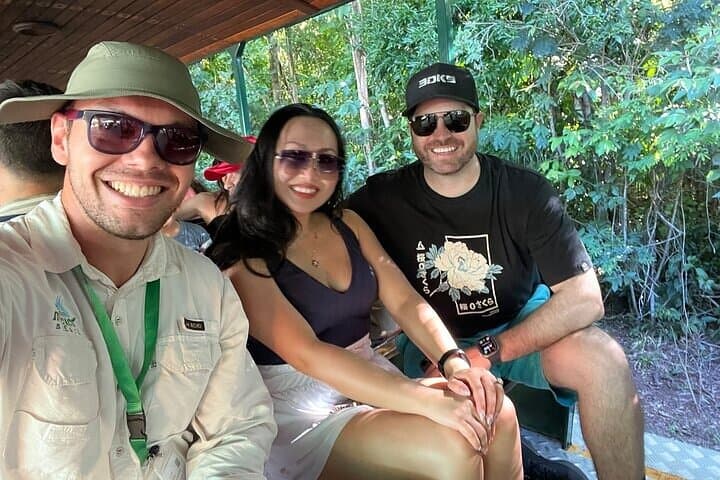
Day one follows the Brazilian circuit: a short network of panoramic viewpoints and an orientation at the visitor center. Day two uses Argentina’s eco-train to reach the Upper and Lower Circuits and the long walkway to Garganta do Diabo (Devil’s Throat). Expect steady walking on boardwalks and stairs, intermittent drizzle from the falls, and sharp photo opportunities.
Practical guidance: bring a waterproof layer and quick-dry clothing, carry local currency and your passport for the cross-border transfer, and reserve park admission in advance. Time your visit for early openings to avoid crowds and high noon spray. Respect park rules—stay on paths, don’t feed wildlife, and keep electronics protected from mist. Two days give a balanced view: wide panoramas, intimate platforms, and enough time to notice the rainforest between the waterfalls.
moderate.
2 days (about 8–9 hours of guided touring).
Moderate fitness: able to walk several kilometers on boardwalks and stairs over two days, and handle short climbs.
No; the itinerary notes that admissions are not included—bring your printed or mobile ticket and prepare to show ID at the park entrance.
Yes. The experience crosses the Brazil–Argentina border, so a valid passport (and any required visas) is necessary.
The listing states wheelchair accessibility, but some viewpoints have ramps or alternative access—confirm details with the operator ahead of time to arrange pickup and access needs.
Boat excursions such as the Gran Aventura are typically optional and extra; check with the operator if you want to add a river boat near the falls.
Both parks are UNESCO World Heritage sites that protect rainforest surrounding the Paraná River’s dramatic basalt escarpment; the area has long cultural ties to Guarani communities.
Visitors are asked to stay on designated trails, avoid feeding wildlife, and minimize plastic use—both parks run programs to protect water quality and native forest.
DGTOUR operates guided outdoor trips and adventures with an emphasis on safety, stewardship, and memorable experiences.
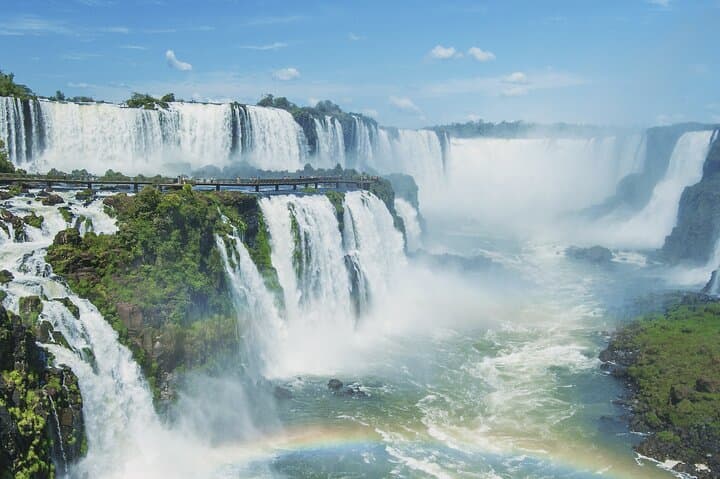
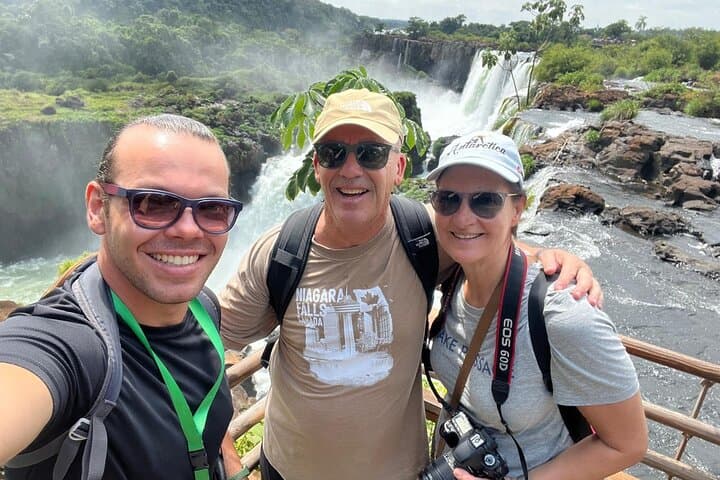
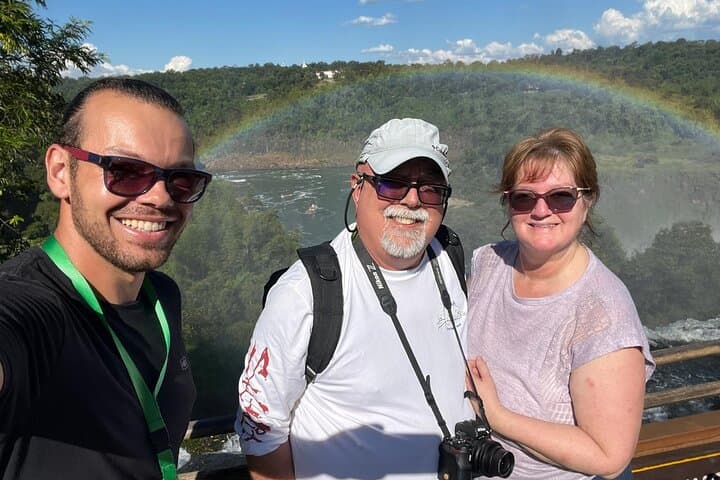
The first glimpse is sudden: a wall of spray and roar that seems to breathe across the gorge, sunlight cutting prisms through its mist. On the Brazilian rim you stand back from the cascade and the falls spread like a living map; on the Argentine side you move into the spray, platforms running out toward the Devil’s Throat where water hammers the gorge below.
The first glimpse is sudden: a wall of spray and roar that seems to breathe across the gorge, sunlight cutting prisms through its mist. On the Brazilian rim you stand back from the cascade and the falls spread like a living map; on the Argentine side you move into the spray, platforms running out toward the Devil’s Throat where water hammers the gorge below.
Geology here is blunt and old—basalt flows cracked and stepped 200 million years ago, forcing the Paraná River into dramatic drops. Both national parks are UNESCO-protected sites; the modern parks preserve rainforest that indigenous Guarani people long used as hunting and ceremonial grounds. Wildlife is visible in short bursts: coatis threading the boardwalk edges, toucans calling from canopy pockets, butterflies lifting like colored punctuation.
Day one follows the Brazilian circuit: a short network of panoramic viewpoints and an orientation at the visitor center. Day two uses Argentina’s eco-train to reach the Upper and Lower Circuits and the long walkway to Garganta do Diabo (Devil’s Throat). Expect steady walking on boardwalks and stairs, intermittent drizzle from the falls, and sharp photo opportunities.
Practical guidance: bring a waterproof layer and quick-dry clothing, carry local currency and your passport for the cross-border transfer, and reserve park admission in advance. Time your visit for early openings to avoid crowds and high noon spray. Respect park rules—stay on paths, don’t feed wildlife, and keep electronics protected from mist. Two days give a balanced view: wide panoramas, intimate platforms, and enough time to notice the rainforest between the waterfalls.