THE ADVENTURE COLLECTIVE® · Independent discovery and booking for outdoor travel

Spend two purposeful days across the Giza Plateau, Saqqara, Memphis and Dahshur — sunrise Pyramid views, the Step Pyramid’s early engineering and the Bent and Red Pyramids’ experimental lines. Early starts, plenty of water and a good pair of shoes make this archaeological sprint rewarding.
Spend two purposeful days across the Giza Plateau, Saqqara, Memphis and Dahshur — sunrise Pyramid views, the Step Pyramid’s early engineering and the Bent and Red Pyramids’ experimental lines. Early starts, plenty of water and a good pair of shoes make this archaeological sprint rewarding.
A pale sun lifts over the Giza Plateau and suddenly the stones begin to claim shape — three pyramids cutting clean lines against the sky, the Sphinx watching the desert like an older, quieter neighbor. You’ll arrive early, when the light slants and the heat is still waiting to press down; the plateaus, pathways and sand feel immediate, tactile, a landscape that keeps pushing you forward.
Verified experiences and guided adventures in the surrounding area.
Operated by Available travel Egypt · Giza, Cairo Governorate
A pale sun lifts over the Giza Plateau and suddenly the stones begin to claim shape — three pyramids cutting clean lines against the sky, the Sphinx watching the desert like an older, quieter neighbor. You’ll arrive early, when the light slants and the heat is still waiting to press down; the plateaus, pathways and sand feel immediate, tactile, a landscape that keeps pushing you forward.
These monuments sit on layers of limestone and wind-sculpted sand shaped by the Nile’s long influence. The Great Pyramid (c. 2500 BCE) anchors the site, while nearby Saqqara shows an earlier architectural leap: Imhotep’s Step Pyramid, the first large-scale stone construction. Memphis, once Egypt’s capital, offers colossal statuary and reliefs that map political power across millennia. At Dahshur you’ll see experimental forms — the Bent Pyramid’s changing angles and the Red Pyramid’s clean silhouette reveal ancient trial-and-error in engineering.
Local guides link these structures to daily life, funerary rites and the Nile’s role in provisioning workers and transporting stone. Expect active archaeological presence, vendors near entrances, and occasional conservation work that can alter access.
Practical guidance: start at dawn to avoid heat and crowds, carry 2–3 liters of water and sunscreen, and wear sturdy shoes for uneven stone and sand. Ask about ticket inclusions in advance; some entrances and camel rides are extra. Security checks are routine; keep ID and any required permits on hand. With reasonable pacing the two days balance immersive history with grounded logistics — it’s an intense, walkable encounter with Egypt’s oldest ambitions.
easy.
2 days (approx. 8–10 hours/day).
Suitable for most fitness levels; requires standing and walking on uneven surfaces for several hours each day.
Not always — confirm with the operator; some sites (or optional camel rides) may require separate tickets on the day.
Yes, camel rides are commonly offered near the plateau but are optional and typically paid locally; agree on a price before mounting.
The tour is rated easy overall, but expect several hours of walking on uneven terrain each day and some standing during guided explanations.
Many transport and paved areas are accessible, but archaeological zones include uneven stone and sand where accessibility can be limited; check specifics beforehand.
Giza, Saqqara and Memphis trace a continuous political and funerary landscape from the Early Dynastic period through the Old Kingdom, reflecting evolving stone-construction techniques and state organization.
Conservation teams regularly stabilize masonry and limit access to vulnerable areas; follow signs and guides to reduce wear. Support local preservation by avoiding climbing on monuments and by using official paths.
Available travel Egypt operates guided outdoor trips and adventures with an emphasis on safety, stewardship, and memorable experiences.
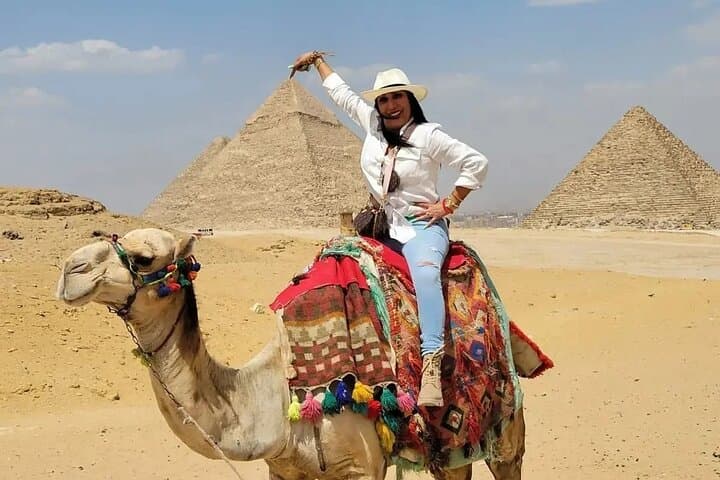
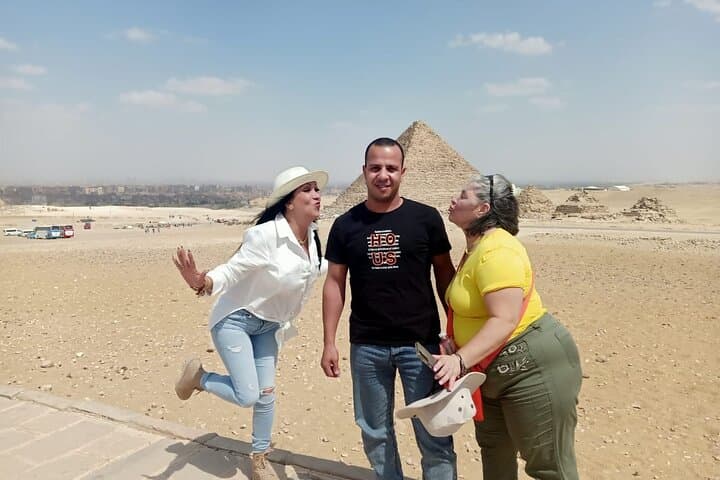
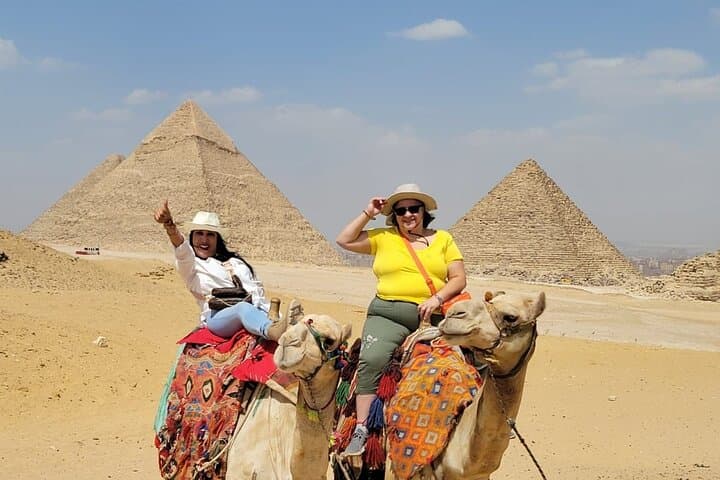
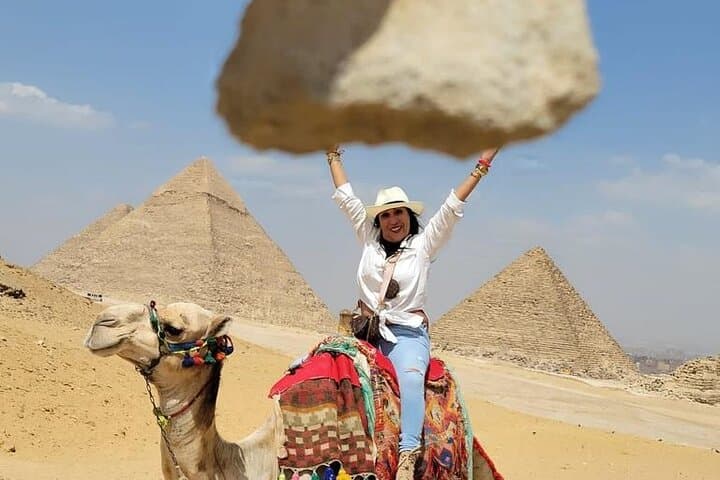
A pale sun lifts over the Giza Plateau and suddenly the stones begin to claim shape — three pyramids cutting clean lines against the sky, the Sphinx watching the desert like an older, quieter neighbor. You’ll arrive early, when the light slants and the heat is still waiting to press down; the plateaus, pathways and sand feel immediate, tactile, a landscape that keeps pushing you forward.
A pale sun lifts over the Giza Plateau and suddenly the stones begin to claim shape — three pyramids cutting clean lines against the sky, the Sphinx watching the desert like an older, quieter neighbor. You’ll arrive early, when the light slants and the heat is still waiting to press down; the plateaus, pathways and sand feel immediate, tactile, a landscape that keeps pushing you forward.
These monuments sit on layers of limestone and wind-sculpted sand shaped by the Nile’s long influence. The Great Pyramid (c. 2500 BCE) anchors the site, while nearby Saqqara shows an earlier architectural leap: Imhotep’s Step Pyramid, the first large-scale stone construction. Memphis, once Egypt’s capital, offers colossal statuary and reliefs that map political power across millennia. At Dahshur you’ll see experimental forms — the Bent Pyramid’s changing angles and the Red Pyramid’s clean silhouette reveal ancient trial-and-error in engineering.
Local guides link these structures to daily life, funerary rites and the Nile’s role in provisioning workers and transporting stone. Expect active archaeological presence, vendors near entrances, and occasional conservation work that can alter access.
Practical guidance: start at dawn to avoid heat and crowds, carry 2–3 liters of water and sunscreen, and wear sturdy shoes for uneven stone and sand. Ask about ticket inclusions in advance; some entrances and camel rides are extra. Security checks are routine; keep ID and any required permits on hand. With reasonable pacing the two days balance immersive history with grounded logistics — it’s an intense, walkable encounter with Egypt’s oldest ambitions.