THE ADVENTURE COLLECTIVE® · Independent discovery and booking for outdoor travel

A compact two-day overland journey from Salta through the Quebrada de Humahuaca to steep, ancient Iruya. Expect dramatic geology, pre-Columbian culture, gravel roads and a taste of high-altitude village life.
A compact two-day overland journey from Salta through the Quebrada de Humahuaca to steep, ancient Iruya. Expect dramatic geology, pre-Columbian culture, gravel roads and a taste of high-altitude village life.
You leave Salta before dawn and the highway peels away into a jagged horizon: the Quebrada de Humahuaca pushes its folded cliffs toward the sky, colors sharpened by thin mountain air. The road threads through villages whose adobe walls hold long winters and older stories, then climbs to gravel tracks that rattle nerves and awaken curiosity. By late afternoon Iruya appears—whitewashed houses clinging to steep streets, a river daring you to cross its braided course.
Verified experiences and guided adventures in the surrounding area.
Operated by RipioTurismo · Iruya, Salta Province
You leave Salta before dawn and the highway peels away into a jagged horizon: the Quebrada de Humahuaca pushes its folded cliffs toward the sky, colors sharpened by thin mountain air. The road threads through villages whose adobe walls hold long winters and older stories, then climbs to gravel tracks that rattle nerves and awaken curiosity. By late afternoon Iruya appears—whitewashed houses clinging to steep streets, a river daring you to cross its braided course.
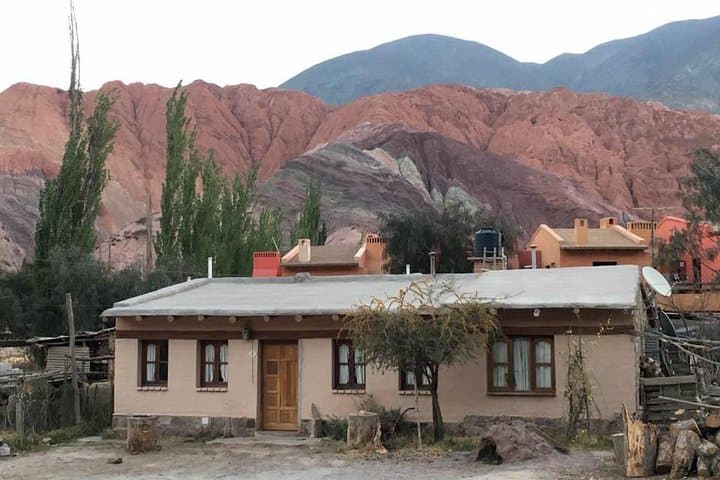
This corridor is shaped by tectonic uplift and wind-carved sediment: layered hills like open books record millennia of Andean geology. Humahuaca itself is an old trading artery used by pre-Columbian peoples; Tilcara’s pucará ruins and Purmamarca’s Cerro de los Siete Colores are nearby cultural signposts. Local communities still practice traditional weaving and celebrate Pachamama in August and patron saint festivals each October, events that show how living culture anchors the landscape.
Expect narrow, steep, paved lanes in Iruya and long stretches of unsealed provincial road—impassable in heavy summer rains (December–March). Accommodation isn’t included; lodging options are basic and range from family-run hostels to simple guesthouses. Bring layered clothing for strong daytime sun and chilly nights, a reliable pair of walking shoes for cobbled streets, and cash—services on route are limited.
Pace the trip to acclimatize (Iruya sits around 2,700–2,800 meters). Photography windows open at sunrise and late afternoon when light sculpts the canyon. The experience balances geology and culture: a short, rugged passage into a highland town where the past still keeps its rhythm and the road keeps testing you.
easy.
2 days.
Suitable for most fitness levels; requires walking on steep, uneven village streets and short climbs.
No—this excursion includes transport and guiding but not lodging; expect to arrange or pay for your own guesthouse in Iruya.
Mostly yes, but heavy summer rains (December–March) can wash out sections of the dirt road to Iruya and make some crossings impossible.
Iruya sits around 2,700–2,800 m; most travelers experience mild symptoms if any—take time to hydrate, avoid heavy exertion on arrival, and monitor symptoms.
Meals are not specified as included—plan for stops in towns along the route and carry snacks or money for local eateries.
The Quebrada de Humahuaca has been a trade and ceremonial corridor for pre-Columbian cultures for centuries; villages like Humahuaca and Tilcara preserve indigenous traditions and colonial-era influence.
This highland environment is fragile—stay on designated tracks, pack out waste, and support local economies rather than leaving trash or disturbing terraces.
RipioTurismo operates guided outdoor trips and adventures with an emphasis on safety, stewardship, and memorable experiences.
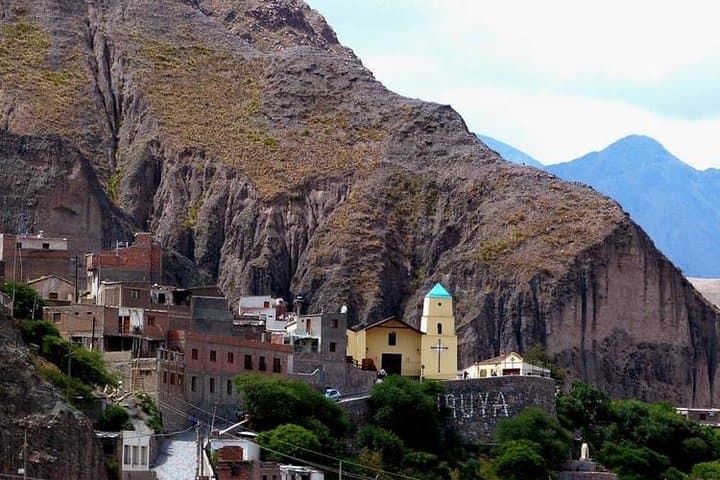
You leave Salta before dawn and the highway peels away into a jagged horizon: the Quebrada de Humahuaca pushes its folded cliffs toward the sky, colors sharpened by thin mountain air. The road threads through villages whose adobe walls hold long winters and older stories, then climbs to gravel tracks that rattle nerves and awaken curiosity. By late afternoon Iruya appears—whitewashed houses clinging to steep streets, a river daring you to cross its braided course.
You leave Salta before dawn and the highway peels away into a jagged horizon: the Quebrada de Humahuaca pushes its folded cliffs toward the sky, colors sharpened by thin mountain air. The road threads through villages whose adobe walls hold long winters and older stories, then climbs to gravel tracks that rattle nerves and awaken curiosity. By late afternoon Iruya appears—whitewashed houses clinging to steep streets, a river daring you to cross its braided course.
This corridor is shaped by tectonic uplift and wind-carved sediment: layered hills like open books record millennia of Andean geology. Humahuaca itself is an old trading artery used by pre-Columbian peoples; Tilcara’s pucará ruins and Purmamarca’s Cerro de los Siete Colores are nearby cultural signposts. Local communities still practice traditional weaving and celebrate Pachamama in August and patron saint festivals each October, events that show how living culture anchors the landscape.
Expect narrow, steep, paved lanes in Iruya and long stretches of unsealed provincial road—impassable in heavy summer rains (December–March). Accommodation isn’t included; lodging options are basic and range from family-run hostels to simple guesthouses. Bring layered clothing for strong daytime sun and chilly nights, a reliable pair of walking shoes for cobbled streets, and cash—services on route are limited.
Pace the trip to acclimatize (Iruya sits around 2,700–2,800 meters). Photography windows open at sunrise and late afternoon when light sculpts the canyon. The experience balances geology and culture: a short, rugged passage into a highland town where the past still keeps its rhythm and the road keeps testing you.