THE ADVENTURE COLLECTIVE® · Independent discovery and booking for outdoor travel

A compact two-day private tour from Athens that pairs the oracle of Delphi, the cliff‑perched monasteries of Meteora, and the historic pass of Thermopylae. Ideal for travelers who want concentrated cultural depth with private transport and flexible pacing.
A compact two-day private tour from Athens that pairs the oracle of Delphi, the cliff‑perched monasteries of Meteora, and the historic pass of Thermopylae. Ideal for travelers who want concentrated cultural depth with private transport and flexible pacing.
You leave Athens before dawn and the highway unfolds like a promise—olive groves sliding past the window, limestone ridges rising to the horizon, and small villages blinking awake. By midmorning you arrive at Delphi: terraces of broken columns, the ruined podium of Apollo, and a museum that holds the chilly gaze of the Charioteer.
Verified experiences and guided adventures in the surrounding area.
Operated by LS Tours · Athens, Attica
You leave Athens before dawn and the highway unfolds like a promise—olive groves sliding past the window, limestone ridges rising to the horizon, and small villages blinking awake. By midmorning you arrive at Delphi: terraces of broken columns, the ruined podium of Apollo, and a museum that holds the chilly gaze of the Charioteer.
Delphi sits on the south-west slope of Mount Parnassus, a place that guided political and spiritual decisions across the ancient Greek world; its geology—faulted limestone and steep terraces—made it a dramatic seat for an oracle whose voice carried across the valley.
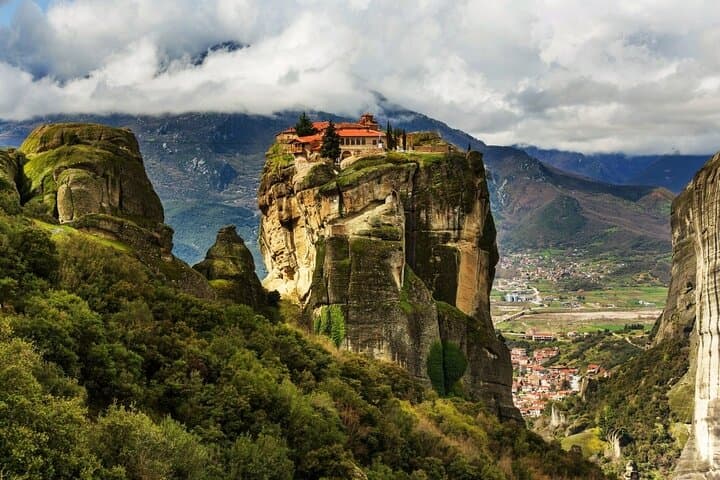
The drive to Meteora crosses Thessaly’s plain and then climbs to shoehorned monasteries atop vertical conglomerate pillars—sandstone and rounded pebbles cemented by time and water. The monasteries, largely 14th–19th century constructions, feel both fragile and immovable as you climb carved steps to chapels and frescoed cells.
On the return route you stop at Thermopylae, where a narrow coastal pass shaped history and the statue of King Leonidas stands as a compact, human-scale marker amid reeds and wind.
Practical guidance: the tour is private, travel is by air-conditioned vehicle with Wi‑Fi, and drivers provide commentary in English but do not accompany you inside sites. Expect uneven stone paths, many steps at Meteora, and modest dress required in monasteries. Bring sturdy shoes, layered clothing for varying elevations, sun protection, and a compact daypack—this itinerary compresses long drives and concentrated walking into two full days.
moderate.
2 days (full days of touring).
Moderate — you should be able to walk on uneven terrain and climb multiple flights of stairs over the two days
No, drivers give commentary in English and are knowledgeable, but they do not enter the archaeological sites with you or provide official guiding inside museums.
Entrance to museums and archaeological sites are typically not included—bring cash or card for admissions where required.
Yes—this private tour is suitable for all fitness levels, but families and older travelers should note there are stairs and uneven ground at Delphi and Meteora.
Yes; the tour provides flexible pickup and return to the same place or another preferred point within Athens as arranged at booking.
Delphi was the pan‑Hellenic sanctuary of Apollo and the seat of the Pythia; Meteora’s monasteries grew in the late medieval period when monks sought remote places for isolation and defense.
Meteora and Delphi are UNESCO sites with strict visitor rules to protect fragile frescoes and rock formations—stay on marked paths and follow monastery dress and behavior guidelines.
LS Tours operates guided outdoor trips and adventures with an emphasis on safety, stewardship, and memorable experiences.


You leave Athens before dawn and the highway unfolds like a promise—olive groves sliding past the window, limestone ridges rising to the horizon, and small villages blinking awake. By midmorning you arrive at Delphi: terraces of broken columns, the ruined podium of Apollo, and a museum that holds the chilly gaze of the Charioteer.
You leave Athens before dawn and the highway unfolds like a promise—olive groves sliding past the window, limestone ridges rising to the horizon, and small villages blinking awake. By midmorning you arrive at Delphi: terraces of broken columns, the ruined podium of Apollo, and a museum that holds the chilly gaze of the Charioteer.
Delphi sits on the south-west slope of Mount Parnassus, a place that guided political and spiritual decisions across the ancient Greek world; its geology—faulted limestone and steep terraces—made it a dramatic seat for an oracle whose voice carried across the valley.
The drive to Meteora crosses Thessaly’s plain and then climbs to shoehorned monasteries atop vertical conglomerate pillars—sandstone and rounded pebbles cemented by time and water. The monasteries, largely 14th–19th century constructions, feel both fragile and immovable as you climb carved steps to chapels and frescoed cells.
On the return route you stop at Thermopylae, where a narrow coastal pass shaped history and the statue of King Leonidas stands as a compact, human-scale marker amid reeds and wind.
Practical guidance: the tour is private, travel is by air-conditioned vehicle with Wi‑Fi, and drivers provide commentary in English but do not accompany you inside sites. Expect uneven stone paths, many steps at Meteora, and modest dress required in monasteries. Bring sturdy shoes, layered clothing for varying elevations, sun protection, and a compact daypack—this itinerary compresses long drives and concentrated walking into two full days.