THE ADVENTURE COLLECTIVE® · Independent discovery and booking for outdoor travel

Summit Ecuador’s Chimborazo in a focused two-day expedition: a high-camp overnight followed by a midnight push to 6,268 m. This guided climb combines technical glacier travel with dramatic Andean panoramas—best for fit, acclimatized climbers.
Summit Ecuador’s Chimborazo in a focused two-day expedition: a high-camp overnight followed by a midnight push to 6,268 m. This guided climb combines technical glacier travel with dramatic Andean panoramas—best for fit, acclimatized climbers.
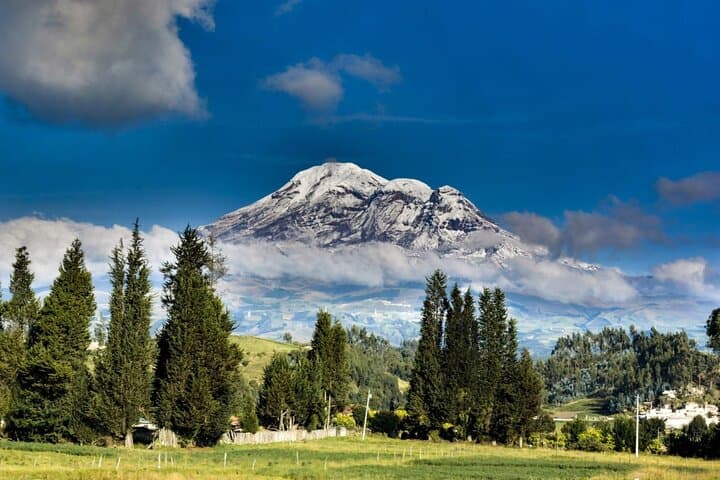
A hush falls across the high camp as climbers pull on crampons beneath a sky bruised with stars. The wind on Chimborazo seems to test resolve, nudging you forward as headlamps cut a thin ribbon up the glacier. By dawn the summit opens like a raw, white bowl—sharp ridgelines and distant Andean peaks under a low, clear sun.
Verified experiences and guided adventures in the surrounding area.
Operated by Peru Expeditions Tours · Riobamba, Chimborazo Province
A hush falls across the high camp as climbers pull on crampons beneath a sky bruised with stars. The wind on Chimborazo seems to test resolve, nudging you forward as headlamps cut a thin ribbon up the glacier. By dawn the summit opens like a raw, white bowl—sharp ridgelines and distant Andean peaks under a low, clear sun.
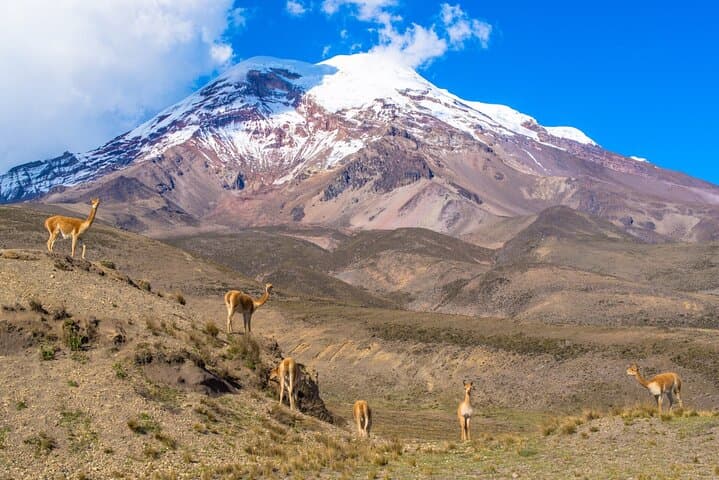
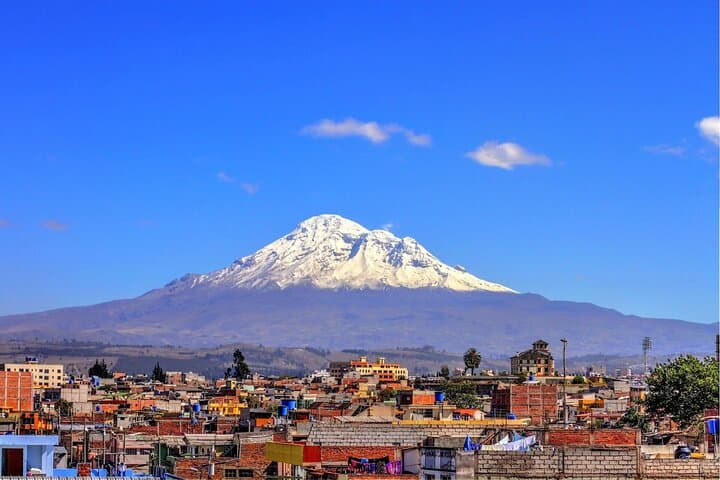
Chimborazo is an extinct stratovolcano whose weathered flanks record repeated ice ages and volcanic cycles; because it sits near the equator its summit is the point on Earth farthest from the planet's center. The mountain has been significant to Andean peoples for centuries and today sits inside a protected reserve that conserves high-altitude puna and glacial habitats.
Expect steep, glaciated slopes, hard-packed snow, and sections of scree on the lower approach. The standard itinerary runs two days: drive from Quito or Ambato to high camp (approx. 5,300 m), overnight, then a midnight start for a 6–8 hour ascent to 6,268 m and a 3–4 hour descent.
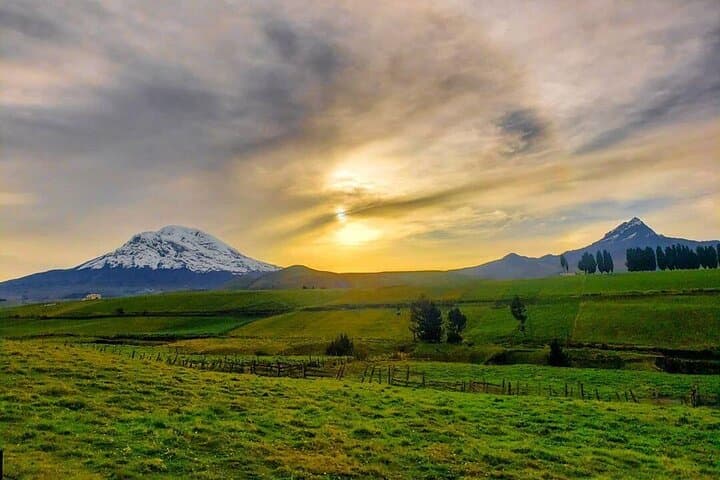
Practical edge: acclimatization is the single most important variable—plan additional days in Riobamba or Quito if you’ve recently arrived from sea level. Technical skills include basic crampon and ice-axe use and travel on roped teams; guides provide rope systems and safety gear. Hydrate, eat small salty snacks during the climb, and layer aggressively—the temperature swings are extreme. For those prepared, Chimborazo rewards with raw alpine exposure, wide vistas, and the rare satisfaction of standing on one of South America’s highest summits.
difficult.
2 days (approx. 24–30 hours active).
High aerobic fitness and prior high-altitude trekking experience; ability to move at a steady pace for 6–10 hours.
Plan on 6–8 hours to climb from the high camp (~5,300 m) to the 6,268 m summit depending on group pace and conditions.
Yes — prior glacier travel and comfort on crampons and with an ice axe are strongly recommended; guides can mentor but basic skills speed and safety.
Typical inclusions are transportation, high-camp accommodation (tents), meals, local ASEGUIM/UIAGM guides, technical safety gear and SIB registration.
The dry season (June–September) offers more stable weather, but climbs operate year‑round; expect more snow and variable conditions in the wet months.
Chimborazo has long cultural significance to Andean communities and was mapped and attempted by European alpinists in the 19th century; it remains a national landmark.
Glaciers on Chimborazo are retreating; the reserve manages visitor impact and registration (SIB) helps monitor biodiversity and limit disturbance.
Peru Expeditions Tours operates guided outdoor trips and adventures with an emphasis on safety, stewardship, and memorable experiences.
A hush falls across the high camp as climbers pull on crampons beneath a sky bruised with stars. The wind on Chimborazo seems to test resolve, nudging you forward as headlamps cut a thin ribbon up the glacier. By dawn the summit opens like a raw, white bowl—sharp ridgelines and distant Andean peaks under a low, clear sun.
A hush falls across the high camp as climbers pull on crampons beneath a sky bruised with stars. The wind on Chimborazo seems to test resolve, nudging you forward as headlamps cut a thin ribbon up the glacier. By dawn the summit opens like a raw, white bowl—sharp ridgelines and distant Andean peaks under a low, clear sun.
Chimborazo is an extinct stratovolcano whose weathered flanks record repeated ice ages and volcanic cycles; because it sits near the equator its summit is the point on Earth farthest from the planet's center. The mountain has been significant to Andean peoples for centuries and today sits inside a protected reserve that conserves high-altitude puna and glacial habitats.
Expect steep, glaciated slopes, hard-packed snow, and sections of scree on the lower approach. The standard itinerary runs two days: drive from Quito or Ambato to high camp (approx. 5,300 m), overnight, then a midnight start for a 6–8 hour ascent to 6,268 m and a 3–4 hour descent.
Practical edge: acclimatization is the single most important variable—plan additional days in Riobamba or Quito if you’ve recently arrived from sea level. Technical skills include basic crampon and ice-axe use and travel on roped teams; guides provide rope systems and safety gear. Hydrate, eat small salty snacks during the climb, and layer aggressively—the temperature swings are extreme. For those prepared, Chimborazo rewards with raw alpine exposure, wide vistas, and the rare satisfaction of standing on one of South America’s highest summits.