THE ADVENTURE COLLECTIVE® · Independent discovery and booking for outdoor travel

Ride with the rhythm of dromedaries through the Draa Valley’s palm groves and dunes on a two-day camel caravan from M’Hamid. Expect slow desert miles, nights under open sky, and nomadic hospitality at simple camps.
Ride with the rhythm of dromedaries through the Draa Valley’s palm groves and dunes on a two-day camel caravan from M’Hamid. Expect slow desert miles, nights under open sky, and nomadic hospitality at simple camps.
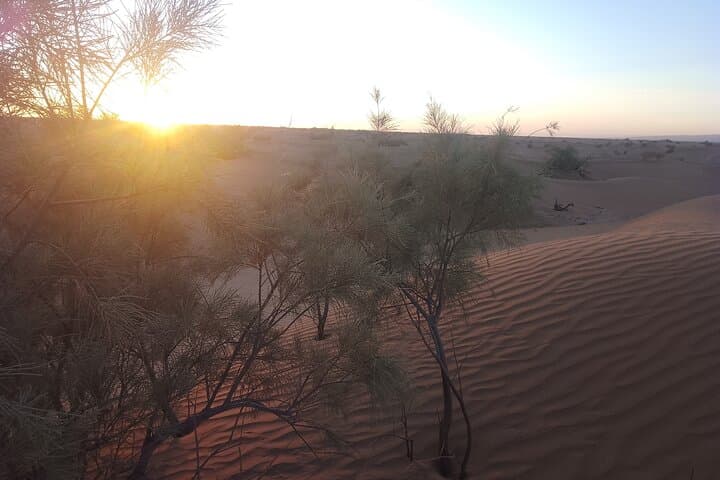
You climb onto a patient dromedary as the sun bleeds gold across the dunes and the palm grove of M'Hamid shrinks behind you. The first hours are a slow, rocking cadence—camels keep a steady 3–5 km/h—crossing hard-packed hamada, shimmering sand ridges and the green pockets of oasis where tamarisk shade promises lunch.
Verified experiences and guided adventures in the surrounding area.
Operated by Desert Atmosphere Tours · M'Hamid El Ghizlane, Drâa-Tafilalet
You climb onto a patient dromedary as the sun bleeds gold across the dunes and the palm grove of M'Hamid shrinks behind you. The first hours are a slow, rocking cadence—camels keep a steady 3–5 km/h—crossing hard-packed hamada, shimmering sand ridges and the green pockets of oasis where tamarisk shade promises lunch.
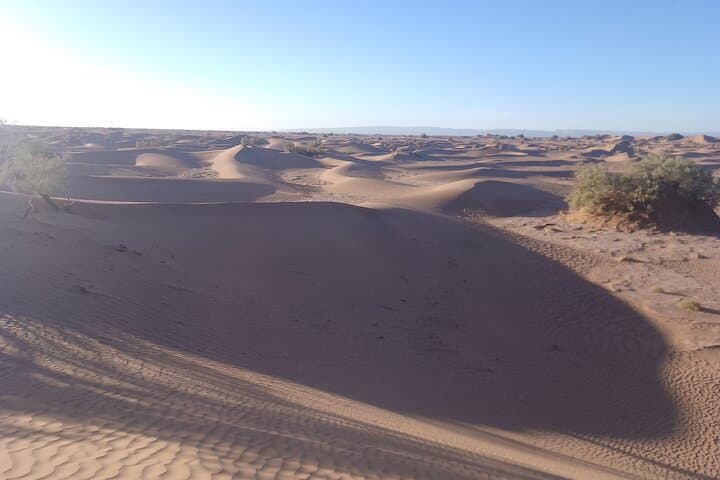
This route follows the lower Draa Valley, long a corridor for Saharan caravans. Geology alternates between compacted desert pavement (hamada) and wind-sculpted erg dunes; underfoot, the sand can shift from coarse ridges to fine, drifting flour. Culture here is visible in small kasbahs and the music and tea rituals you’ll share at camp: nomadic songs at night, and the traditional “sand loaf” baking by embers.
Over two days expect short daytime marches from camp to camp, an evening beneath a wide sky, and a morning ride back toward M'Hamid. Temperatures swing sharply—hot days, brisk nights—so plan clothing in layers. Footing off the camels involves limited walking on soft sand and rocky tracks; minimal elevation change but an unrelenting solar load.
Practical tips: bring 3–4 liters of water per day, high-SPF sun protection, and a small pack for essentials while mounted. If you’re sensitive to motion, take anti-nausea measures before mounting. The experience is low-impact physically but requires preparation for heat, sand, and basic desert camping comforts. Expect authentic desert rhythms, close contact with local hospitality, and long horizons that keep pushing your pace forward.
easy.
2 days.
Suitable for most fitness levels; basic mobility for mounting/dismounting camels and short walks on sand recommended
No—camels are led by experienced handlers and the ride is paced for beginners; people with severe back or mobility issues should consult the operator.
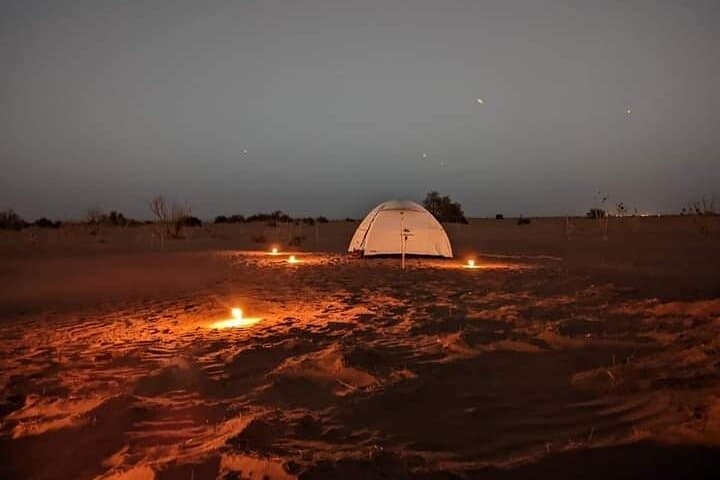
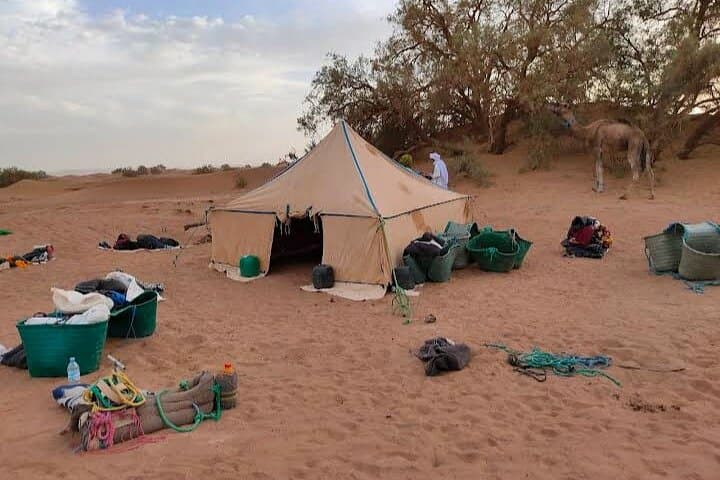
Camps are traditional desert setups—basic tents or bivouacs, communal meals and simple latrine facilities; hot showers are usually not available.
Yes for most children, but infants must sit on laps per operator rules and parents should assess long saddle times and desert conditions.
Expect limited or no mobile signal in dunes; some camps may offer solar charging but bring a power bank and offline maps.
M'Hamid has long been the southern gateway of Morocco, on historic caravan tracks linking the Draa Valley to the Sahara; kasbahs and oasis settlements reflect that trade and nomadic heritage.
The Sahara environment is fragile—stay on established routes, minimize campfire impact, and carry out all non-biodegradable waste to protect scarce water and native flora.
Desert Atmosphere Tours operates guided outdoor trips and adventures with an emphasis on safety, stewardship, and memorable experiences.
You climb onto a patient dromedary as the sun bleeds gold across the dunes and the palm grove of M'Hamid shrinks behind you. The first hours are a slow, rocking cadence—camels keep a steady 3–5 km/h—crossing hard-packed hamada, shimmering sand ridges and the green pockets of oasis where tamarisk shade promises lunch.
You climb onto a patient dromedary as the sun bleeds gold across the dunes and the palm grove of M'Hamid shrinks behind you. The first hours are a slow, rocking cadence—camels keep a steady 3–5 km/h—crossing hard-packed hamada, shimmering sand ridges and the green pockets of oasis where tamarisk shade promises lunch.
This route follows the lower Draa Valley, long a corridor for Saharan caravans. Geology alternates between compacted desert pavement (hamada) and wind-sculpted erg dunes; underfoot, the sand can shift from coarse ridges to fine, drifting flour. Culture here is visible in small kasbahs and the music and tea rituals you’ll share at camp: nomadic songs at night, and the traditional “sand loaf” baking by embers.
Over two days expect short daytime marches from camp to camp, an evening beneath a wide sky, and a morning ride back toward M'Hamid. Temperatures swing sharply—hot days, brisk nights—so plan clothing in layers. Footing off the camels involves limited walking on soft sand and rocky tracks; minimal elevation change but an unrelenting solar load.
Practical tips: bring 3–4 liters of water per day, high-SPF sun protection, and a small pack for essentials while mounted. If you’re sensitive to motion, take anti-nausea measures before mounting. The experience is low-impact physically but requires preparation for heat, sand, and basic desert camping comforts. Expect authentic desert rhythms, close contact with local hospitality, and long horizons that keep pushing your pace forward.