THE ADVENTURE COLLECTIVE® · Independent discovery and booking for outdoor travel

Spend two days crossing Cambodia’s lowlands from Phnom Penh to the Angkor complex: a day of pre-Angkorian ruins and Tonle Sap’s floating villages, then a sunrise visit to Angkor Wat, Bayon and Ta Prohm. Expect long drives, early mornings, and richly textured cultural encounters.
Spend two days crossing Cambodia’s lowlands from Phnom Penh to the Angkor complex: a day of pre-Angkorian ruins and Tonle Sap’s floating villages, then a sunrise visit to Angkor Wat, Bayon and Ta Prohm. Expect long drives, early mornings, and richly textured cultural encounters.
You step into the van before dawn, Phnom Penh’s humid air already warm against your skin, and the road unfurls toward rice plains and scattered wooden stilt houses. By midmorning the van pauses at Skun’s Spider Market, where the texture of local life — the calls of vendors, the scent of frying spices — feels immediate and uncompromising.
Verified experiences and guided adventures in the surrounding area.
Operated by Cambodia Taxi Driver · Siem Reap, Siem Reap Province
You step into the van before dawn, Phnom Penh’s humid air already warm against your skin, and the road unfurls toward rice plains and scattered wooden stilt houses. By midmorning the van pauses at Skun’s Spider Market, where the texture of local life — the calls of vendors, the scent of frying spices — feels immediate and uncompromising.
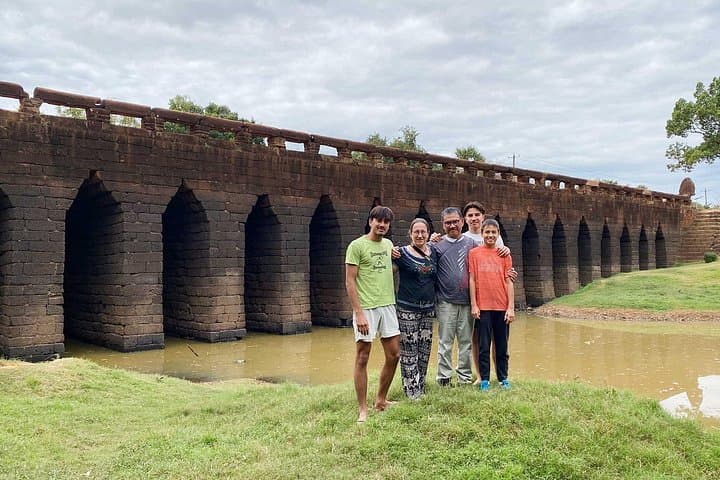
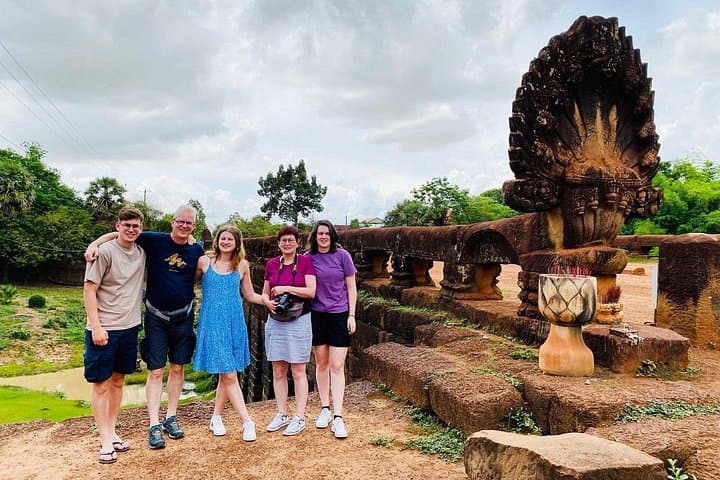
The route traces Cambodia’s deep history: Sambor Prei Kuk’s 7th-century brick sanctuaries rise from the forest floor with pre-Angkorian lintels and quiet courtyards. Geology here is gentle — lowland sandstone and alluvial soils support the lakes and waterways that make Tonle Sap such a dynamic ecosystem. On the lake, Kampong Kleang’s stilt villages appear like a community afloat, fishing boats threading channels as water levels swell and retreat with the seasons.
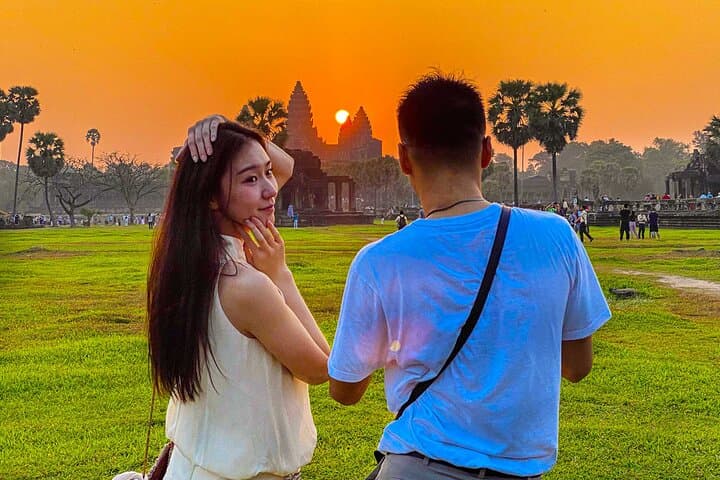
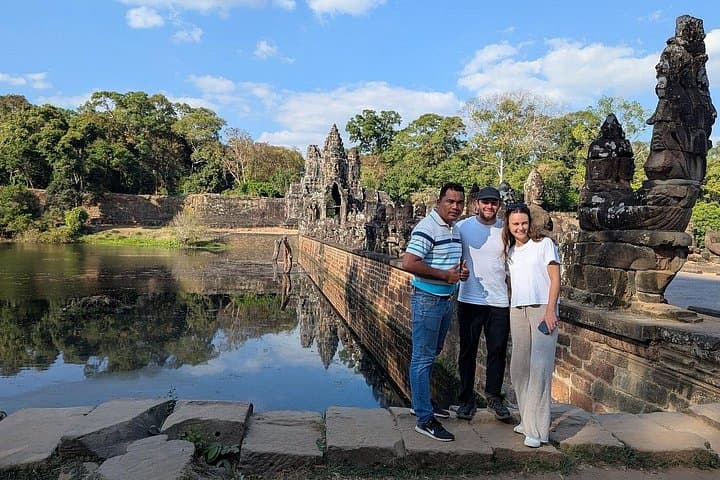
Day two brings the cinematic scale of Angkor Wat at sunrise, its reflecting pools mirroring carved pediments, then the stone-faced Bayon and the root-entangled corridors of Ta Prohm where fig and silk-cotton trees press history into living sculpture.
Practical edge: expect long transfers (several hours each day), early starts (sunrise visits begin around 5:00 AM), and temple grounds that require steady walking across uneven stone and packed earth. Bring sun protection, insect repellent, and water; modest clothing is required at religious sites. Time your visit outside the afternoon monsoon if possible, and leave room in your itinerary to absorb the scale and local rhythms rather than rush portraits and selfies.
easy.
2 days.
Light fitness required — comfortable walking and short climbs over uneven temple stones; all ages can participate.
Expect roughly 5–6 hours of driving total spread across stops; individual transfers vary and include sightseeing pauses.
This itinerary typically includes a local lunch and vehicle costs; Angkor Park entry tickets are usually not included — purchase separately.
Yes — the operator lists the tour as physically easy, though early starts and walking over uneven ground mean mobility considerations are important.
Yes — community boat rides are a common optional activity at Kampong Kleang to view stilt houses and seasonal fishing operations.
Sambor Prei Kuk predates Angkor, dating to the 7th century, while Angkor Wat was built in the 12th century under King Suryavarman II as a Hindu–later Buddhist temple complex.
Rising visitor numbers strain temple conservation and local ecosystems; stick to marked paths, avoid touching bas-reliefs, and use licensed guides to support community-based tourism.
Cambodia Taxi Driver operates guided outdoor trips and adventures with an emphasis on safety, stewardship, and memorable experiences.
You step into the van before dawn, Phnom Penh’s humid air already warm against your skin, and the road unfurls toward rice plains and scattered wooden stilt houses. By midmorning the van pauses at Skun’s Spider Market, where the texture of local life — the calls of vendors, the scent of frying spices — feels immediate and uncompromising.
You step into the van before dawn, Phnom Penh’s humid air already warm against your skin, and the road unfurls toward rice plains and scattered wooden stilt houses. By midmorning the van pauses at Skun’s Spider Market, where the texture of local life — the calls of vendors, the scent of frying spices — feels immediate and uncompromising.
The route traces Cambodia’s deep history: Sambor Prei Kuk’s 7th-century brick sanctuaries rise from the forest floor with pre-Angkorian lintels and quiet courtyards. Geology here is gentle — lowland sandstone and alluvial soils support the lakes and waterways that make Tonle Sap such a dynamic ecosystem. On the lake, Kampong Kleang’s stilt villages appear like a community afloat, fishing boats threading channels as water levels swell and retreat with the seasons.
Day two brings the cinematic scale of Angkor Wat at sunrise, its reflecting pools mirroring carved pediments, then the stone-faced Bayon and the root-entangled corridors of Ta Prohm where fig and silk-cotton trees press history into living sculpture.
Practical edge: expect long transfers (several hours each day), early starts (sunrise visits begin around 5:00 AM), and temple grounds that require steady walking across uneven stone and packed earth. Bring sun protection, insect repellent, and water; modest clothing is required at religious sites. Time your visit outside the afternoon monsoon if possible, and leave room in your itinerary to absorb the scale and local rhythms rather than rush portraits and selfies.