THE ADVENTURE COLLECTIVE® · Independent discovery and booking for outdoor travel

A compact, two-day air-and-land circuit from Cairo connects Luxor’s temples, the Valley of the Kings, Aswan’s riverfront, and the monumental Abu Simbel—ideal for travelers short on time but keen on Upper Egypt’s highlights.
A compact, two-day air-and-land circuit from Cairo connects Luxor’s temples, the Valley of the Kings, Aswan’s riverfront, and the monumental Abu Simbel—ideal for travelers short on time but keen on Upper Egypt’s highlights.
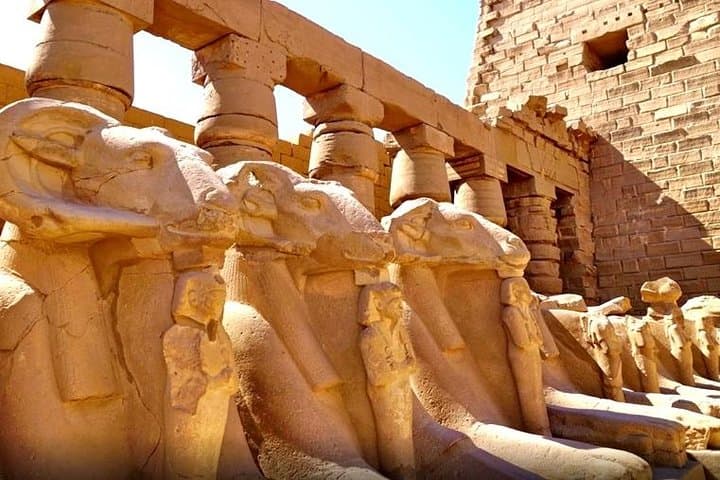
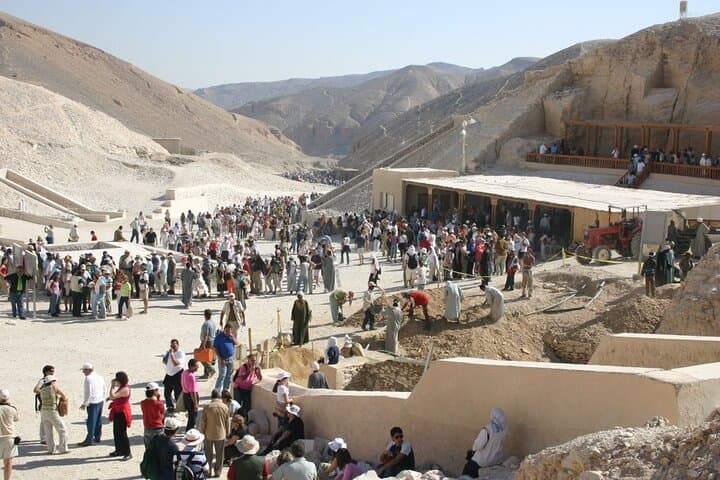
You wake before dawn in Cairo, suitcase in hand, while the Nile still holds the city’s heat in its slow current. In less than an hour you’re airborne toward Luxor, where columns rise like an organized crowd and the desert rocks keep their cool. The Valley of the Kings cuts into the West Bank — tombs hewn into ancient limestone where painted corridors lead to chambers that dared the ages to forget them.
Verified experiences and guided adventures in the surrounding area.
Operated by Egypt Travel Line · Luxor, Luxor Governorate
You wake before dawn in Cairo, suitcase in hand, while the Nile still holds the city’s heat in its slow current. In less than an hour you’re airborne toward Luxor, where columns rise like an organized crowd and the desert rocks keep their cool. The Valley of the Kings cuts into the West Bank — tombs hewn into ancient limestone where painted corridors lead to chambers that dared the ages to forget them.
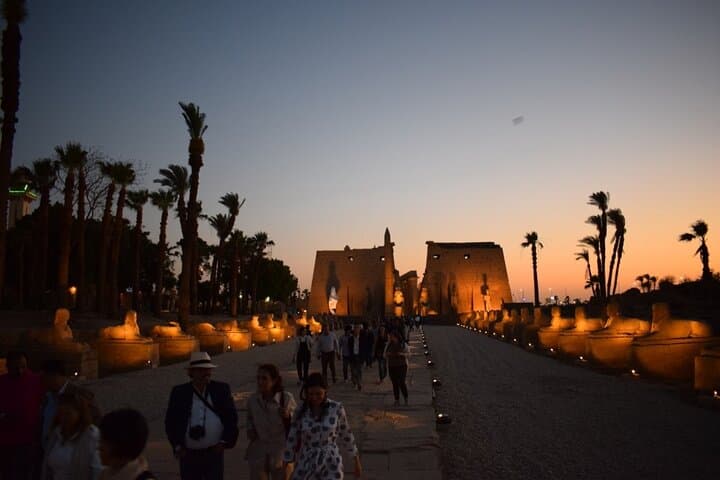
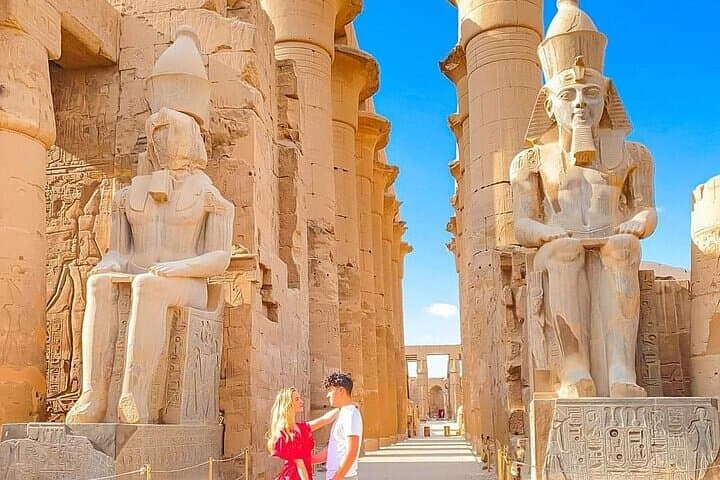
This two-day circuit stitches together three eras of Upper Egypt: the open courts and colonnades of Karnak and Luxor Temple on the Nile’s eastern shore; the funerary terraces of Hatshepsut and the weathered Colossi of Memnon on the west; and the relocated rock-cut doubles at Abu Simbel, a 13th-century BC complex saved and lifted above Lake Nasser during the dam project of the 1960s.
Geology here is hands-on: sandstone and limestone bear pharaohs’ names; the Nile’s floodplain created the fertile corridor that defined ancient settlement and modern towns alike. Local culture remains centered on river life, markets, and tourism services in Luxor and Aswan, while conservation efforts focus on controlling visitor impact at fragile tomb surfaces and relocated temples.
Practical guidance: expect very early starts, stairs and uneven stone underfoot, and long transfer times between sites. Carry sun protection, a refillable water bottle, and cash for tips and small purchases. Museums and major temples require tickets and guarded entry times—follow your guide’s schedule to make the most of short visits. Pace yourself: the route rewards attention more than speed.
moderate.
2 days (approx. 48 hours).
Adequate mobility for walking, stairs and short hikes; reasonable stamina for long days and early mornings.
Domestic flights between Cairo and Luxor are about one hour; road or train transfers (Luxor–Aswan) range from 3–4 hours depending on train schedules and traffic.
Most site admissions listed in the itinerary are included, but some special tombs or photography permits may require extra fees; check your booking details and bring cash.
The tour notes wheelchair-accessible options, but many archaeological sites have uneven surfaces and steps; contact the operator in advance to arrange assistance where possible.
This is a tightly scheduled two-day program; free time is limited. Expect guided visits and transfers with short windows for self-guided exploration.
The sites span millennia: New Kingdom pharaohs built the great temples and tombs in Luxor and Aswan, while Abu Simbel was carved under Ramses II and later moved in the 1960s to preserve it from Lake Nasser’s waters.
Ongoing conservation focuses on controlling humidity, visitor numbers in fragile tombs, and managing the effects of tourism on ancient stone and painted surfaces.
Egypt Travel Line operates guided outdoor trips and adventures with an emphasis on safety, stewardship, and memorable experiences.
You wake before dawn in Cairo, suitcase in hand, while the Nile still holds the city’s heat in its slow current. In less than an hour you’re airborne toward Luxor, where columns rise like an organized crowd and the desert rocks keep their cool. The Valley of the Kings cuts into the West Bank — tombs hewn into ancient limestone where painted corridors lead to chambers that dared the ages to forget them.
You wake before dawn in Cairo, suitcase in hand, while the Nile still holds the city’s heat in its slow current. In less than an hour you’re airborne toward Luxor, where columns rise like an organized crowd and the desert rocks keep their cool. The Valley of the Kings cuts into the West Bank — tombs hewn into ancient limestone where painted corridors lead to chambers that dared the ages to forget them.
This two-day circuit stitches together three eras of Upper Egypt: the open courts and colonnades of Karnak and Luxor Temple on the Nile’s eastern shore; the funerary terraces of Hatshepsut and the weathered Colossi of Memnon on the west; and the relocated rock-cut doubles at Abu Simbel, a 13th-century BC complex saved and lifted above Lake Nasser during the dam project of the 1960s.
Geology here is hands-on: sandstone and limestone bear pharaohs’ names; the Nile’s floodplain created the fertile corridor that defined ancient settlement and modern towns alike. Local culture remains centered on river life, markets, and tourism services in Luxor and Aswan, while conservation efforts focus on controlling visitor impact at fragile tomb surfaces and relocated temples.
Practical guidance: expect very early starts, stairs and uneven stone underfoot, and long transfer times between sites. Carry sun protection, a refillable water bottle, and cash for tips and small purchases. Museums and major temples require tickets and guarded entry times—follow your guide’s schedule to make the most of short visits. Pace yourself: the route rewards attention more than speed.