THE ADVENTURE COLLECTIVE® · Independent discovery and booking for outdoor travel

Cross salt flats and palm oases on a compact two-day circuit from Douz to Tozeur. Experience cave dwellings, Roman ruins, camel rides and Star Wars dunes with practical logistics for desert travel.
Cross salt flats and palm oases on a compact two-day circuit from Douz to Tozeur. Experience cave dwellings, Roman ruins, camel rides and Star Wars dunes with practical logistics for desert travel.
You step out of an air-conditioned minivan into a wind that seems to count the grains of sand as it passes—here the desert speaks in white salt and ochre dunes. The first day threads Roman columns at El Jem, the shaded oases of Gabès and the subterranean rooms of Matmata before folding into Douz, the traditional gateway to the Sahara where camels and quad bikes mark time differently.
Verified experiences and guided adventures in the surrounding area.
Operated by Ôthentic Travel & Services · Tozeur, Tozeur Governorate
You step out of an air-conditioned minivan into a wind that seems to count the grains of sand as it passes—here the desert speaks in white salt and ochre dunes. The first day threads Roman columns at El Jem, the shaded oases of Gabès and the subterranean rooms of Matmata before folding into Douz, the traditional gateway to the Sahara where camels and quad bikes mark time differently.
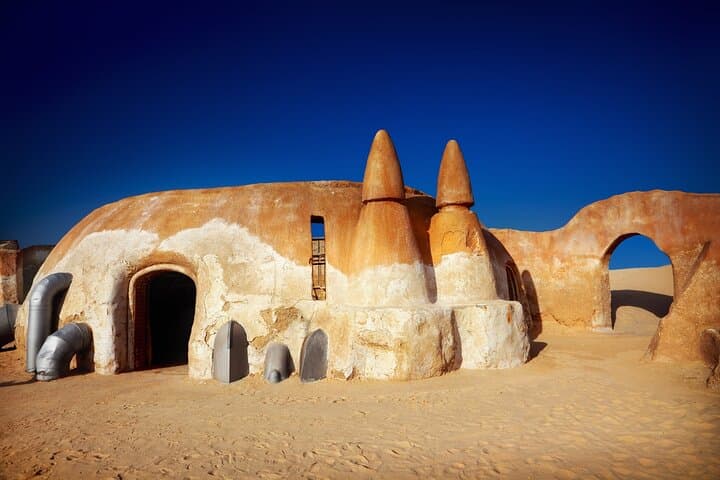
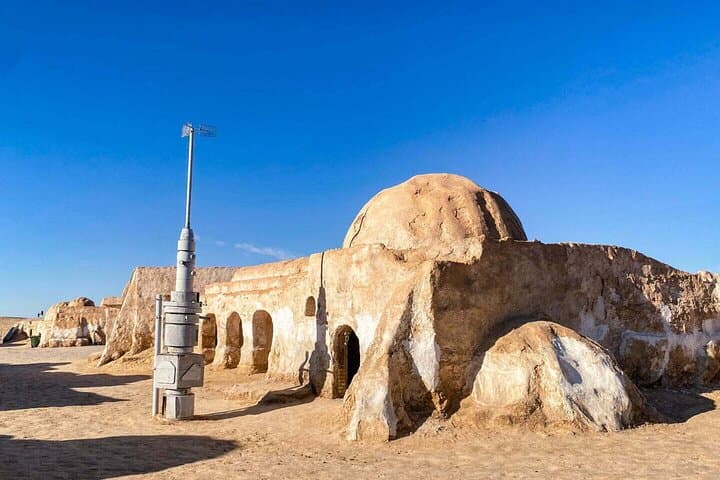
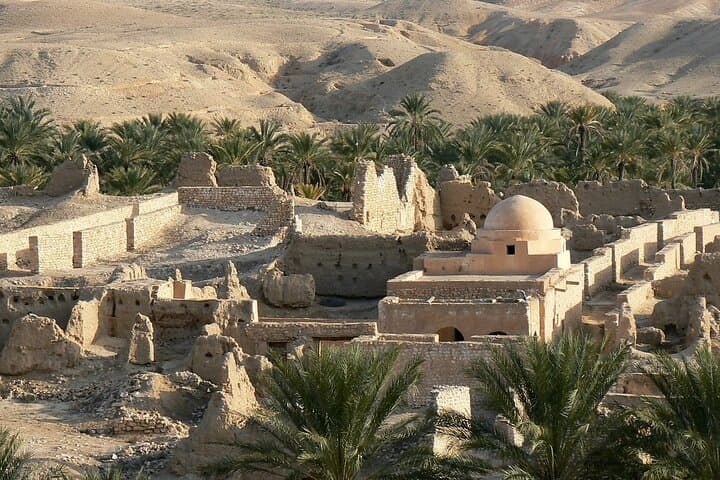
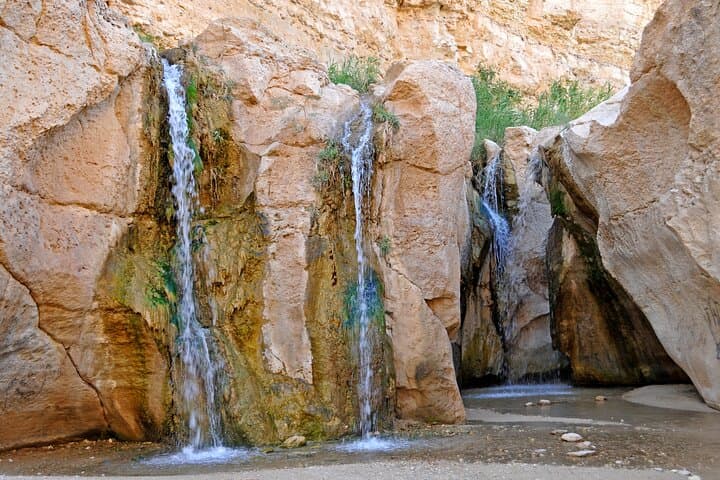
This route crosses contrasting layers of Tunisia’s past: Roman urbanism, Amazigh (Berber) vernacular architecture carved into limestone, and the salt flats of Chott el-Jerid, a geological pan that shimmers like a mirage. Tozeur’s palm groves and the mountain oases of Chebika and Tamerza show how water sculpts refuge out of aridity; nearby Ong Jmal’s dunes earned a cinematic afterlife as Star Wars locations.
Culturally, expect conversations threaded with crafts—handwoven carpets in Kairouan, henna and jasmine in Gabès—and food that emphasizes dates, olive oil and stews slow-cooked over coals. The itinerary balances sightseeing with time to feel the desert’s scale: a camel ride at dusk, a 4x4 crossing at midday, a quiet walk through Tozeur’s medina.
Practical guidance: carry sun protection and at least 2 liters of water, layers for cool nights, and cash for small purchases. Travel distances are long—prepare for several hours of driving each day—and mobile coverage can be patchy. With comfortable footwear and a patient pace, this two-day loop is an efficient way to experience Tunisia’s desert landscapes and living traditions.
moderate.
2 days.
Basic to moderate fitness—able to manage short walks, camel saddles and multiple transfers across varied terrain
The tour covers long road stretches between sites—expect several hours of driving each day with stops for sightseeing and short walks.
Camel or quad-bike experiences are offered depending on the chosen excursion in Douz—confirm with the operator when booking.
Yes—the itinerary is suitable for a range of fitness levels with mostly short, low-intensity walks and vehicle transfers; infant seats are available on request.
Travelers should carry a valid passport; visa requirements depend on nationality—check Tunisia’s entry rules before travel and keep photocopies on hand.
The route threads Roman heritage at El Jem, millennia-old Amazigh settlements like Matmata and Kairouan’s early Islamic significance, reflecting layers of North African history.
Water management is critical; please avoid waste in oases and respect local practices around palm groves and irrigation. Stick to marked paths to limit erosion of fragile desert soils.
Ôthentic Travel & Services operates guided outdoor trips and adventures with an emphasis on safety, stewardship, and memorable experiences.
You step out of an air-conditioned minivan into a wind that seems to count the grains of sand as it passes—here the desert speaks in white salt and ochre dunes. The first day threads Roman columns at El Jem, the shaded oases of Gabès and the subterranean rooms of Matmata before folding into Douz, the traditional gateway to the Sahara where camels and quad bikes mark time differently.
You step out of an air-conditioned minivan into a wind that seems to count the grains of sand as it passes—here the desert speaks in white salt and ochre dunes. The first day threads Roman columns at El Jem, the shaded oases of Gabès and the subterranean rooms of Matmata before folding into Douz, the traditional gateway to the Sahara where camels and quad bikes mark time differently.
This route crosses contrasting layers of Tunisia’s past: Roman urbanism, Amazigh (Berber) vernacular architecture carved into limestone, and the salt flats of Chott el-Jerid, a geological pan that shimmers like a mirage. Tozeur’s palm groves and the mountain oases of Chebika and Tamerza show how water sculpts refuge out of aridity; nearby Ong Jmal’s dunes earned a cinematic afterlife as Star Wars locations.
Culturally, expect conversations threaded with crafts—handwoven carpets in Kairouan, henna and jasmine in Gabès—and food that emphasizes dates, olive oil and stews slow-cooked over coals. The itinerary balances sightseeing with time to feel the desert’s scale: a camel ride at dusk, a 4x4 crossing at midday, a quiet walk through Tozeur’s medina.
Practical guidance: carry sun protection and at least 2 liters of water, layers for cool nights, and cash for small purchases. Travel distances are long—prepare for several hours of driving each day—and mobile coverage can be patchy. With comfortable footwear and a patient pace, this two-day loop is an efficient way to experience Tunisia’s desert landscapes and living traditions.