THE ADVENTURE COLLECTIVE® · Independent discovery and booking for outdoor travel

Two days of off-road driving, sandboarding, desert hikes and a Bedouin camp in the White and Black Deserts around Bahariya Oasis. Expect stark geology, star-filled nights, and practical, hands-on cultural experiences.
Two days of off-road driving, sandboarding, desert hikes and a Bedouin camp in the White and Black Deserts around Bahariya Oasis. Expect stark geology, star-filled nights, and practical, hands-on cultural experiences.
A late-afternoon road from Cairo dissolves into ochre and shadow; by dusk the convoy of 4x4 Land Cruisers threads a ribbon of track into an open, silent country where wind-carved silhouettes crowd the horizon. Camp is pitched in the White Desert beneath chalk mushrooms and vaulting white monoliths, and the stars—unhindered by city glow—seem close enough to touch.
Verified experiences and guided adventures in the surrounding area.
Operated by Dune Raider · Bawiti, Giza Governorate
A late-afternoon road from Cairo dissolves into ochre and shadow; by dusk the convoy of 4x4 Land Cruisers threads a ribbon of track into an open, silent country where wind-carved silhouettes crowd the horizon. Camp is pitched in the White Desert beneath chalk mushrooms and vaulting white monoliths, and the stars—unhindered by city glow—seem close enough to touch.
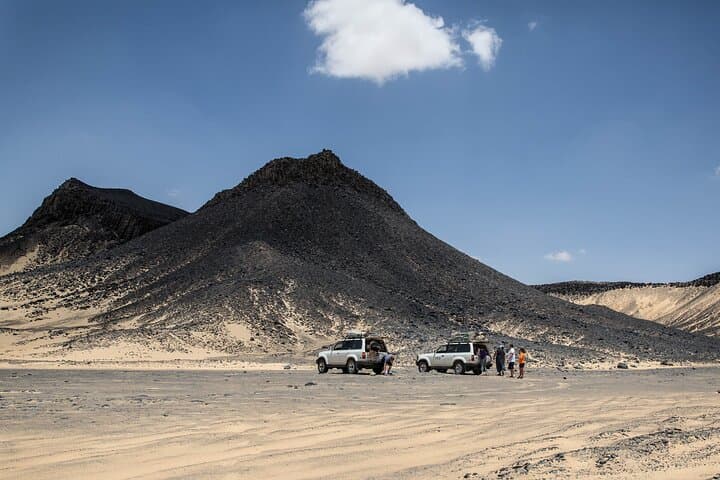
The Bahariya Oasis sits at the edge of Egypt’s Western Desert and has served as a human refuge and caravan stop since antiquity. Its geology is a study in contrasts: the Black Desert’s basaltic, volcanic-capped hills give way to the bleached gypsum formations of the White Desert, sculpted over millennia by wind and occasional flash floods. Bawiti’s settlement history and Bedouin culture still shape daily life—guests visit family homes for homemade lunches and hear oral histories around campfires.
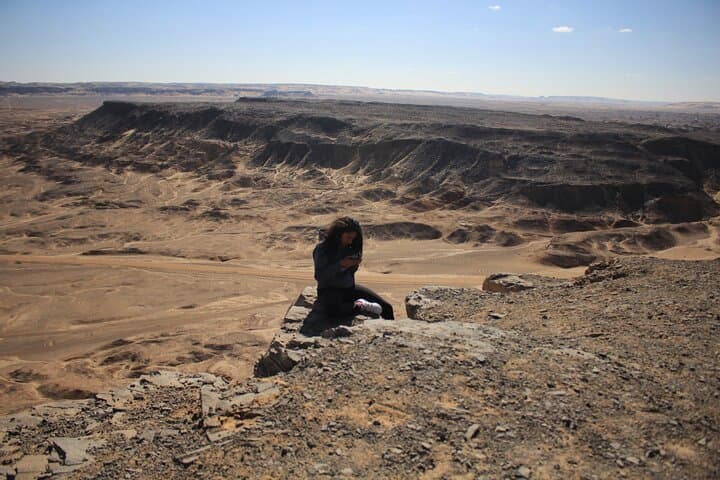
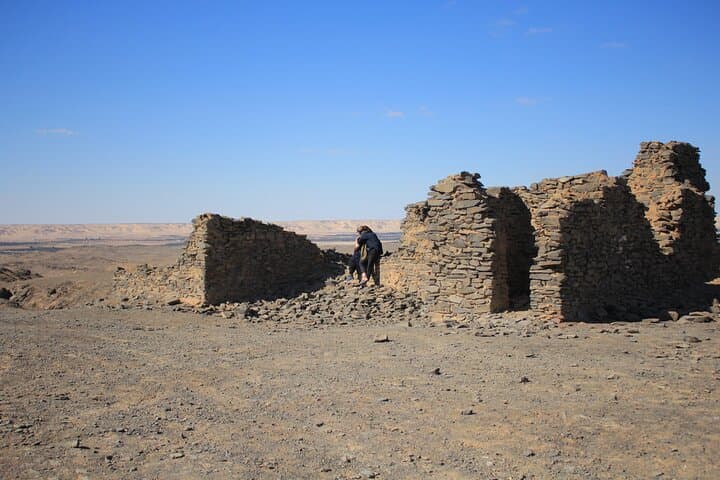
Over two days expect short hikes to wartime lookout points, visits to Roman-era springs like Ain Khadra, sandboarding in Agabat Valley, and a dip in mineral springs at El Heiz. Guides run logistics and story-telling; sleeping bags and simple Bedouin tents are provided.
Practical guidance: pack layers for large diurnal swings, bring a high-capacity water bottle, sun protection, and sturdy closed-toe shoes for rocky approaches and sand. Morning light is best for photography and calmer winds; plan pickups from Cairo early to avoid midday heat on the approach. Respect local customs—ask before photographing people—and follow Leave No Trace practices: carry out all waste and minimize campfire impacts.
easy.
2 days.
Suitable for most fitness levels; involves short hikes (30–120 minutes) and standing on board for sandboarding.
Most departures collect from Cairo; the tour returns to the same general pickup area after two days—confirm your pickup point when booking.
Activities are low-impact: sandboarding requires balance but no technical skill; hikes are short to moderate and suitable for most participants.
Yes—traditional Bedouin camp setups and sleeping bags are included; bringing a personal liner increases comfort on cold nights.
Drink only bottled or guide-provided water; avoid local tap water unless explicitly stated by your guide or accommodation.
Bahariya Oasis has been a strategic rest stop and agricultural pocket since Pharaonic and Roman times; its springs sustained settlements and caravan routes across the Western Desert.
The fragile desert surface and unique rock formations are vulnerable to off-trail driving and litter; stick to established tracks, use camp stoves instead of uncontrolled fires when possible, and pack out all trash.
Dune Raider operates guided outdoor trips and adventures with an emphasis on safety, stewardship, and memorable experiences.
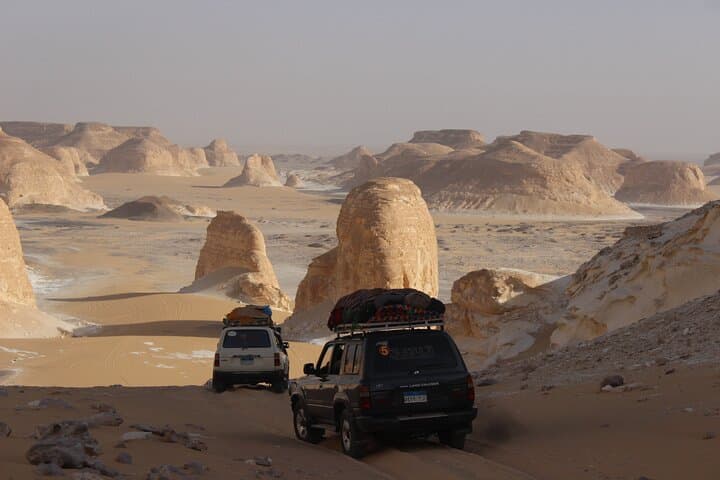
A late-afternoon road from Cairo dissolves into ochre and shadow; by dusk the convoy of 4x4 Land Cruisers threads a ribbon of track into an open, silent country where wind-carved silhouettes crowd the horizon. Camp is pitched in the White Desert beneath chalk mushrooms and vaulting white monoliths, and the stars—unhindered by city glow—seem close enough to touch.
A late-afternoon road from Cairo dissolves into ochre and shadow; by dusk the convoy of 4x4 Land Cruisers threads a ribbon of track into an open, silent country where wind-carved silhouettes crowd the horizon. Camp is pitched in the White Desert beneath chalk mushrooms and vaulting white monoliths, and the stars—unhindered by city glow—seem close enough to touch.
The Bahariya Oasis sits at the edge of Egypt’s Western Desert and has served as a human refuge and caravan stop since antiquity. Its geology is a study in contrasts: the Black Desert’s basaltic, volcanic-capped hills give way to the bleached gypsum formations of the White Desert, sculpted over millennia by wind and occasional flash floods. Bawiti’s settlement history and Bedouin culture still shape daily life—guests visit family homes for homemade lunches and hear oral histories around campfires.
Over two days expect short hikes to wartime lookout points, visits to Roman-era springs like Ain Khadra, sandboarding in Agabat Valley, and a dip in mineral springs at El Heiz. Guides run logistics and story-telling; sleeping bags and simple Bedouin tents are provided.
Practical guidance: pack layers for large diurnal swings, bring a high-capacity water bottle, sun protection, and sturdy closed-toe shoes for rocky approaches and sand. Morning light is best for photography and calmer winds; plan pickups from Cairo early to avoid midday heat on the approach. Respect local customs—ask before photographing people—and follow Leave No Trace practices: carry out all waste and minimize campfire impacts.