THE ADVENTURE COLLECTIVE® · Independent discovery and booking for outdoor travel

A focused two-day guided journey from Arras that follows Australian units across the Western Front. Visit Villers-Bretonneux, Pozieres, Fromelles and Ypres with a guide who specializes in Australian military history.
A focused two-day guided journey from Arras that follows Australian units across the Western Front. Visit Villers-Bretonneux, Pozieres, Fromelles and Ypres with a guide who specializes in Australian military history.
Dawn in Arras starts cool and clear; the town square is quiet while an air-conditioned minibus gathers a small group and a guide who speaks with the authority of long research and local contacts. Over the next two days you follow Australian footsteps across fields that still hold the shape of war — chalk ridges, shell-cratered hollows and re-cut trenches that seem to push the landscape forward.
Verified experiences and guided adventures in the surrounding area.
Operated by Sacred Ground Tours · Arras, Hauts-de-France
Dawn in Arras starts cool and clear; the town square is quiet while an air-conditioned minibus gathers a small group and a guide who speaks with the authority of long research and local contacts. Over the next two days you follow Australian footsteps across fields that still hold the shape of war — chalk ridges, shell-cratered hollows and re-cut trenches that seem to push the landscape forward.
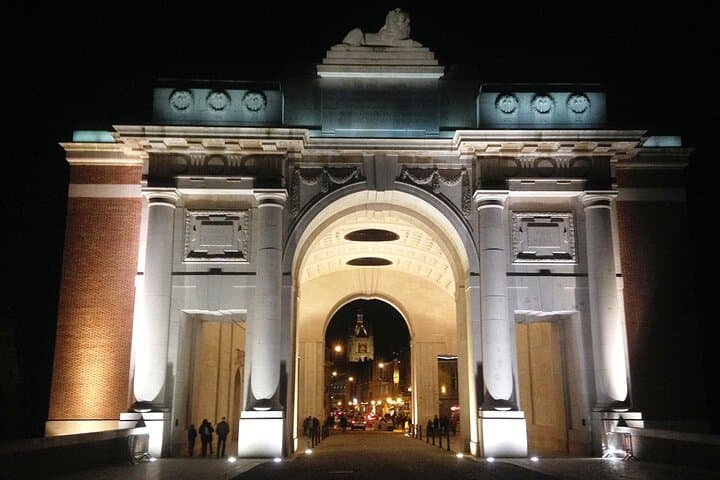
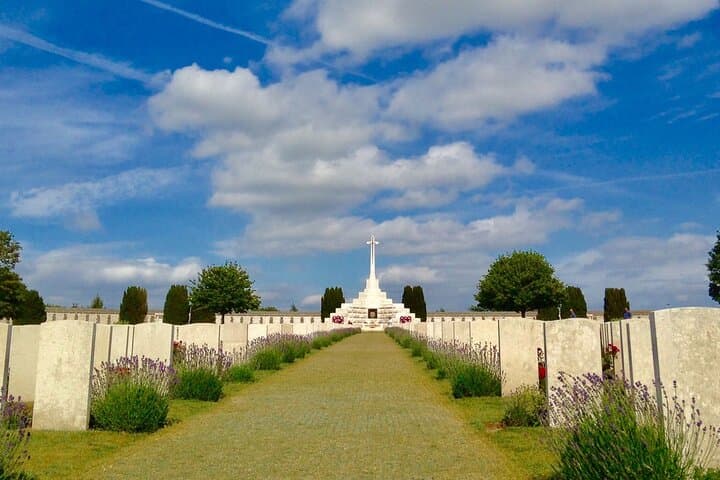
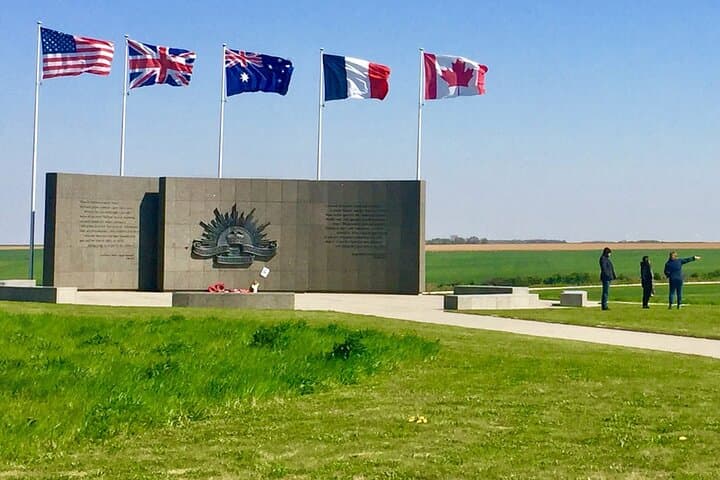
This itinerary traces key WWI actions: Villers-Bretonneux and its ANZAC commemorations, the Somme’s mass cemeteries, Pozieres’ slopes where the 1st Australian Division suffered heavy losses, and the battle scars around Fromelles and Messines. Geologically the route crosses northern France’s Cretaceous chalk plateau — firm underfoot but pockmarked by mines and craters that altered drainage and soil. Culturally the region retains a strong commemorative life: local museums, dawn services and the nightly Last Post in Ypres anchor memory to place.
Practical guidance: expect full touring days with short guided walks at sites, most on easy terrain but sometimes uneven mud and exposed stone. Bring layered clothing for open ridges, sturdy shoes for crater rims and a respectful attitude at cemeteries and memorials. Photography is welcome but modesty is expected during services and near headstones. The small-group format (max seven) allows time to locate individual graves or family sites when provided in advance.
Plan travel time to/from Arras, carry ID for cross-border stops into Belgium, and reserve the tour early during ANZAC and summer dates when demand spikes.
moderate.
2 days.
Suitable for most adults with basic mobility; be prepared for several short walks on uneven ground each day
All tours start and end in Arras; confirm the exact pickup point when booking.
Yes—small group sizes allow the guide to locate graves or memorial inscriptions if you provide names and unit details before departure.
Entry fees are listed as included in the tour’s stated inclusions for specified sites; confirm which museums are covered when booking.
The tour is described as physically easy overall, but uneven terrain at battlefield sites can be challenging; contact the operator to discuss mobility needs.
The tour follows sites where Australian formations played decisive roles on the Western Front from 1916–1918, including innovative tactics at Le Hamel under General Monash.
Many sites are maintained by Commonwealth War Graves and local authorities—stay on paths, avoid disturbing turf over buried remains, and support local museums that fund preservation.
Sacred Ground Tours operates guided outdoor trips and adventures with an emphasis on safety, stewardship, and memorable experiences.
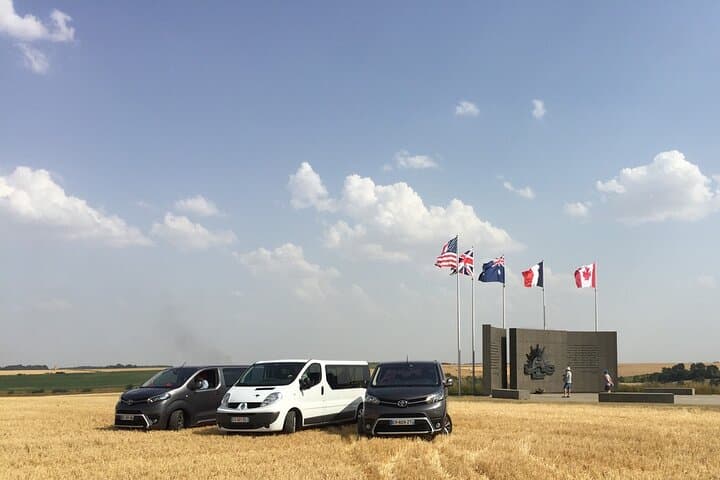
Dawn in Arras starts cool and clear; the town square is quiet while an air-conditioned minibus gathers a small group and a guide who speaks with the authority of long research and local contacts. Over the next two days you follow Australian footsteps across fields that still hold the shape of war — chalk ridges, shell-cratered hollows and re-cut trenches that seem to push the landscape forward.
Dawn in Arras starts cool and clear; the town square is quiet while an air-conditioned minibus gathers a small group and a guide who speaks with the authority of long research and local contacts. Over the next two days you follow Australian footsteps across fields that still hold the shape of war — chalk ridges, shell-cratered hollows and re-cut trenches that seem to push the landscape forward.
This itinerary traces key WWI actions: Villers-Bretonneux and its ANZAC commemorations, the Somme’s mass cemeteries, Pozieres’ slopes where the 1st Australian Division suffered heavy losses, and the battle scars around Fromelles and Messines. Geologically the route crosses northern France’s Cretaceous chalk plateau — firm underfoot but pockmarked by mines and craters that altered drainage and soil. Culturally the region retains a strong commemorative life: local museums, dawn services and the nightly Last Post in Ypres anchor memory to place.
Practical guidance: expect full touring days with short guided walks at sites, most on easy terrain but sometimes uneven mud and exposed stone. Bring layered clothing for open ridges, sturdy shoes for crater rims and a respectful attitude at cemeteries and memorials. Photography is welcome but modesty is expected during services and near headstones. The small-group format (max seven) allows time to locate individual graves or family sites when provided in advance.
Plan travel time to/from Arras, carry ID for cross-border stops into Belgium, and reserve the tour early during ANZAC and summer dates when demand spikes.