THE ADVENTURE COLLECTIVE® · Independent discovery and booking for outdoor travel

Spend two days above 4,000 m exploring Ausangate’s glaciers, Rainbow Mountain (Vinicunca) and the secluded Red Valley. This guided trek combines high passes, lakeside camping, and encounters with Andean communities.
Spend two days above 4,000 m exploring Ausangate’s glaciers, Rainbow Mountain (Vinicunca) and the secluded Red Valley. This guided trek combines high passes, lakeside camping, and encounters with Andean communities.
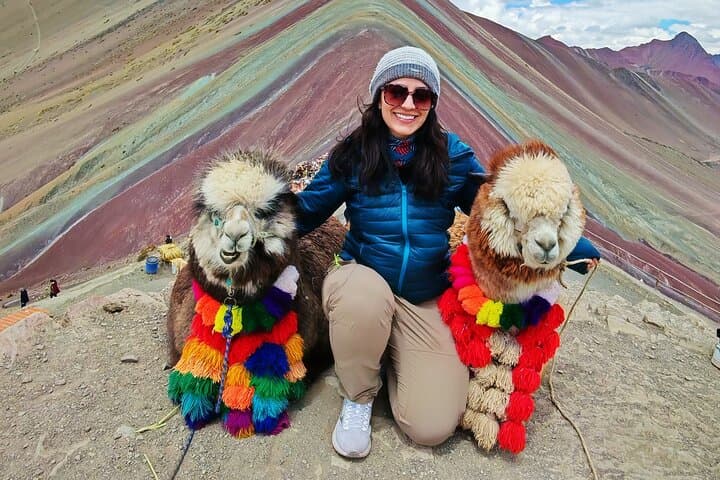
A pre-dawn van slips away from Cusco, the highway thinning as clouds lift off Andean ridges and the first light paints the glaciers on Ausangate. By the time hikers step onto the trail at Quesiuno, the mountains feel alive—snowfields watching, moraine streams daring you forward, and alpaca herds scattering like quiet punctuation.
Verified experiences and guided adventures in the surrounding area.
Operated by Trails to Machu Picchu · Pitumarca, Cusco
A pre-dawn van slips away from Cusco, the highway thinning as clouds lift off Andean ridges and the first light paints the glaciers on Ausangate. By the time hikers step onto the trail at Quesiuno, the mountains feel alive—snowfields watching, moraine streams daring you forward, and alpaca herds scattering like quiet punctuation.
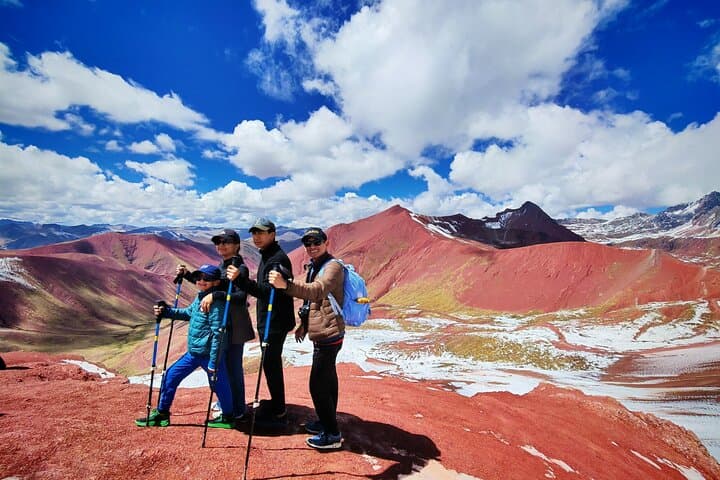
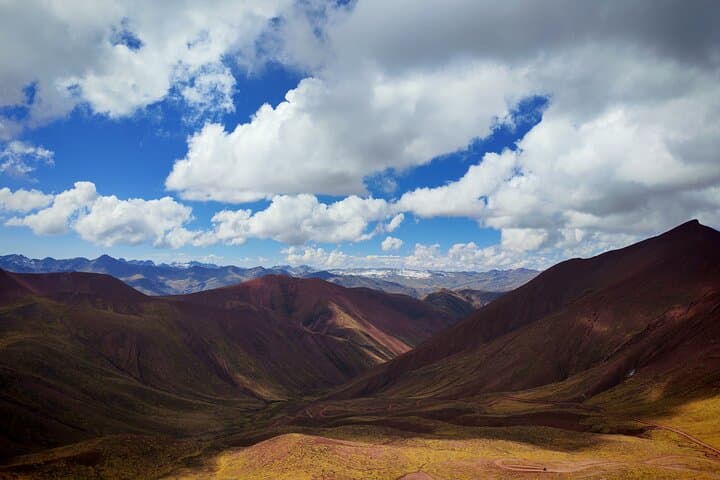
The route traces high Andean history: shepherding corridors threaded with Quechua communities that have tended these slopes for centuries. Geology here is blunt and honest—layers of sediment and mineral oxides exposed by uplift and glaciation produce Vinicunca’s striped tones and the deep iron reds of the Red Valley. Cultural markers—stone corrals, carved trail stones, and the occasional ch’arki drying rack—offer windows into pastoral life at altitude.
Expect two long days of high-altitude trekking: day one climbs to passes near 4,870–4,985 m before camping beside Surineqocha; day two rises to the Rainbow viewpoint around 5,100 m and visits the quieter Red Valley. Trails are a mix of packed dirt, rocky steps, and grassy switchbacks with cumulative elevation gain of roughly 700–1,000 m per day depending on route choices.
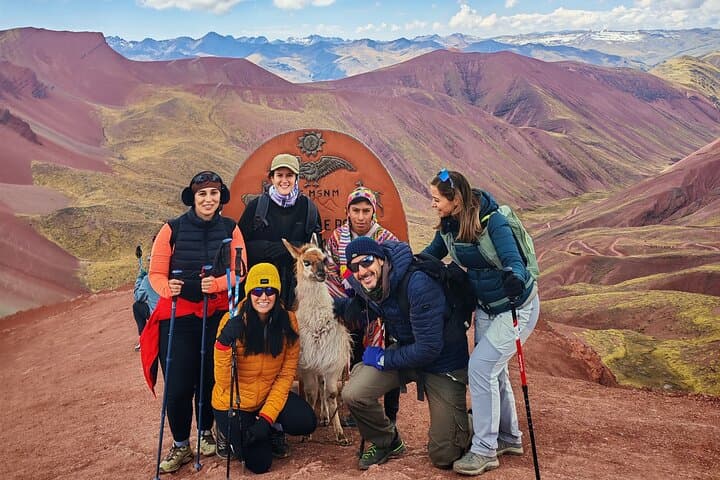
Practical guidance: arrive in Cusco 1–2 days early to acclimatize, carry layered insulation for sub-freezing nights, and bring sun protection—UV is intense above 4,000 m. Travel light, hydrate often, and lean on trekking poles for descents. With a seasoned guide and basic camping gear provided, this two-day circuit rewards endurance with rare highland panoramas and the nearer presence of Andean life.
challenging.
2 days.
Good cardiovascular fitness and prior high-altitude hiking experience recommended; must tolerate long days and steep, uneven terrain.
Yes—spend at least 24–48 hours in Cusco or a similar elevation to help prevent altitude sickness; guide groups may refuse participants with severe symptoms.
Expect 6–12 km per day depending on route and pacing, with 6–8 hours of hiking each day including breaks and photo stops.
Yes—two breakfasts, two lunches and dinners are included along with one night of camping equipment and sleeping bag service per the itinerary.
This trek is not recommended for pregnant travelers or for very young children due to high altitude and strenuous sections.
Trails link ancient pastoral routes used by Quechua communities and pre-Columbian herding economies; Ausangate is also an important sacred mountain (apu) in Andean cosmology.
High foot traffic and fragile soils make staying on established paths and packing out waste essential; local guides support community conservation and low-impact camping practices.
Trails to Machu Picchu operates guided outdoor trips and adventures with an emphasis on safety, stewardship, and memorable experiences.
A pre-dawn van slips away from Cusco, the highway thinning as clouds lift off Andean ridges and the first light paints the glaciers on Ausangate. By the time hikers step onto the trail at Quesiuno, the mountains feel alive—snowfields watching, moraine streams daring you forward, and alpaca herds scattering like quiet punctuation.
A pre-dawn van slips away from Cusco, the highway thinning as clouds lift off Andean ridges and the first light paints the glaciers on Ausangate. By the time hikers step onto the trail at Quesiuno, the mountains feel alive—snowfields watching, moraine streams daring you forward, and alpaca herds scattering like quiet punctuation.
The route traces high Andean history: shepherding corridors threaded with Quechua communities that have tended these slopes for centuries. Geology here is blunt and honest—layers of sediment and mineral oxides exposed by uplift and glaciation produce Vinicunca’s striped tones and the deep iron reds of the Red Valley. Cultural markers—stone corrals, carved trail stones, and the occasional ch’arki drying rack—offer windows into pastoral life at altitude.
Expect two long days of high-altitude trekking: day one climbs to passes near 4,870–4,985 m before camping beside Surineqocha; day two rises to the Rainbow viewpoint around 5,100 m and visits the quieter Red Valley. Trails are a mix of packed dirt, rocky steps, and grassy switchbacks with cumulative elevation gain of roughly 700–1,000 m per day depending on route choices.
Practical guidance: arrive in Cusco 1–2 days early to acclimatize, carry layered insulation for sub-freezing nights, and bring sun protection—UV is intense above 4,000 m. Travel light, hydrate often, and lean on trekking poles for descents. With a seasoned guide and basic camping gear provided, this two-day circuit rewards endurance with rare highland panoramas and the nearer presence of Andean life.