THE ADVENTURE COLLECTIVE® · Independent discovery and booking for outdoor travel

A two-day, one-night trek from Marrakech into the High Atlas that links Tahnouet, Asni and Imlil. Expect a three-hour mountain walk through Berber villages, simple overnight accommodations, and big mountain views.
A two-day, one-night trek from Marrakech into the High Atlas that links Tahnouet, Asni and Imlil. Expect a three-hour mountain walk through Berber villages, simple overnight accommodations, and big mountain views.
Dust from Marrakech fades as the minibus climbs into the High Atlas and the air sharpens. You arrive in small market towns—Tahnouet, Asni—before the road narrows toward Imlil, a village sitting at roughly 1,740 m where mule tracks and stone terraces lead upward. On this two-day route you trade city heat for cool pine-scented tracks and a three-hour walk through Berber villages, fields, and gullies that feel engineered to challenge and reward in equal measure.
Verified experiences and guided adventures in the surrounding area.
Dust from Marrakech fades as the minibus climbs into the High Atlas and the air sharpens. You arrive in small market towns—Tahnouet, Asni—before the road narrows toward Imlil, a village sitting at roughly 1,740 m where mule tracks and stone terraces lead upward. On this two-day route you trade city heat for cool pine-scented tracks and a three-hour walk through Berber villages, fields, and gullies that feel engineered to challenge and reward in equal measure.
The High Atlas is young, geologically active terrain: folded sedimentary layers lifted by the African and Eurasian plates and cut by winter snows. Local Berber (Amazigh) culture remains visible in terraced fields, stone homes, and communal life—shepherds, seasonal herders, and shrine sites like Sidi Chamharouch nearby are part of the landscape.
Expect steady climbs on rock and packed-earth trails, short stream crossings, and panoramic views of the Toubkal massif (North Africa’s highest peak at 4,167 m) in the distance. Nights are simple—guesthouse or gîte stays offer hearty tagine, hot tea, and mattress-bunk rooms; weather can swing cool after sunset.
Practical guidance: carry water and a wind layer, break hikes into steady 30–45 minute efforts, and plan for 1–1.5 hours’ driving each way from Marrakech. This trek suits hikers comfortable with uneven footing and moderate elevation; guides and mule support are common and recommended. Leave no trace, respect private terraces and prayer times, and enjoy the tactile clarity of mountain air and ringing goat bells that mark the pace here.
moderate.
2 days (overnight).
Good general fitness; able to hike 3–6 hours total with repeated short climbs and uneven terrain
The advertised itinerary includes a three-hour mountain trek; expect additional short hikes and walking around villages—total on-trail time varies but plan for 3–6 hours across the two days.
Overnight is typically in a local gîte or simple guesthouse with shared rooms or mats; facilities are basic but offer hot meals and blankets.
Guides are strongly recommended for navigation, cultural context, and arranging mule support if you prefer not to carry a pack.
Most tours include round-trip transport from Marrakech; independent travelers can reach Imlil by car or shared taxi in roughly 1–1.5 hours depending on traffic.
High Atlas valleys have long been inhabited by Amazigh (Berber) communities; terraces and irrigation systems reflect generations of mountain agriculture.
Water is scarce seasonally and trails suffer erosion—stick to trails, avoid single-use plastics, and support local guides to keep tourism sustainable.
Dust from Marrakech fades as the minibus climbs into the High Atlas and the air sharpens. You arrive in small market towns—Tahnouet, Asni—before the road narrows toward Imlil, a village sitting at roughly 1,740 m where mule tracks and stone terraces lead upward. On this two-day route you trade city heat for cool pine-scented tracks and a three-hour walk through Berber villages, fields, and gullies that feel engineered to challenge and reward in equal measure.
Dust from Marrakech fades as the minibus climbs into the High Atlas and the air sharpens. You arrive in small market towns—Tahnouet, Asni—before the road narrows toward Imlil, a village sitting at roughly 1,740 m where mule tracks and stone terraces lead upward. On this two-day route you trade city heat for cool pine-scented tracks and a three-hour walk through Berber villages, fields, and gullies that feel engineered to challenge and reward in equal measure.
The High Atlas is young, geologically active terrain: folded sedimentary layers lifted by the African and Eurasian plates and cut by winter snows. Local Berber (Amazigh) culture remains visible in terraced fields, stone homes, and communal life—shepherds, seasonal herders, and shrine sites like Sidi Chamharouch nearby are part of the landscape.
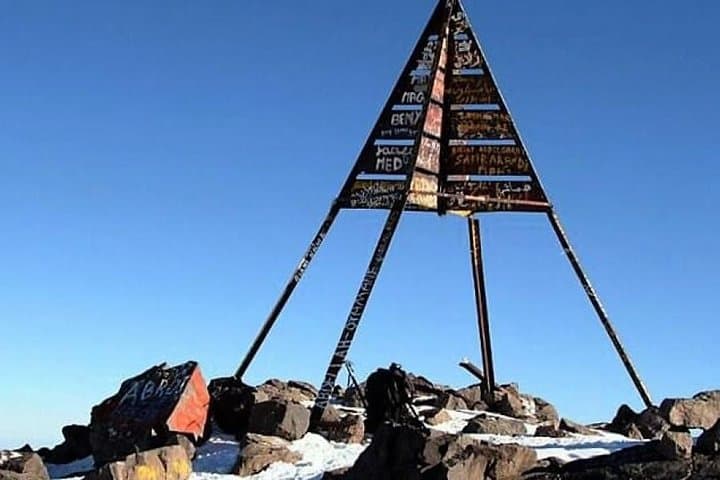
Expect steady climbs on rock and packed-earth trails, short stream crossings, and panoramic views of the Toubkal massif (North Africa’s highest peak at 4,167 m) in the distance. Nights are simple—guesthouse or gîte stays offer hearty tagine, hot tea, and mattress-bunk rooms; weather can swing cool after sunset.
Practical guidance: carry water and a wind layer, break hikes into steady 30–45 minute efforts, and plan for 1–1.5 hours’ driving each way from Marrakech. This trek suits hikers comfortable with uneven footing and moderate elevation; guides and mule support are common and recommended. Leave no trace, respect private terraces and prayer times, and enjoy the tactile clarity of mountain air and ringing goat bells that mark the pace here.