THE ADVENTURE COLLECTIVE® · Independent discovery and booking for outdoor travel

Drive the High Atlas, stroll a UNESCO kasbah, and sleep under desert stars on this two-day private tour from Marrakech. Expect long scenic drives, a short camel ride, and a peaceful night in a desert bivouac.
Drive the High Atlas, stroll a UNESCO kasbah, and sleep under desert stars on this two-day private tour from Marrakech. Expect long scenic drives, a short camel ride, and a peaceful night in a desert bivouac.
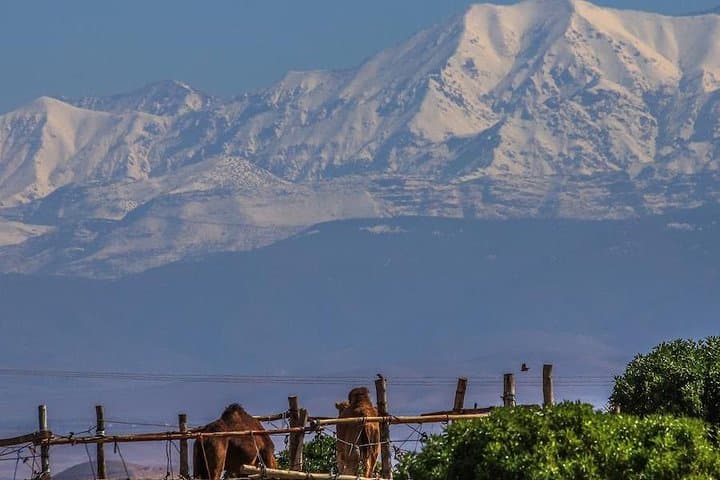
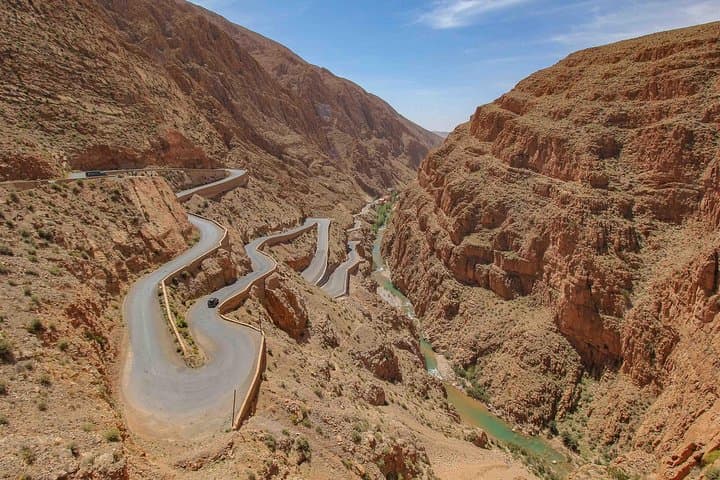
The day begins before dawn in Marrakech, tires humming as the road climbs toward Tizi n’Tichka. Cold mountain air pushes through open windows; peaks strip the skyline into layered ridgelines. By midafternoon the asphalt gives way to ochre valleys and adobe villages where flat-roofed houses watch the road pass by.
Verified experiences and guided adventures in the surrounding area.
Operated by Sunny Morocco · Marrakech, Marrakesh-Safi
The day begins before dawn in Marrakech, tires humming as the road climbs toward Tizi n’Tichka. Cold mountain air pushes through open windows; peaks strip the skyline into layered ridgelines. By midafternoon the asphalt gives way to ochre valleys and adobe villages where flat-roofed houses watch the road pass by.
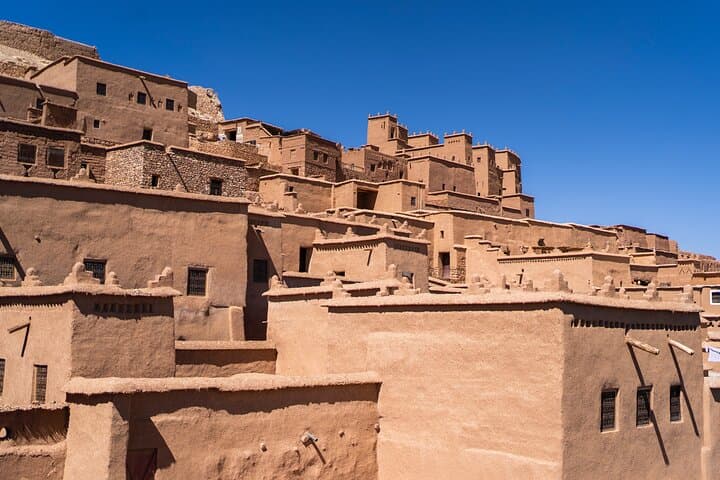
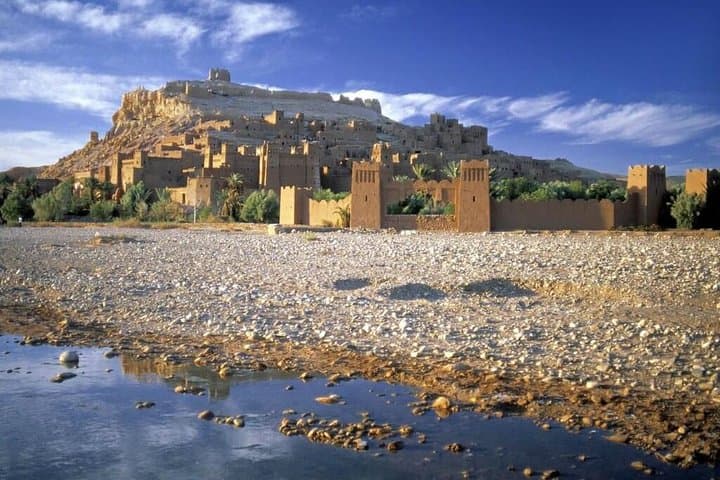
This two-day route threads history and geology: a High Atlas pass carved by tectonic uplift, terraced fields watered by ancient irrigation, and the fortified kasbah of Ait Ben Haddou—a stop that speaks to centuries of caravan trade and film crews. The drive down the Draa Valley reveals palm oases that have sustained communities for generations; then the landscape simplifies into gravel plains and the wind-sculpted Erg Lihoudi dunes where a single-camel silhouette will carry you to camp.
At the bivouac, dunes take on personality—ridges that challenge your footing, slopes that hold the last warmth of the day, and a sky sharp with stars. Sunrise walks reward those who wake early; a short camel trek reconnects travelers to traditional desert travel.
Practical guidance: pack layers for a large diurnal swing, bring a refillable water bottle, and expect dusty conditions—closed shoes and a scarf are useful. Mobility demands are low to moderate: long drives, short camel rides, and light walking on sand. Local guides manage logistics and meals; tipping and respectful dress in villages are customary.
The experience balances accessible adventure with cultural context—mountain passes, UNESCO heritage, palm-lined valleys, and a night that makes the desert’s scale impossible to forget.
moderate.
2 days (approx. 48 hours).
Suitable for travelers in average physical condition able to handle several hours sitting in a vehicle, short camel rides, and walking on sand.
Tours typically include pickup from central Marrakech hotels; confirm your pickup point when booking.
Camel rides are about an hour and low-impact; walking on sand can be tiring but only short distances are required.
You’ll stay in a desert bivouac—simple tents or berber-style camp, communal dining, and basic facilities; a hot shower is available after returning to M’Hamid on day two.
Yes, this listing is sold as a private tour with a dedicated guide and vehicle for your group.
Ait Ben Haddou and the Draa Valley were key points on trans-Saharan trade routes; kasbahs here reflect centuries of fortified village architecture.
The desert and oasis ecosystems are fragile—minimize water use, stay on established tracks, and support local guides and small businesses to benefit communities.
Sunny Morocco operates guided outdoor trips and adventures with an emphasis on safety, stewardship, and memorable experiences.
The day begins before dawn in Marrakech, tires humming as the road climbs toward Tizi n’Tichka. Cold mountain air pushes through open windows; peaks strip the skyline into layered ridgelines. By midafternoon the asphalt gives way to ochre valleys and adobe villages where flat-roofed houses watch the road pass by.
The day begins before dawn in Marrakech, tires humming as the road climbs toward Tizi n’Tichka. Cold mountain air pushes through open windows; peaks strip the skyline into layered ridgelines. By midafternoon the asphalt gives way to ochre valleys and adobe villages where flat-roofed houses watch the road pass by.
This two-day route threads history and geology: a High Atlas pass carved by tectonic uplift, terraced fields watered by ancient irrigation, and the fortified kasbah of Ait Ben Haddou—a stop that speaks to centuries of caravan trade and film crews. The drive down the Draa Valley reveals palm oases that have sustained communities for generations; then the landscape simplifies into gravel plains and the wind-sculpted Erg Lihoudi dunes where a single-camel silhouette will carry you to camp.
At the bivouac, dunes take on personality—ridges that challenge your footing, slopes that hold the last warmth of the day, and a sky sharp with stars. Sunrise walks reward those who wake early; a short camel trek reconnects travelers to traditional desert travel.
Practical guidance: pack layers for a large diurnal swing, bring a refillable water bottle, and expect dusty conditions—closed shoes and a scarf are useful. Mobility demands are low to moderate: long drives, short camel rides, and light walking on sand. Local guides manage logistics and meals; tipping and respectful dress in villages are customary.
The experience balances accessible adventure with cultural context—mountain passes, UNESCO heritage, palm-lined valleys, and a night that makes the desert’s scale impossible to forget.