THE ADVENTURE COLLECTIVE® · Independent discovery and booking for outdoor travel

A purposeful two-day trek from Marrakech into the Western High Atlas that combines village hospitality, a high mountain pass and the region’s tallest waterfalls. Expect steady climbs, rocky mule tracks, and nights in family-run guesthouses.
A purposeful two-day trek from Marrakech into the Western High Atlas that combines village hospitality, a high mountain pass and the region’s tallest waterfalls. Expect steady climbs, rocky mule tracks, and nights in family-run guesthouses.
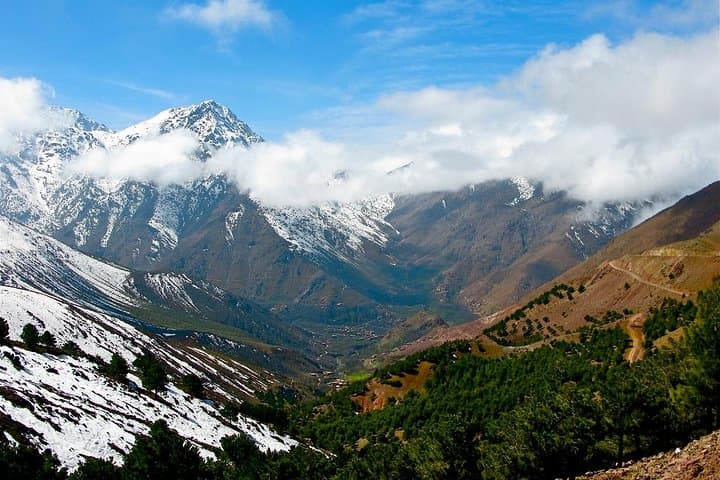
Morning light peels across Marrakech as the minibus climbs toward the High Atlas; olive groves fall away and the road narrows into villages stacked against the slopes. By midmorning you step out in Imlil, at roughly 1,740 m, and the trail pulls you upward through terraces, walnut groves and juniper-scented forest toward the Tizi Mzik saddle (≈2,684 m). The pass opens onto a wide valley with a distant peak-line and the urge to keep walking.
Verified experiences and guided adventures in the surrounding area.
Operated by Marrakech Day Trips · Imlil, Marrakech-Safi
Morning light peels across Marrakech as the minibus climbs toward the High Atlas; olive groves fall away and the road narrows into villages stacked against the slopes. By midmorning you step out in Imlil, at roughly 1,740 m, and the trail pulls you upward through terraces, walnut groves and juniper-scented forest toward the Tizi Mzik saddle (≈2,684 m). The pass opens onto a wide valley with a distant peak-line and the urge to keep walking.
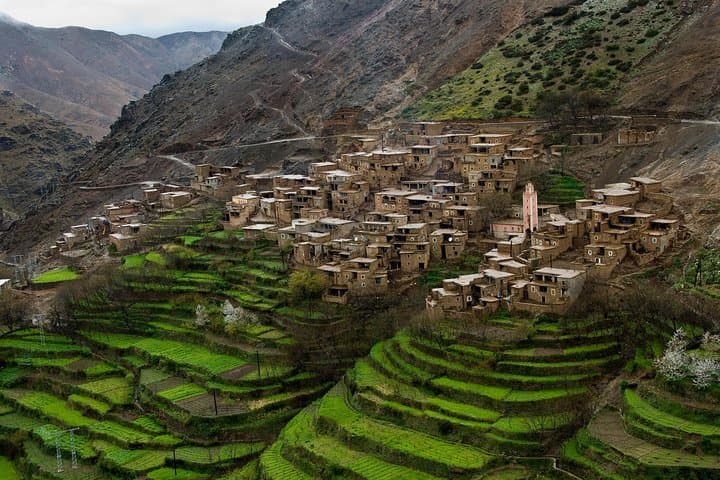
This route threads Berber (Amazigh) villages—Imlil, Tizi Oussem, Aguersiouâl—places shaped by centuries of terraced irrigation and pastoral life. Geologically the western High Atlas is a series of folded sedimentary and volcanic ranges; the hike alternates rocky mule tracks, scree near the pass and compacted soil along the river. Cultural notes: family-run guesthouses host guests for dinner and breakfast, and local guides narrate irrigation systems and seasonal harvests.
Practical guidance: expect 5–6 hours walking on each day, with a cumulative elevation change near 900 m on day one; trails are well-trodden but uneven. Footwear with good grip, layered clothing for rapid temperature shifts, and 2–3 liters of water per day will keep you moving. Lunches often come under walnut trees beside a stream where the water dares you to linger. Plan to move early to avoid afternoon heat and to reach the pass with stable light.
This trek balances cultural immersion and alpine walking—bring a respectful curiosity, modest clothing for villages, and a readiness for exposed, high-elevation weather.
moderate.
2 days.
Suitable for hikers comfortable with multiple 5–6 hour days and sustained elevation gain; good cardiovascular fitness recommended
Each day involves 5–6 hours of walking with significant elevation gain on day one (roughly 900 m); the route is moderate but requires steady fitness.
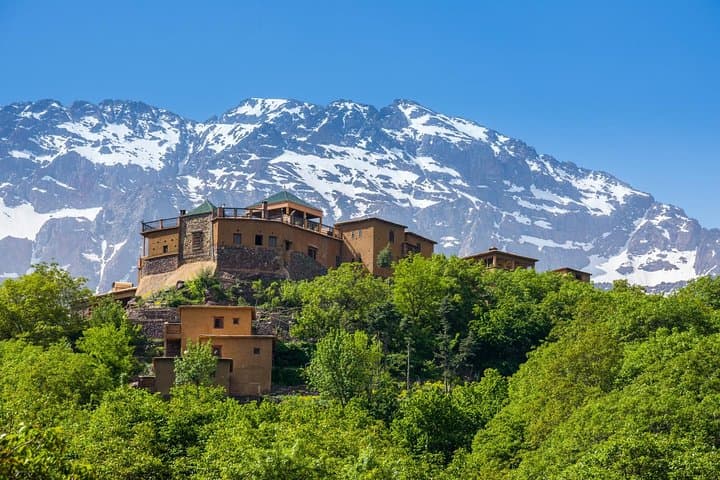
Overnight stays are in family-run guesthouses in Tizi Oussem; rooms are simple, with shared facilities common.
Children may join if fit enough for long hikes and supervised by an adult; child rates apply only when sharing with two paying adults.
The trip includes a local guide and muleteer; the guide handles route finding, cultural interpretation and logistics.
The valleys are home to Amazigh (Berber) communities whose terraced agriculture and irrigation systems have shaped the landscape for generations.
Water is scarce seasonally and trails are vulnerable to erosion; support local guesthouses, pack out waste and stick to established paths to minimize impact.
Marrakech Day Trips operates guided outdoor trips and adventures with an emphasis on safety, stewardship, and memorable experiences.
Morning light peels across Marrakech as the minibus climbs toward the High Atlas; olive groves fall away and the road narrows into villages stacked against the slopes. By midmorning you step out in Imlil, at roughly 1,740 m, and the trail pulls you upward through terraces, walnut groves and juniper-scented forest toward the Tizi Mzik saddle (≈2,684 m). The pass opens onto a wide valley with a distant peak-line and the urge to keep walking.
Morning light peels across Marrakech as the minibus climbs toward the High Atlas; olive groves fall away and the road narrows into villages stacked against the slopes. By midmorning you step out in Imlil, at roughly 1,740 m, and the trail pulls you upward through terraces, walnut groves and juniper-scented forest toward the Tizi Mzik saddle (≈2,684 m). The pass opens onto a wide valley with a distant peak-line and the urge to keep walking.
This route threads Berber (Amazigh) villages—Imlil, Tizi Oussem, Aguersiouâl—places shaped by centuries of terraced irrigation and pastoral life. Geologically the western High Atlas is a series of folded sedimentary and volcanic ranges; the hike alternates rocky mule tracks, scree near the pass and compacted soil along the river. Cultural notes: family-run guesthouses host guests for dinner and breakfast, and local guides narrate irrigation systems and seasonal harvests.
Practical guidance: expect 5–6 hours walking on each day, with a cumulative elevation change near 900 m on day one; trails are well-trodden but uneven. Footwear with good grip, layered clothing for rapid temperature shifts, and 2–3 liters of water per day will keep you moving. Lunches often come under walnut trees beside a stream where the water dares you to linger. Plan to move early to avoid afternoon heat and to reach the pass with stable light.
This trek balances cultural immersion and alpine walking—bring a respectful curiosity, modest clothing for villages, and a readiness for exposed, high-elevation weather.