THE ADVENTURE COLLECTIVE® · Independent discovery and booking for outdoor travel

Spend two days exploring Angkor’s greatest monuments with a private English-speaking driver and A/C transport. This practical guide previews the itinerary, history, and what to pack for sunrises at Angkor Wat and ruins shrouded in fig roots.
Spend two days exploring Angkor’s greatest monuments with a private English-speaking driver and A/C transport. This practical guide previews the itinerary, history, and what to pack for sunrises at Angkor Wat and ruins shrouded in fig roots.
The morning light slices across the Angkor moat as the vehicle eases through a palm-lined road and the first spires of Angkor Wat appear above the tree line. Visitors step out into a humid, bird-filled air where stone faces and carved galleries hold the hush of centuries.
Verified experiences and guided adventures in the surrounding area.
Operated by Cambodia Cab · Siem Reap, Siem Reap Province
The morning light slices across the Angkor moat as the vehicle eases through a palm-lined road and the first spires of Angkor Wat appear above the tree line. Visitors step out into a humid, bird-filled air where stone faces and carved galleries hold the hush of centuries.
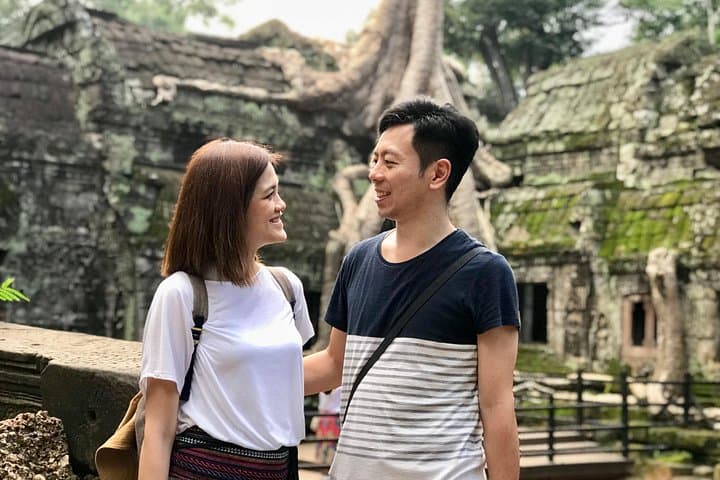
This two-day route threads Angkor Thom’s Bayon—famous for its 200-plus smiling stone faces—through Baphuon and the Terrace of Elephants, then on to Angkor Wat’s monumental galleries and Ta Prohm, where strangler figs and silk-cotton trees press into walls. The Khmer Empire shaped much of this landscape from the 9th to 15th centuries; the temples sit on sandstone and laterite, quarried and moved with astonishing logistics for their time. Local culture remains visible in village life around the Baray reservoirs and in guides’ stories about royal rituals and restoration efforts.
Expect long walks across uneven stone, broad causeways, and steep temple terraces; sunlight and sudden tropical showers both shape the day. The private, air-conditioned vehicle makes early starts and late sunsets manageable—ideal for catching sunrise reflections at the west moat or avoiding midday heat. Practicalities: buy the Angkor Pass at the main ticket center, carry small denomination riels or dollars for entrance fees, and wear shoulders- and knee-covering clothing to respect temple rules. Bring refillable water, a sun hat, and comfortable shoes with grip; pace photo stops to leave energy for stair climbs and longer temple sequences. With a knowledgeable English-speaking driver handling logistics, the focus stays on the stones, the stories, and the slow reveal of one of Southeast Asia’s most compelling archaeological landscapes.
easy.
2 days (approximately 8–10 hours touring per day).
Suitable for most fitness levels but expect sustained walking, uneven steps, and early starts.
No; the Angkor Pass must be purchased separately at the official ticket center near the complex before your first visit.
Yes; the itinerary includes hotel pickup and drop-off with an air-conditioned private vehicle.
This product provides an English-speaking driver (vaccinated and experienced); for a licensed temple guide you may request an additional certified guide.
For sunrise at Angkor Wat aim to leave around 4:30–5:00 AM; sunset viewpoints like Phnom Bakheng are best one hour before official sunset, weather permitting.
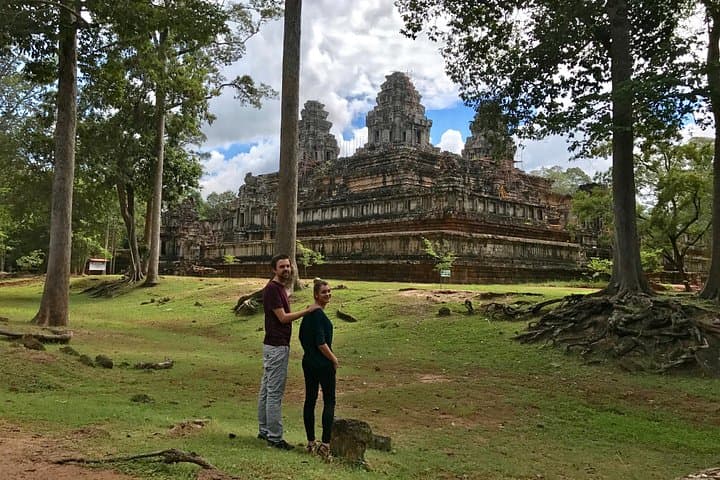
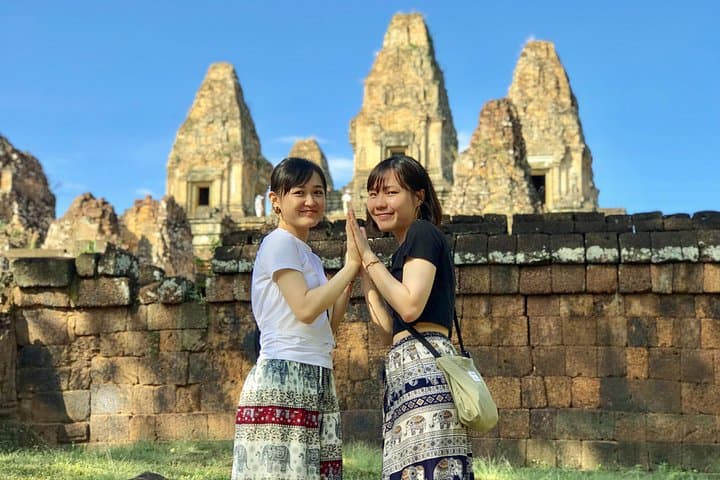
Angkor was the political and religious center of the Khmer Empire from roughly the 9th to the 15th centuries; many temples shifted from Hindu to Buddhist use over time.
High visitor numbers stress ancient stonework and ecosystems—stay on marked paths, avoid touching bas-reliefs, and use refillable bottles to reduce plastic waste.
Cambodia Cab operates guided outdoor trips and adventures with an emphasis on safety, stewardship, and memorable experiences.
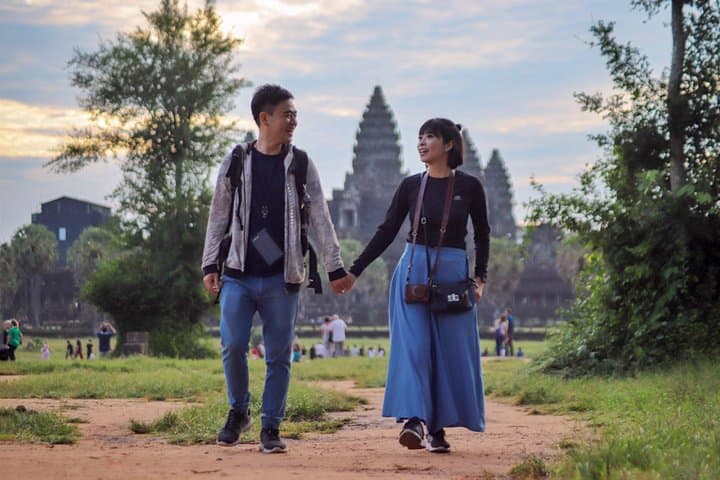
The morning light slices across the Angkor moat as the vehicle eases through a palm-lined road and the first spires of Angkor Wat appear above the tree line. Visitors step out into a humid, bird-filled air where stone faces and carved galleries hold the hush of centuries.
The morning light slices across the Angkor moat as the vehicle eases through a palm-lined road and the first spires of Angkor Wat appear above the tree line. Visitors step out into a humid, bird-filled air where stone faces and carved galleries hold the hush of centuries.
This two-day route threads Angkor Thom’s Bayon—famous for its 200-plus smiling stone faces—through Baphuon and the Terrace of Elephants, then on to Angkor Wat’s monumental galleries and Ta Prohm, where strangler figs and silk-cotton trees press into walls. The Khmer Empire shaped much of this landscape from the 9th to 15th centuries; the temples sit on sandstone and laterite, quarried and moved with astonishing logistics for their time. Local culture remains visible in village life around the Baray reservoirs and in guides’ stories about royal rituals and restoration efforts.
Expect long walks across uneven stone, broad causeways, and steep temple terraces; sunlight and sudden tropical showers both shape the day. The private, air-conditioned vehicle makes early starts and late sunsets manageable—ideal for catching sunrise reflections at the west moat or avoiding midday heat. Practicalities: buy the Angkor Pass at the main ticket center, carry small denomination riels or dollars for entrance fees, and wear shoulders- and knee-covering clothing to respect temple rules. Bring refillable water, a sun hat, and comfortable shoes with grip; pace photo stops to leave energy for stair climbs and longer temple sequences. With a knowledgeable English-speaking driver handling logistics, the focus stays on the stones, the stories, and the slow reveal of one of Southeast Asia’s most compelling archaeological landscapes.