THE ADVENTURE COLLECTIVE® · Independent discovery and booking for outdoor travel

Spend two active days exploring Angkor’s temple complexes and the Phnom Kulen waterfall. This private itinerary mixes big-name sites like Angkor Wat and Ta Prohm with the quieter ‘river of 1,000 lingas’ — ideal for travelers who want history, archaeology, and a cool natural finish.
Spend two active days exploring Angkor’s temple complexes and the Phnom Kulen waterfall. This private itinerary mixes big-name sites like Angkor Wat and Ta Prohm with the quieter ‘river of 1,000 lingas’ — ideal for travelers who want history, archaeology, and a cool natural finish.
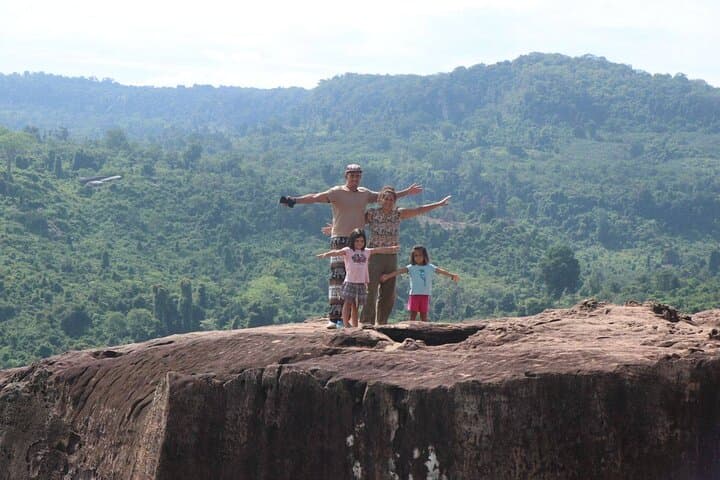
Dust from the red-dirt roads lifts as the van drops you at the south gate of Angkor Thom, where carved faces watch the procession of travelers. Morning light sharpens bas-reliefs on Bayon’s towers; later, roots and fig trees wrap Ta Prohm’s stones like slow hands reclaiming architecture. On day two the landscape opens to Phnom Kulen — a mountain stream laughing over carved lingas before the waterfall dares you to step in.
Verified experiences and guided adventures in the surrounding area.
Operated by Angkor Pro Travel · Siem Reap, Siem Reap
Dust from the red-dirt roads lifts as the van drops you at the south gate of Angkor Thom, where carved faces watch the procession of travelers. Morning light sharpens bas-reliefs on Bayon’s towers; later, roots and fig trees wrap Ta Prohm’s stones like slow hands reclaiming architecture. On day two the landscape opens to Phnom Kulen — a mountain stream laughing over carved lingas before the waterfall dares you to step in.
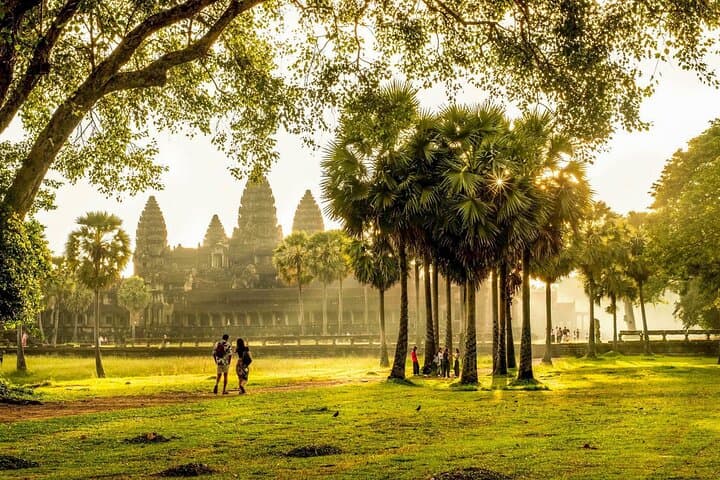
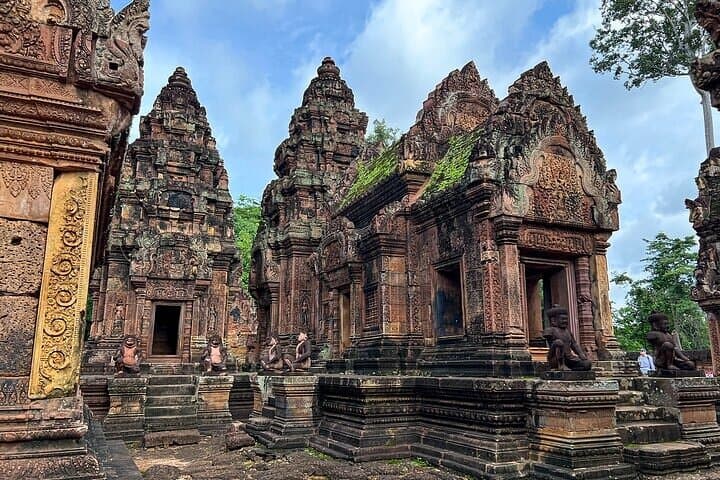
Angkor’s stones record a kingdom at its peak: 12th-century Angkor Wat was conceived as both a temple and a cosmic mountain for King Suryavarman II. The surrounding complexes — Angkor Thom, Banteay Kdei, Banteay Srei — show shifts from Hindu to Buddhist devotion and regional stoneworking techniques. Phnom Kulen’s “river of 1,000 lingas” is a carved sandstone bed left by Khmer artisans to sanctify flowing water.
Expect uneven sandstone steps, shaded galleries, and crowded viewpoints at sunrise and sunset. Guides here mix archaeology with local lore; many sites have modest food stalls and shaded resting areas. Temperatures are tropical — mornings and late afternoons are best for walking.
Practical tips: carry at least 2 liters of water, wear shoes with good grip, bring sun protection and insect repellent, and keep respectful clothing for sacred sites (shoulders and knees covered). Start early to avoid mid-day heat and larger tour groups. If you want the waterfall, plan for a bumpy drive and a short, sometimes muddy walk to the cascade. This two-day private itinerary balances the signature monuments with a refreshing natural finish at Kulen, giving both cultural context and a hands-on water break.
easy.
2 days (approx. 8–10 hours per day).
Suitable for most travelers who can walk 2–5 miles on uneven ground and manage some short climbs.
Yes — entrance to the Angkor Archaeological Park requires a paid pass. Your operator usually advises and can help arrange passes or you can buy them at the park entry.
The waterfall visit involves a bumpy road and a moderate walk on sometimes muddy trails; it's not technical but requires steady footwear and mobility for short slopes.
Some areas have flat approaches and are partially accessible, but many temples have steps and uneven surfaces; confirm accessibility with the operator in advance.
Yes, locals often swim in designated pools, but check with your guide about safe areas and avoid carved or sacred sections of the riverbed.
Angkor Wat was constructed in the early 12th century for King Suryavarman II and served both religious and political functions, reflecting Khmer cosmology and statecraft.
Visitor impact is managed through controlled access and passes; avoid touching carvings, stay on marked paths, and use local guide services that support site preservation.
Angkor Pro Travel operates guided outdoor trips and adventures with an emphasis on safety, stewardship, and memorable experiences.
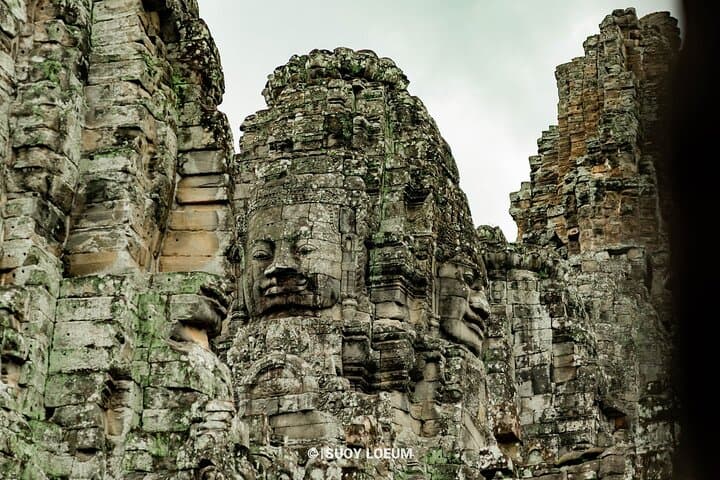
Dust from the red-dirt roads lifts as the van drops you at the south gate of Angkor Thom, where carved faces watch the procession of travelers. Morning light sharpens bas-reliefs on Bayon’s towers; later, roots and fig trees wrap Ta Prohm’s stones like slow hands reclaiming architecture. On day two the landscape opens to Phnom Kulen — a mountain stream laughing over carved lingas before the waterfall dares you to step in.
Dust from the red-dirt roads lifts as the van drops you at the south gate of Angkor Thom, where carved faces watch the procession of travelers. Morning light sharpens bas-reliefs on Bayon’s towers; later, roots and fig trees wrap Ta Prohm’s stones like slow hands reclaiming architecture. On day two the landscape opens to Phnom Kulen — a mountain stream laughing over carved lingas before the waterfall dares you to step in.
Angkor’s stones record a kingdom at its peak: 12th-century Angkor Wat was conceived as both a temple and a cosmic mountain for King Suryavarman II. The surrounding complexes — Angkor Thom, Banteay Kdei, Banteay Srei — show shifts from Hindu to Buddhist devotion and regional stoneworking techniques. Phnom Kulen’s “river of 1,000 lingas” is a carved sandstone bed left by Khmer artisans to sanctify flowing water.
Expect uneven sandstone steps, shaded galleries, and crowded viewpoints at sunrise and sunset. Guides here mix archaeology with local lore; many sites have modest food stalls and shaded resting areas. Temperatures are tropical — mornings and late afternoons are best for walking.
Practical tips: carry at least 2 liters of water, wear shoes with good grip, bring sun protection and insect repellent, and keep respectful clothing for sacred sites (shoulders and knees covered). Start early to avoid mid-day heat and larger tour groups. If you want the waterfall, plan for a bumpy drive and a short, sometimes muddy walk to the cascade. This two-day private itinerary balances the signature monuments with a refreshing natural finish at Kulen, giving both cultural context and a hands-on water break.