THE ADVENTURE COLLECTIVE® · Independent discovery and booking for outdoor travel

Spend two focused days exploring Angkor’s monumental temples and the living waterways of Tonle Sap. This private itinerary pairs dawn at Angkor Wat with jungle-strangled Ta Prohm and an intimate boat visit to a floating village.
Spend two focused days exploring Angkor’s monumental temples and the living waterways of Tonle Sap. This private itinerary pairs dawn at Angkor Wat with jungle-strangled Ta Prohm and an intimate boat visit to a floating village.
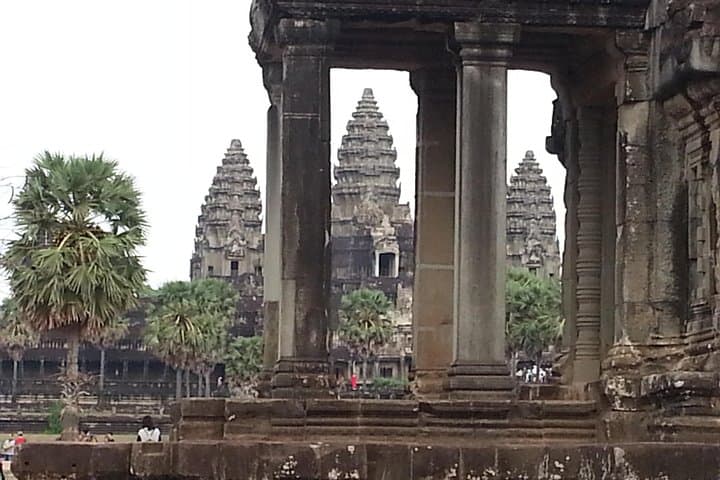
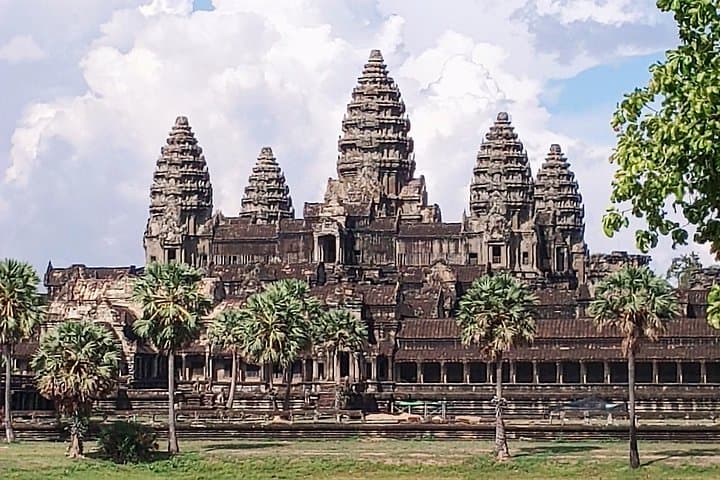
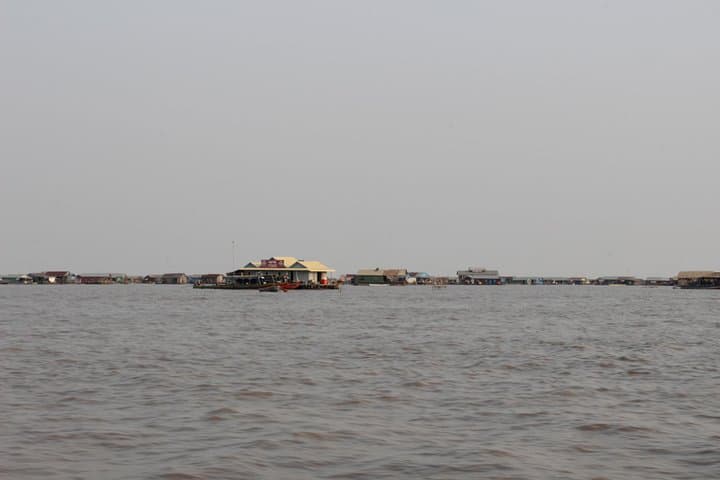
You arrive before dawn, walking onto the flat causeway as a pale light loosens the stone reliefs. The spires of Angkor Wat rise like weathered hymnals; the moat reflects a sky that shifts from bruise to blue. By midday the jungle takes over at Ta Prohm, roots and fig trees tugging on temple walls like patient hands. On day two the lake greets you — Tonle Sap’s wooden houses bob gently while long-tail boats thread narrow channels and birds wheel low over reed beds.
Verified experiences and guided adventures in the surrounding area.
Operated by Tour Guide-Siem Reap · Siem Reap, Siem Reap Province
You arrive before dawn, walking onto the flat causeway as a pale light loosens the stone reliefs. The spires of Angkor Wat rise like weathered hymnals; the moat reflects a sky that shifts from bruise to blue. By midday the jungle takes over at Ta Prohm, roots and fig trees tugging on temple walls like patient hands. On day two the lake greets you — Tonle Sap’s wooden houses bob gently while long-tail boats thread narrow channels and birds wheel low over reed beds.
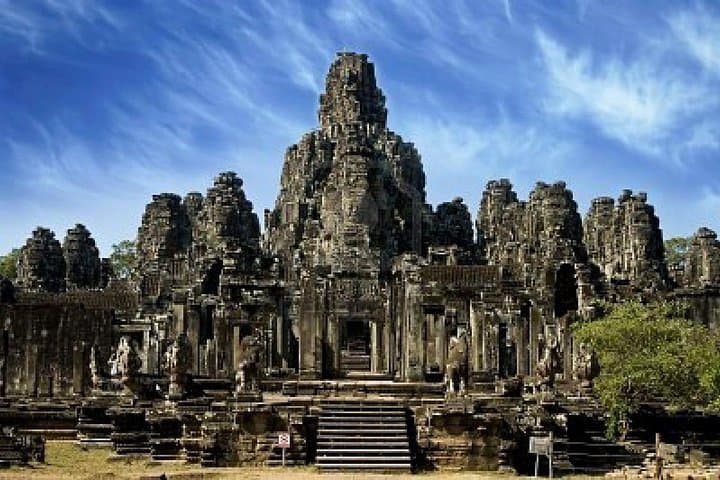
This itinerary threads Khmer history and living culture into two compact days. Angkor Wat and Angkor Thom date to the 9th–12th centuries, the high point of the Khmer Empire; Bayon’s carved faces and bas-reliefs narrate court life and conquest. Geologically, the Khmer landscape is low-lying sandstone and laterite, shaped by seasonal floods whose rhythms feed Tonle Sap’s productivity. You’ll touch sculpture techniques at Les Artisans d’Angkor and see three communities — Khmer, Cham and Vietnamese — who adapt their lives to the lake.
Practical guidance: start both days early to avoid heat and crowds; carry a reusable water bottle and expect unpaved sections and many steps. Modest dress is required at sacred sites—shoulders and knees covered—and sunscreen and a wide-brim hat are useful under the tropical sun. Boat rides on Tonle Sap depend on water level; mornings are typically calmer. Bring local currency for small purchases and tips, and leave single-use plastics behind where possible to reduce impact on this sensitive ecosystem.
moderate.
2 days.
Moderate fitness—comfortable walking for 3–5 hours per day on mixed terrain with some stairs
Yes. Visitors must buy an Angkor Archaeological Park pass (1-, 3- or 7-day options) at the official ticket center; your guide can advise on timing and logistics.
Generally yes—boats are stable but life jackets and supervision are recommended; water levels vary seasonally, affecting how close boats get to houses.
Modest clothing is required—cover shoulders and knees. Bring a sarong or lightweight long-sleeve layer for comfort and respect.
Many areas have steps and uneven surfaces, but the tour notes wheelchair-accessible options; contact the operator to arrange transport and specific accessibility needs.
Angkor was the capital of the Khmer Empire from the 9th to 15th centuries; its temples combine Hindu and Buddhist beliefs and reflect sophisticated hydraulic engineering.
Tonle Sap is one of the world’s most productive inland fisheries and is sensitive to overfishing, pollution and upstream development; visitors should avoid single-use plastics and support community-based operators.
Tour Guide-Siem Reap operates guided outdoor trips and adventures with an emphasis on safety, stewardship, and memorable experiences.
You arrive before dawn, walking onto the flat causeway as a pale light loosens the stone reliefs. The spires of Angkor Wat rise like weathered hymnals; the moat reflects a sky that shifts from bruise to blue. By midday the jungle takes over at Ta Prohm, roots and fig trees tugging on temple walls like patient hands. On day two the lake greets you — Tonle Sap’s wooden houses bob gently while long-tail boats thread narrow channels and birds wheel low over reed beds.
You arrive before dawn, walking onto the flat causeway as a pale light loosens the stone reliefs. The spires of Angkor Wat rise like weathered hymnals; the moat reflects a sky that shifts from bruise to blue. By midday the jungle takes over at Ta Prohm, roots and fig trees tugging on temple walls like patient hands. On day two the lake greets you — Tonle Sap’s wooden houses bob gently while long-tail boats thread narrow channels and birds wheel low over reed beds.
This itinerary threads Khmer history and living culture into two compact days. Angkor Wat and Angkor Thom date to the 9th–12th centuries, the high point of the Khmer Empire; Bayon’s carved faces and bas-reliefs narrate court life and conquest. Geologically, the Khmer landscape is low-lying sandstone and laterite, shaped by seasonal floods whose rhythms feed Tonle Sap’s productivity. You’ll touch sculpture techniques at Les Artisans d’Angkor and see three communities — Khmer, Cham and Vietnamese — who adapt their lives to the lake.
Practical guidance: start both days early to avoid heat and crowds; carry a reusable water bottle and expect unpaved sections and many steps. Modest dress is required at sacred sites—shoulders and knees covered—and sunscreen and a wide-brim hat are useful under the tropical sun. Boat rides on Tonle Sap depend on water level; mornings are typically calmer. Bring local currency for small purchases and tips, and leave single-use plastics behind where possible to reduce impact on this sensitive ecosystem.