THE ADVENTURE COLLECTIVE® · Independent discovery and booking for outdoor travel

Experience Angkor’s major temples over two efficiently paced days with a private English-speaking guide. Sunrise at Angkor Wat, Bayon’s faces, Ta Prohm’s tree-split corridors, and the intricate reliefs of Banteay Srei are covered with pickup, entrance fees, and bottled water included.
Experience Angkor’s major temples over two efficiently paced days with a private English-speaking guide. Sunrise at Angkor Wat, Bayon’s faces, Ta Prohm’s tree-split corridors, and the intricate reliefs of Banteay Srei are covered with pickup, entrance fees, and bottled water included.
Before dawn, a private van eases away from Siem Reap and the road narrows into the Khmer countryside. Torches of village lamps recede as the silhouette of Angkor Wat sharpens against a pale horizon; the first light finds the temple’s towers like sentries keeping time. Moving through the eastern entrance in near-darkness, visitors slip along long cloisters where bas-reliefs begin to reveal their stories.
Verified experiences and guided adventures in the surrounding area.
Operated by Angkor Dynasty Travel · Siem Reap, Siem Reap Province
Before dawn, a private van eases away from Siem Reap and the road narrows into the Khmer countryside. Torches of village lamps recede as the silhouette of Angkor Wat sharpens against a pale horizon; the first light finds the temple’s towers like sentries keeping time. Moving through the eastern entrance in near-darkness, visitors slip along long cloisters where bas-reliefs begin to reveal their stories.
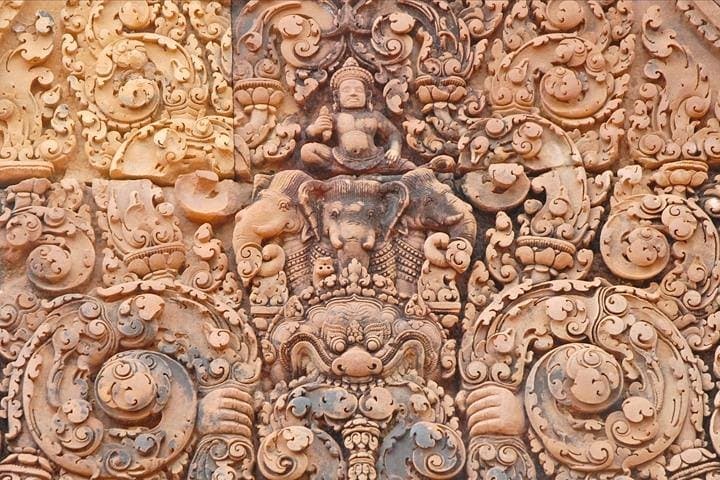
The tour threads through the high points of the Angkor complex: the carved faces of Bayon, the root-entangled chambers of Ta Prohm, and the delicate sandstone of Banteay Srei. These ruins reflect the Khmer Empire’s engineering—barays (reservoirs) tamed the wet season, laterite and sandstone erected temple mountains, and hydraulic ingenuity underpinned an urban center that peaked between the 9th and 13th centuries. Local guides connect iconography to ritual life and explain how stone, water, and forest shaped Khmer society.
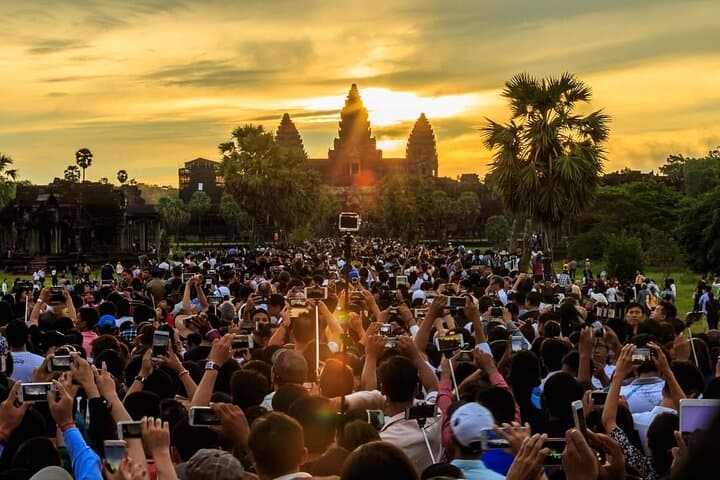
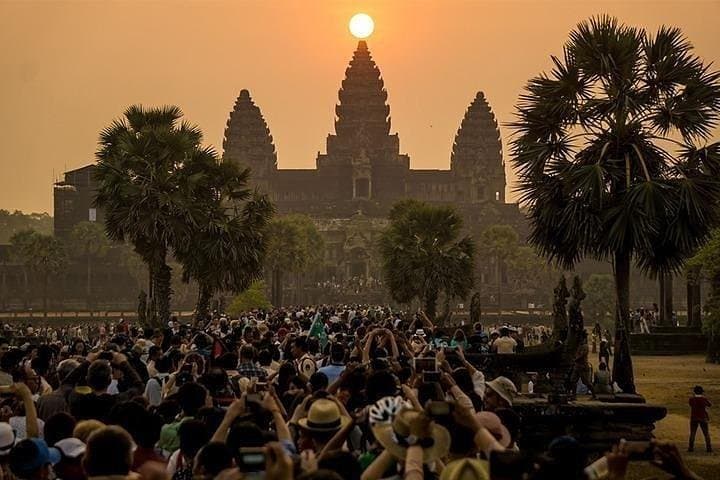
Practical notes: expect long days on foot, uneven stone surfaces, and steep temple steps; the tour includes hotel pickup, entrance fees, bottled water, and an English-speaking guide. Sunrise at Angkor Wat is popular—arrive for the eastern causeway to get the full dawn effect but be prepared for crowds. Wear modest, light clothing that covers shoulders and knees for temple entry, sturdy closed shoes for climbing, and carry sun protection and insect repellent. Hydrate before and between sites; rest breaks are built into the itinerary.
With a private guide, the route is paced to individual interests—history, photography, or architecture—so travelers leave with context as well as striking images.
moderate.
2 days (roughly 8–10 hours per day).
Moderate; be comfortable walking on uneven stone, climbing temple steps, and standing for extended periods.
Yes — the tour price includes the required Angkor Archaeological Park entry tickets for the sites visited.
Pickup is generally between 4:00–4:30 a.m., adjusted seasonally to reach Angkor Wat before sunrise.
Yes; the tour accepts children and infants, but infants must sit on an adult’s lap and the pace may be adjusted to accommodate families.
Modest attire is required: shoulders and knees covered. Bring a light shawl or long-sleeve shirt if needed.
Angkor was the seat of the Khmer Empire from roughly the 9th to 15th centuries; many temples functioned as state-shrines and hydraulic centers for agriculture and ritual.
High visitor numbers stress delicate stonework and local ecosystems—stay on paths, use a certified guide, and avoid feeding wildlife to limit impact.
Angkor Dynasty Travel operates guided outdoor trips and adventures with an emphasis on safety, stewardship, and memorable experiences.
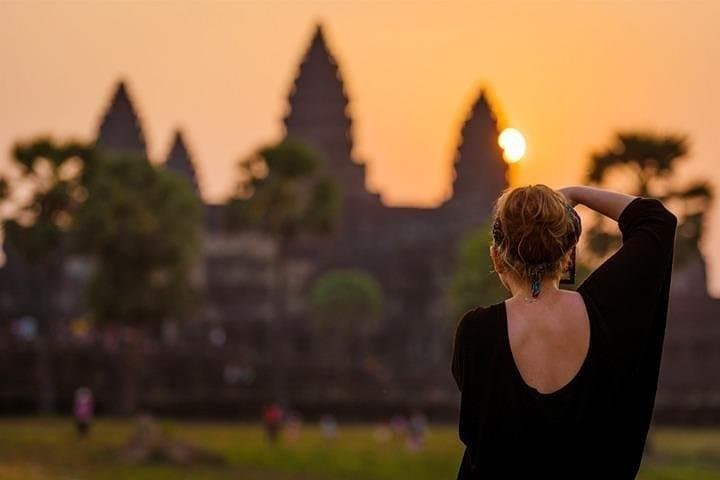
Before dawn, a private van eases away from Siem Reap and the road narrows into the Khmer countryside. Torches of village lamps recede as the silhouette of Angkor Wat sharpens against a pale horizon; the first light finds the temple’s towers like sentries keeping time. Moving through the eastern entrance in near-darkness, visitors slip along long cloisters where bas-reliefs begin to reveal their stories.
Before dawn, a private van eases away from Siem Reap and the road narrows into the Khmer countryside. Torches of village lamps recede as the silhouette of Angkor Wat sharpens against a pale horizon; the first light finds the temple’s towers like sentries keeping time. Moving through the eastern entrance in near-darkness, visitors slip along long cloisters where bas-reliefs begin to reveal their stories.
The tour threads through the high points of the Angkor complex: the carved faces of Bayon, the root-entangled chambers of Ta Prohm, and the delicate sandstone of Banteay Srei. These ruins reflect the Khmer Empire’s engineering—barays (reservoirs) tamed the wet season, laterite and sandstone erected temple mountains, and hydraulic ingenuity underpinned an urban center that peaked between the 9th and 13th centuries. Local guides connect iconography to ritual life and explain how stone, water, and forest shaped Khmer society.
Practical notes: expect long days on foot, uneven stone surfaces, and steep temple steps; the tour includes hotel pickup, entrance fees, bottled water, and an English-speaking guide. Sunrise at Angkor Wat is popular—arrive for the eastern causeway to get the full dawn effect but be prepared for crowds. Wear modest, light clothing that covers shoulders and knees for temple entry, sturdy closed shoes for climbing, and carry sun protection and insect repellent. Hydrate before and between sites; rest breaks are built into the itinerary.
With a private guide, the route is paced to individual interests—history, photography, or architecture—so travelers leave with context as well as striking images.