THE ADVENTURE COLLECTIVE® · Independent discovery and booking for outdoor travel

Explore Angkor’s small-circuit highlights and spend a day on Phnom Kulen discovering the 1,000 Lingas, a reclining Buddha carved from bedrock, and waterfall pools. This compact two-day route mixes world-class temples with a forested mountain escape.
Explore Angkor’s small-circuit highlights and spend a day on Phnom Kulen discovering the 1,000 Lingas, a reclining Buddha carved from bedrock, and waterfall pools. This compact two-day route mixes world-class temples with a forested mountain escape.
Morning light pins the sandstone bas-reliefs into sharp relief as a private vehicle hums out of Siem Reap toward the Small Circuit. On day one the route threads Angkor Wat’s broad causeway, the root-wrapped corridors of Ta Prohm, and the many-faced towers of Bayon—sites that demand slow walking and attention to carved detail. By late afternoon the group climbs Phnom Bakheng to watch the sun pull color across temple roofs and flooded moats.
Verified experiences and guided adventures in the surrounding area.
Operated by Passion Indochina Travel · Siem Reap, Siem Reap Province
Morning light pins the sandstone bas-reliefs into sharp relief as a private vehicle hums out of Siem Reap toward the Small Circuit. On day one the route threads Angkor Wat’s broad causeway, the root-wrapped corridors of Ta Prohm, and the many-faced towers of Bayon—sites that demand slow walking and attention to carved detail. By late afternoon the group climbs Phnom Bakheng to watch the sun pull color across temple roofs and flooded moats.
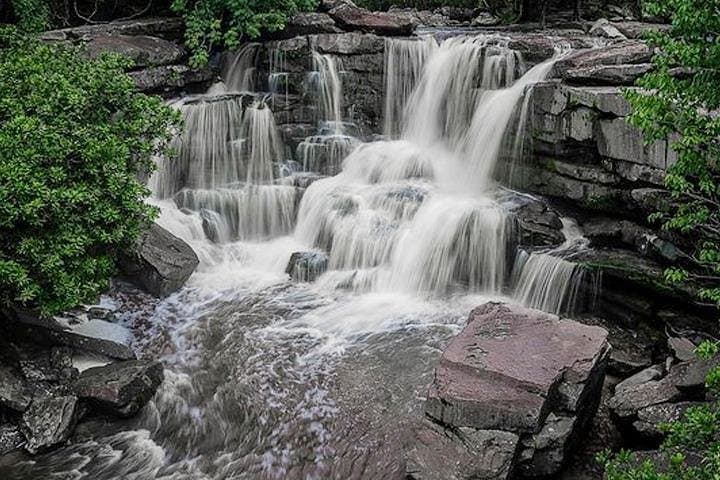
Day two drives roughly 60–70 km north to Phnom Kulen National Park. The mountain rises to about 480–490 m, a compact plateau where a shallow riverbed holds the 1,000 Lingas—carved Shiva symbols smoothed by flowing water—and where Prah Ang Thom’s reclining Buddha is hewn from living rock. Nearby falls drop into forested pools cool enough for a swim when conditions permit.
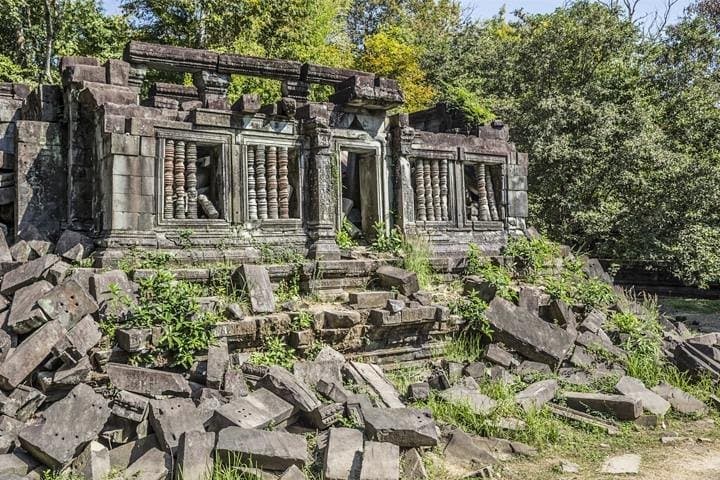
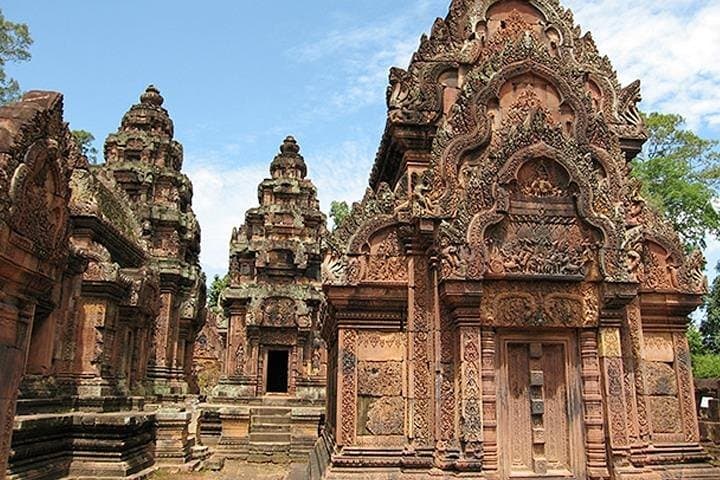
History here is tangible: Angkor’s 9th–13th century Khmer builders, Banteay Srei’s pink sandstone sculptors of the 10th century, and Kulen’s role as a sacred birthplace of the Khmer Empire. Geologically, the plateau is sandstone and laterite, which creates both spectacular carvings and uneven walking underfoot. Culturally, visitors are expected to cover shoulders and knees and behave quietly in temple precincts.
Practical guidance: plan for early starts to avoid heat and crowds, carry the two- or three-day Angkor pass (USD 72) and Kulen entry (USD 20), wear sturdy shoes for slippery riverbed rock, bring sun protection and cash for small eateries. With a licensed English guide and private A/C transport included, this two-day loop balances high-impact sights with short walks and ample time to absorb the archaeology and the forested, water-cut edges of Kulen.
moderate.
2 days (full days).
Suitable for travelers in average fitness; expect multiple short walks on uneven ground and a climb to Phnom Bakheng for sunset.
The itinerary lists the 2–3 day Angkor pass (≈US$72) and Kulen mountain ticket (≈US$20) among inclusions; confirm at booking whether these are prepaid or collected by the guide on-site.
Expect several short to moderate walks totaling a few kilometers per day on uneven ground; promenades between temples are by vehicle but each site requires walking and some stair climbs.
Swimming is often permitted in designated pools but depends on seasonal flow and park rules—follow guide instructions and avoid strong currents after heavy rain.
US dollars are widely accepted in Siem Reap; carry small bills for entry fees, meals and local purchases. Tipping guides and drivers is customary for good service.
Angkor’s temples were the spiritual and administrative center of the Khmer Empire between the 9th and 13th centuries; Phnom Kulen is considered sacred as the site where Jayavarman II declared the Khmer Empire.
Phnom Kulen and the Angkor Park manage visitor impacts through site controls and fees; stick to marked paths, avoid touching carvings, and minimize plastic waste to protect fragile stone and forest habitats.
Passion Indochina Travel operates guided outdoor trips and adventures with an emphasis on safety, stewardship, and memorable experiences.
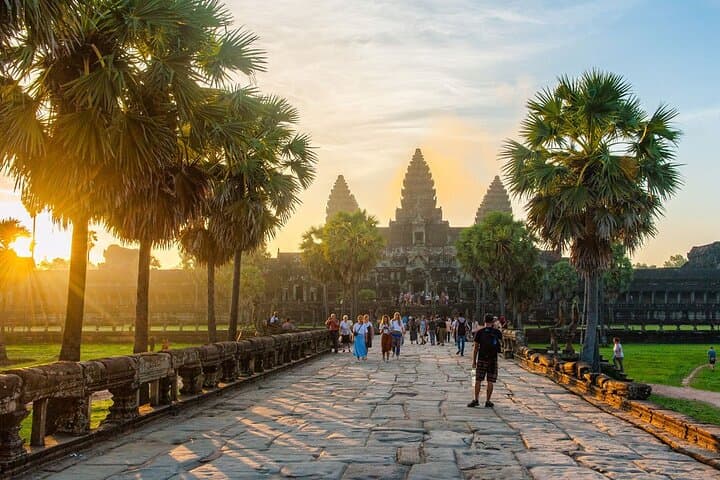
Morning light pins the sandstone bas-reliefs into sharp relief as a private vehicle hums out of Siem Reap toward the Small Circuit. On day one the route threads Angkor Wat’s broad causeway, the root-wrapped corridors of Ta Prohm, and the many-faced towers of Bayon—sites that demand slow walking and attention to carved detail. By late afternoon the group climbs Phnom Bakheng to watch the sun pull color across temple roofs and flooded moats.
Morning light pins the sandstone bas-reliefs into sharp relief as a private vehicle hums out of Siem Reap toward the Small Circuit. On day one the route threads Angkor Wat’s broad causeway, the root-wrapped corridors of Ta Prohm, and the many-faced towers of Bayon—sites that demand slow walking and attention to carved detail. By late afternoon the group climbs Phnom Bakheng to watch the sun pull color across temple roofs and flooded moats.
Day two drives roughly 60–70 km north to Phnom Kulen National Park. The mountain rises to about 480–490 m, a compact plateau where a shallow riverbed holds the 1,000 Lingas—carved Shiva symbols smoothed by flowing water—and where Prah Ang Thom’s reclining Buddha is hewn from living rock. Nearby falls drop into forested pools cool enough for a swim when conditions permit.
History here is tangible: Angkor’s 9th–13th century Khmer builders, Banteay Srei’s pink sandstone sculptors of the 10th century, and Kulen’s role as a sacred birthplace of the Khmer Empire. Geologically, the plateau is sandstone and laterite, which creates both spectacular carvings and uneven walking underfoot. Culturally, visitors are expected to cover shoulders and knees and behave quietly in temple precincts.
Practical guidance: plan for early starts to avoid heat and crowds, carry the two- or three-day Angkor pass (USD 72) and Kulen entry (USD 20), wear sturdy shoes for slippery riverbed rock, bring sun protection and cash for small eateries. With a licensed English guide and private A/C transport included, this two-day loop balances high-impact sights with short walks and ample time to absorb the archaeology and the forested, water-cut edges of Kulen.