THE ADVENTURE COLLECTIVE® · Independent discovery and booking for outdoor travel

See Egypt’s headline Ancient World sites in two packed days: Giza’s pyramids and Sphinx, Cairo’s Egyptian Museum, then fly to Luxor to explore the Valley of the Kings and Karnak. Expect long walking days, uneven stone, and an expert Egyptologist guide.
See Egypt’s headline Ancient World sites in two packed days: Giza’s pyramids and Sphinx, Cairo’s Egyptian Museum, then fly to Luxor to explore the Valley of the Kings and Karnak. Expect long walking days, uneven stone, and an expert Egyptologist guide.
A dawn silence hangs over the Giza Plateau as the first light reveals the sharp silhouettes of the Great Pyramid and the Sphinx. The tour moves through wide, sun-baked stone and low scrub, a landscape that has directed human movement for millennia, before folding into the narrower lanes and grand halls of Cairo’s museum and, by the second day, to Luxor’s river-split monuments.
Verified experiences and guided adventures in the surrounding area.
Operated by Luxor Travels · Giza, Cairo Governorate
A dawn silence hangs over the Giza Plateau as the first light reveals the sharp silhouettes of the Great Pyramid and the Sphinx. The tour moves through wide, sun-baked stone and low scrub, a landscape that has directed human movement for millennia, before folding into the narrower lanes and grand halls of Cairo’s museum and, by the second day, to Luxor’s river-split monuments.
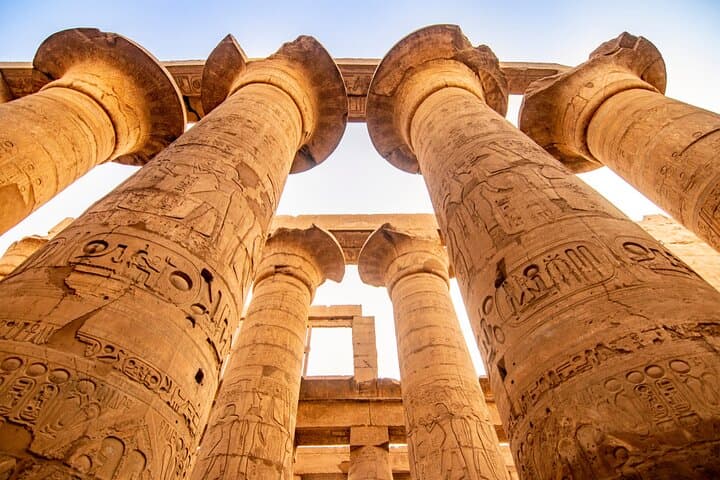
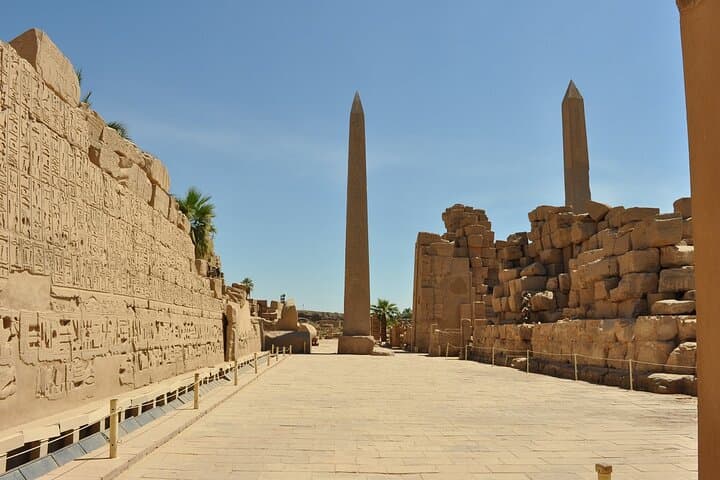
Participants pass through layers of history: Old Kingdom stonework at Giza, Pharaonic funerary design in Luxor’s Valley of the Kings, and Ramesside scale at Karnak. Geologically the sites sit on limestone and sandstone shelves carved by ancient Nile fluctuations; in Luxor that geology creates steep tomb entrances cut into mountain faces and flat fertile banks on the river’s east side. Local insight comes from qualified Egyptologists who contextualize texts, reliefs, and the social role of temples and tombs.
Practicalities matter on a two-day sprint. Expect long days with substantial walking on uneven stone, narrow stairways inside tombs, and crowded museum rooms. The domestic flight between Cairo and Luxor shortens transit but requires passport, early airport arrival, and attention to optional site fees (for example, the Tutankhamun tomb has a separate charge). Bring a sun hat, layered clothing for cooler nights, and shoes with good grip. Hydrate between stops, be ready for brief bargaining at local stalls, and keep copies of travel documents. This itinerary concentrates iconic pharaonic highlights into a compact, guided experience—best for travelers comfortable with brisk pacing and a rich dose of history.
easy.
2 days (~48 hours).
Suitable for travelers in reasonable health who can handle multiple long walking sessions and short flights.
Yes — the itinerary includes the return domestic flight from Cairo to Luxor and transfers to/from airports.
Standard site admissions are included, but some optional entries (for example, Tutankhamun’s tomb) require an additional on-site fee.
The tour is marketed as suitable for all fitness levels, but tombs have narrow and steep passages and some sites require walking on uneven terrain; plan accordingly.
All sales are final — there are no refunds available for cancellations, so confirm travel documents and plans before booking.
These sites span millennia: Giza’s pyramids date to the Fourth Dynasty (~26th century BCE), while Luxor’s temples and royal tombs represent New Kingdom power and religious complexity.
High visitor numbers stress fragile painted surfaces and low-light interiors; stick to marked paths, avoid touching reliefs, and use water sparingly in arid areas.
Luxor Travels operates guided outdoor trips and adventures with an emphasis on safety, stewardship, and memorable experiences.
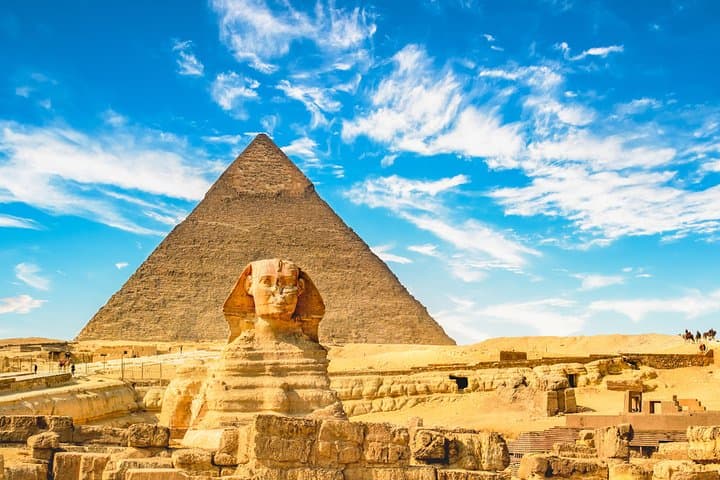
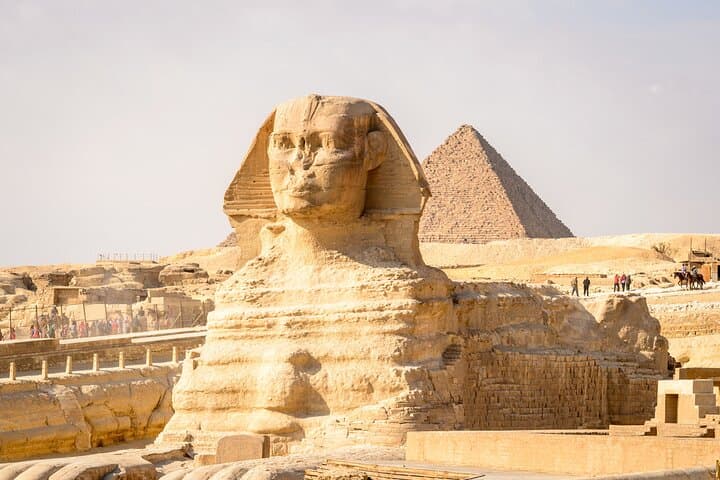
A dawn silence hangs over the Giza Plateau as the first light reveals the sharp silhouettes of the Great Pyramid and the Sphinx. The tour moves through wide, sun-baked stone and low scrub, a landscape that has directed human movement for millennia, before folding into the narrower lanes and grand halls of Cairo’s museum and, by the second day, to Luxor’s river-split monuments.
A dawn silence hangs over the Giza Plateau as the first light reveals the sharp silhouettes of the Great Pyramid and the Sphinx. The tour moves through wide, sun-baked stone and low scrub, a landscape that has directed human movement for millennia, before folding into the narrower lanes and grand halls of Cairo’s museum and, by the second day, to Luxor’s river-split monuments.
Participants pass through layers of history: Old Kingdom stonework at Giza, Pharaonic funerary design in Luxor’s Valley of the Kings, and Ramesside scale at Karnak. Geologically the sites sit on limestone and sandstone shelves carved by ancient Nile fluctuations; in Luxor that geology creates steep tomb entrances cut into mountain faces and flat fertile banks on the river’s east side. Local insight comes from qualified Egyptologists who contextualize texts, reliefs, and the social role of temples and tombs.
Practicalities matter on a two-day sprint. Expect long days with substantial walking on uneven stone, narrow stairways inside tombs, and crowded museum rooms. The domestic flight between Cairo and Luxor shortens transit but requires passport, early airport arrival, and attention to optional site fees (for example, the Tutankhamun tomb has a separate charge). Bring a sun hat, layered clothing for cooler nights, and shoes with good grip. Hydrate between stops, be ready for brief bargaining at local stalls, and keep copies of travel documents. This itinerary concentrates iconic pharaonic highlights into a compact, guided experience—best for travelers comfortable with brisk pacing and a rich dose of history.