THE ADVENTURE COLLECTIVE® · Independent discovery and booking for outdoor travel

Float into a limestone cathedral: two guided cavern dives at Dos Ojos offer certified divers dramatic stalactites, haloclines, and clear visibility just outside Tulum. Learn what to expect, how to prepare, and practical tips for a safe, unforgettable cenote experience.
Float into a limestone cathedral: two guided cavern dives at Dos Ojos offer certified divers dramatic stalactites, haloclines, and clear visibility just outside Tulum. Learn what to expect, how to prepare, and practical tips for a safe, unforgettable cenote experience.
A pale shaft of Caribbean light slips through a leafy opening and hits the water like a stage lamp — that’s the first impression at Dos Ojos. Divers step from warm Mexican air into a cool, echoing cavern where suspended silt hangs like distant stars and limestone columns reach down from the ceiling to meet their mirrored twins.
Verified experiences and guided adventures in the surrounding area.
Operated by La Calypso Dive Center · Tulum, Quintana Roo
A pale shaft of Caribbean light slips through a leafy opening and hits the water like a stage lamp — that’s the first impression at Dos Ojos. Divers step from warm Mexican air into a cool, echoing cavern where suspended silt hangs like distant stars and limestone columns reach down from the ceiling to meet their mirrored twins.
Dos Ojos ("Two Eyes") is part of the great Yucatán karst system: collapsed limestone with flooded passages that preserve freshwater, haloclines, and fossilized remains. The caverns were sacred to Maya communities and later became a focus for underwater science and exploration; today they draw technical and recreational divers alike for both geology and light shows.
Culturally the area is still small-town Quintana Roo: local guides, family-run dive centers, and food stalls along the road between Tulum and the cenotes. Respect for the cave system and local regulations matters — many passages are protected and signage is strict.
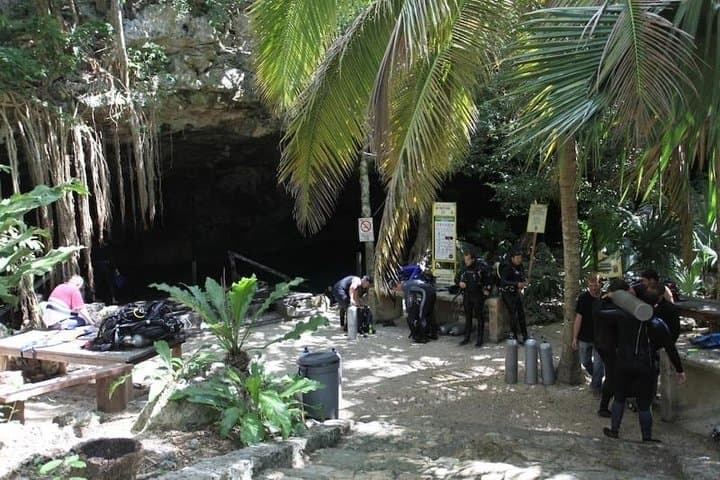
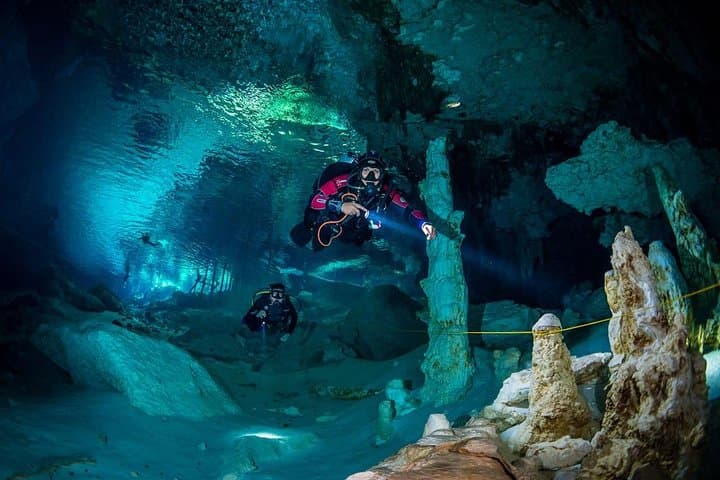
Practically, expect two guided cavern dives (separate drops along marked lines), one tank per dive, full gear supplied, and transportation from the dive center. Bring your dive certification card and logbook, and plan for roughly four hours including briefings and surface intervals. Equalize early and often; visibility is excellent but silty floors punish rushed kicks. Avoid flying within 12–24 hours after diving and disclose medical conditions on the health form.
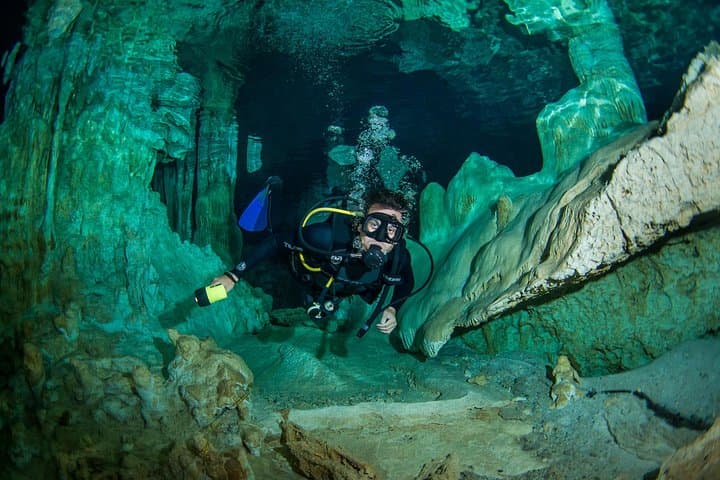
For divers wanting vivid stalactite rooms, halocline layering, and endemic cave fish, Dos Ojos delivers a controlled, otherworldly experience — a technical-looking journey framed for certified recreational divers with an emphasis on safety and respect for fragile underground waters.
moderate.
4 hours.
Moderate cardiovascular fitness and comfort in confined underwater spaces; able to swim and carry basic gear.
Yes — minimum Open Water certification is required; bring your cert card and logbook to check-in.
Expect about 4 hours total including briefing, transport to the cenote, two shallow cavern dives (one tank each), and surface intervals.
These are guided cavern dives along marked lines with permanent access to natural light and nearby exits; they are not extended cave penetrations.
No — avoid flying for at least 12–24 hours after diving; follow instructor guidance and your dive computer's recommendations.
Dos Ojos sits on the Yucatán karst, a landscape formed by millions of years of limestone dissolution; Maya people historically used cenotes for fresh water and ritual purposes.
The cenote system is sensitive to pollution and over-visitation — choose operators that limit groups, use biodegradable products, and follow established lines to protect formations.
La Calypso Dive Center operates guided outdoor trips and adventures with an emphasis on safety, stewardship, and memorable experiences.
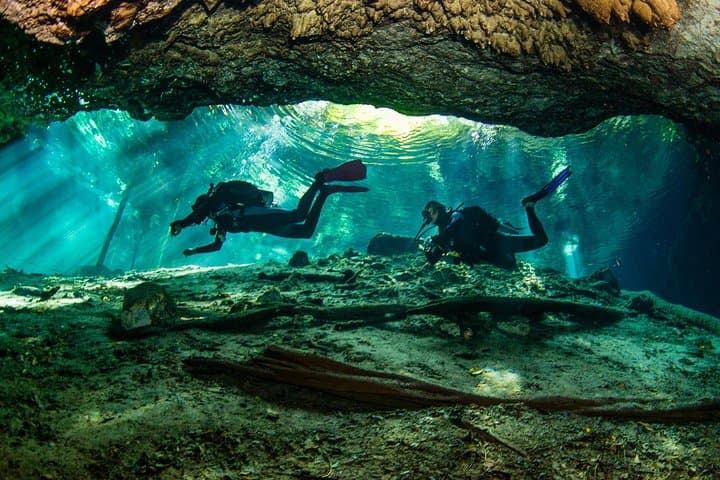
A pale shaft of Caribbean light slips through a leafy opening and hits the water like a stage lamp — that’s the first impression at Dos Ojos. Divers step from warm Mexican air into a cool, echoing cavern where suspended silt hangs like distant stars and limestone columns reach down from the ceiling to meet their mirrored twins.
A pale shaft of Caribbean light slips through a leafy opening and hits the water like a stage lamp — that’s the first impression at Dos Ojos. Divers step from warm Mexican air into a cool, echoing cavern where suspended silt hangs like distant stars and limestone columns reach down from the ceiling to meet their mirrored twins.
Dos Ojos ("Two Eyes") is part of the great Yucatán karst system: collapsed limestone with flooded passages that preserve freshwater, haloclines, and fossilized remains. The caverns were sacred to Maya communities and later became a focus for underwater science and exploration; today they draw technical and recreational divers alike for both geology and light shows.
Culturally the area is still small-town Quintana Roo: local guides, family-run dive centers, and food stalls along the road between Tulum and the cenotes. Respect for the cave system and local regulations matters — many passages are protected and signage is strict.
Practically, expect two guided cavern dives (separate drops along marked lines), one tank per dive, full gear supplied, and transportation from the dive center. Bring your dive certification card and logbook, and plan for roughly four hours including briefings and surface intervals. Equalize early and often; visibility is excellent but silty floors punish rushed kicks. Avoid flying within 12–24 hours after diving and disclose medical conditions on the health form.
For divers wanting vivid stalactite rooms, halocline layering, and endemic cave fish, Dos Ojos delivers a controlled, otherworldly experience — a technical-looking journey framed for certified recreational divers with an emphasis on safety and respect for fragile underground waters.