THE ADVENTURE COLLECTIVE® · Independent discovery and booking for outdoor travel

Explore Jaipur on a quiet, electric TVS iQube S—100 km real-world range, easy handling, and a low-carbon way to reach forts, gardens, and markets. Read on for practical tips, where to ride, and what to pack.
Explore Jaipur on a quiet, electric TVS iQube S—100 km real-world range, easy handling, and a low-carbon way to reach forts, gardens, and markets. Read on for practical tips, where to ride, and what to pack.
A morning ride on a TVS iQube S in Jaipur begins at a traffic light and becomes a study in contrasts: pastel havelis on one side, the serrated silhouette of the Aravalli hills on the other. The scooter’s near-silent motor lets the city’s sounds—vendor calls, temple bells, a distant train—come forward while the wind nudges you along wide avenues and narrower bazaar lanes.
Verified experiences and guided adventures in the surrounding area.
Operated by NOA BIKE · Jaipur, Rajasthan
A morning ride on a TVS iQube S in Jaipur begins at a traffic light and becomes a study in contrasts: pastel havelis on one side, the serrated silhouette of the Aravalli hills on the other. The scooter’s near-silent motor lets the city’s sounds—vendor calls, temple bells, a distant train—come forward while the wind nudges you along wide avenues and narrower bazaar lanes.
Jaipur, planned in 1727 by Maharaja Sawai Jai Singh II, remains a grid city of forts, gardens, and markets. The local geology is dominated by the ancient Aravalli range—pink sandstone outcrops and dry scrub that shape routes out of town. Riding an EV here feels contemporary against that long history: silent propulsion meets centuries-old architecture.
Practical guidance is simple. The iQube S advertises about 100 km real-world range per full charge—enough for a day of urban exploration or short out-of-town legs to Nahargarh or Sisodia Gardens. Helmets and basic gear are provided; bring a charged phone for navigation and photos. Expect variable charging availability outside the main hotel belt; plan routes that pass through commercial areas with charging points.
Timing matters: early mornings offer cooler air and lighter traffic; monsoon months bring sporadic showers, so a raincoat and cautious braking are essential. Be traffic-aware on arterial roads and courteous to pedestrians in busy bazaars. For riders who want efficient, low-emission mobility with freedom to stop at lesser-known sites, the iQube S is a practical, modern way to experience Jaipur.
easy.
1–30 days.
Moderate level of fitness for mounting/dismounting, light maneuvering in traffic; not physically demanding
Yes—riders should carry a valid two-wheeler driving license as required by Indian traffic rules.
Real-world range is approximately 100 km per full charge, but speed, load, and stop-start traffic will reduce range.
Basic home charging and a cable are listed as included; public fast chargers may be limited—plan routes accordingly.
Yes—helmet and raincoat are included along with a phone holder and charging cable extension.
Jaipur was laid out on a strict grid in 1727 by Maharaja Sawai Jai Singh II; its uniform pink façades date to the 19th century and royal hospitality traditions remain strong.
Electric scooters reduce tailpipe emissions and urban noise; riders should dispose of waste responsibly and favor established charging points to avoid ad hoc power draws.
NOA BIKE operates guided outdoor trips and adventures with an emphasis on safety, stewardship, and memorable experiences.

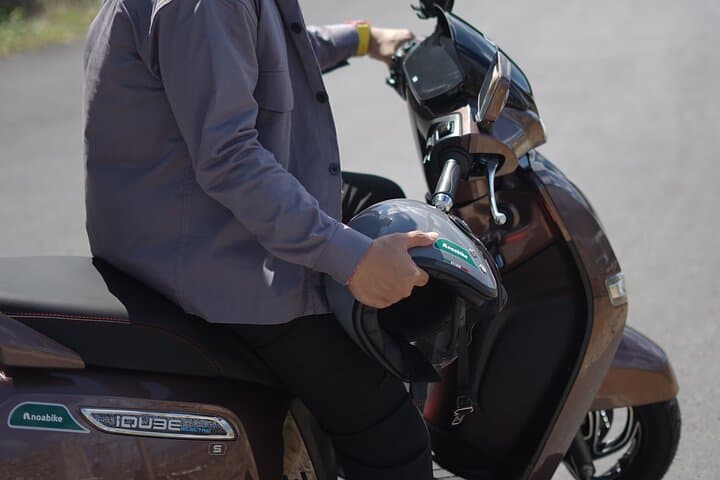
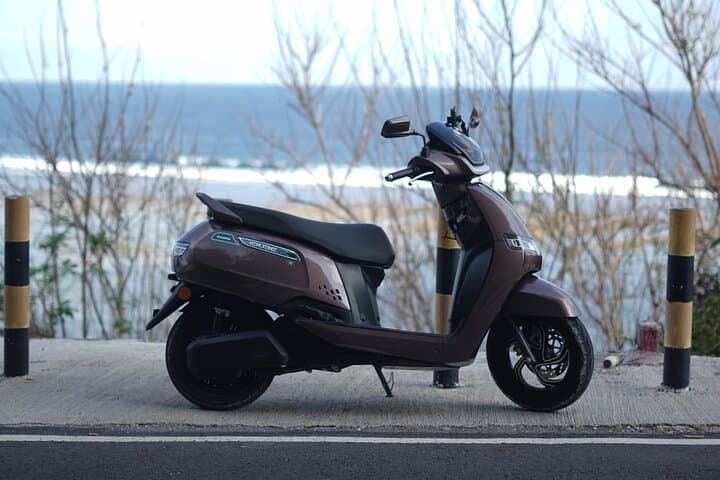
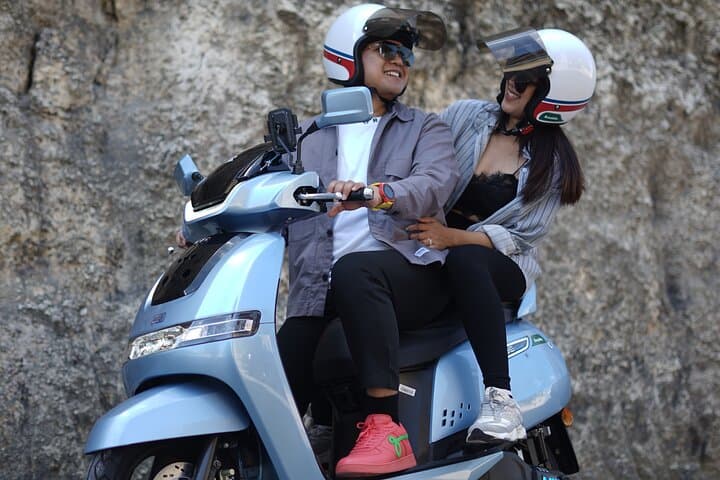
A morning ride on a TVS iQube S in Jaipur begins at a traffic light and becomes a study in contrasts: pastel havelis on one side, the serrated silhouette of the Aravalli hills on the other. The scooter’s near-silent motor lets the city’s sounds—vendor calls, temple bells, a distant train—come forward while the wind nudges you along wide avenues and narrower bazaar lanes.
A morning ride on a TVS iQube S in Jaipur begins at a traffic light and becomes a study in contrasts: pastel havelis on one side, the serrated silhouette of the Aravalli hills on the other. The scooter’s near-silent motor lets the city’s sounds—vendor calls, temple bells, a distant train—come forward while the wind nudges you along wide avenues and narrower bazaar lanes.
Jaipur, planned in 1727 by Maharaja Sawai Jai Singh II, remains a grid city of forts, gardens, and markets. The local geology is dominated by the ancient Aravalli range—pink sandstone outcrops and dry scrub that shape routes out of town. Riding an EV here feels contemporary against that long history: silent propulsion meets centuries-old architecture.
Practical guidance is simple. The iQube S advertises about 100 km real-world range per full charge—enough for a day of urban exploration or short out-of-town legs to Nahargarh or Sisodia Gardens. Helmets and basic gear are provided; bring a charged phone for navigation and photos. Expect variable charging availability outside the main hotel belt; plan routes that pass through commercial areas with charging points.
Timing matters: early mornings offer cooler air and lighter traffic; monsoon months bring sporadic showers, so a raincoat and cautious braking are essential. Be traffic-aware on arterial roads and courteous to pedestrians in busy bazaars. For riders who want efficient, low-emission mobility with freedom to stop at lesser-known sites, the iQube S is a practical, modern way to experience Jaipur.