THE ADVENTURE COLLECTIVE® · Independent discovery and booking for outdoor travel

A seven-day self-guided walking tour through Tusheti threads ancient stone villages, high pastures and dramatic passes. Follow GPS-marked trails between family-run guesthouses and traverse the region that few outside Georgia ever see.
A seven-day self-guided walking tour through Tusheti threads ancient stone villages, high pastures and dramatic passes. Follow GPS-marked trails between family-run guesthouses and traverse the region that few outside Georgia ever see.
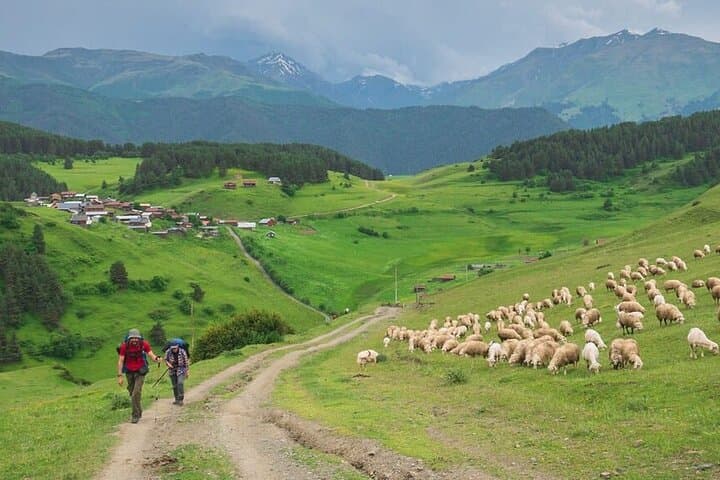
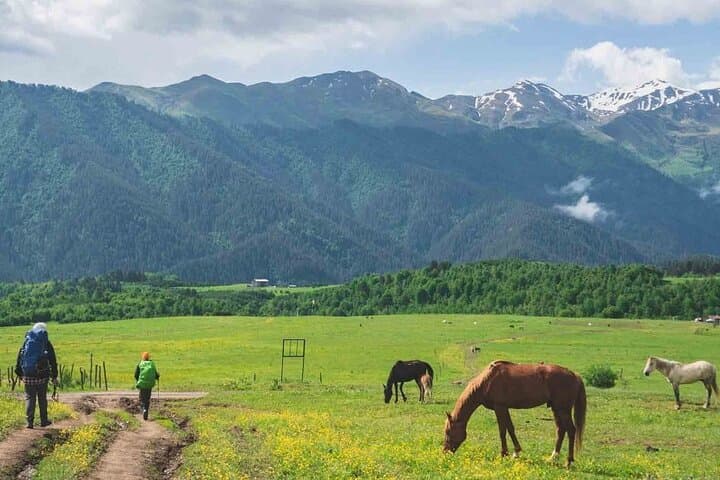
You arrive in Omalo by a hair-raising road that seems to climb into the clouds; stone towers and slate roofs puncture the skyline while wind-swept meadows roll away in every direction.
Verified experiences and guided adventures in the surrounding area.
Operated by Camp Caucasus · Omalo, Kakheti
You arrive in Omalo by a hair-raising road that seems to climb into the clouds; stone towers and slate roofs puncture the skyline while wind-swept meadows roll away in every direction.
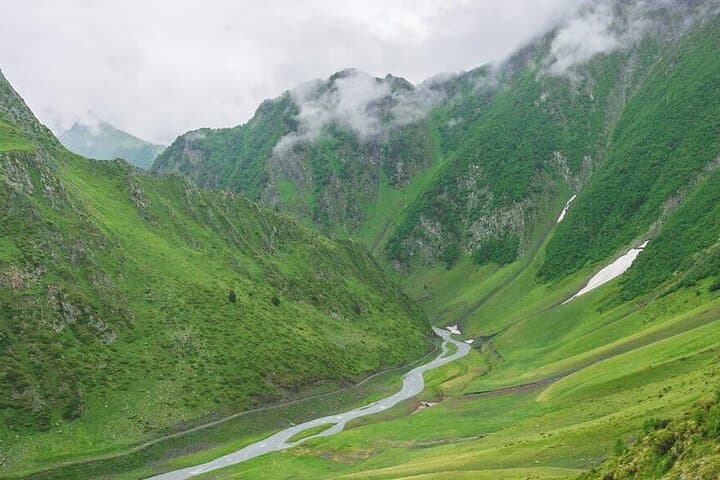
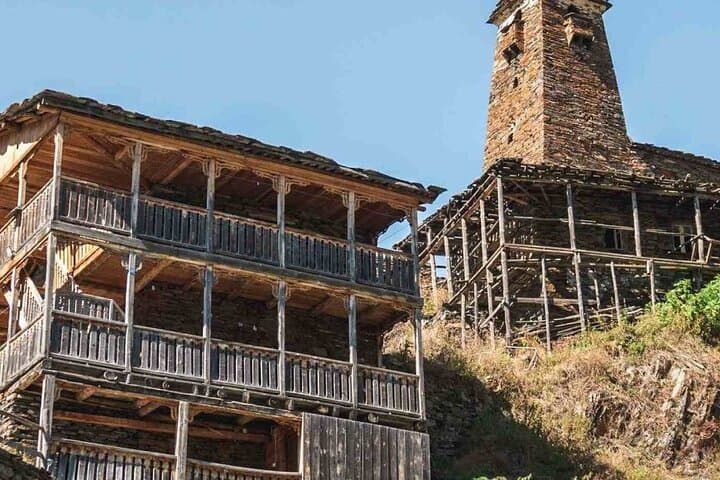
Tusheti is a high-mountain province on the northern flank of the Greater Caucasus where steep limestone ridges give way to broad alpine pastures. The villages — Omalo, Shenako, Diklo, Dartlo and Girevi — preserve multi-century tower houses built as watchpoints against past raids; you’ll see vestiges of defensive masonry and old pastoral trails still used by shepherds. Geologically the area is young and rugged: glacially carved valleys, karst outcrops, and granitic ridges create the sudden views and sharp passes that define the route.
Local culture here is lived outdoors: family guesthouses host hearty stews and cheese made from highland sheep, and shepherd paths cut a direct relationship between people and place. Rivers will press you to stop and cool off; high meadows will dare you to climb one more ridge for the light.
Practical guidance: this self-guided week runs Omalo→Diklo→Dartlo→Girevi→Jvarboseli→Bochorna→Omalo with GPS maps provided. Expect 4–7 hours of walking on kept but rocky trails and one or two steep passes; altitude rarely exceeds 3,000 m but weather changes quickly. Bring stabilizing boots, layered clothing, a daypack with snacks and water, and a charged phone with offline map. Acclimatize in Tbilisi briefly if you’re coming from sea level and plan transfers in advance — the road over Abano Pass (seasonal) determines access. Guesthouses provide simple rooms and cooked meals; carry cash for remote services. Leave no trace: pastures are fragile and livestock grazing is active through summer.
moderate.
7 days.
Good aerobic fitness and comfort with multi-day hikes; able to carry a daypack for up to 6–7 hours per day.
Days typically involve 4–7 hours of walking on well-trodden but rocky trails with some steep sections; a moderate fitness level is recommended.
Late June to early September offers the most reliable access and open mountain pastures; spring and fall can be wet and the Abano road may be closed until summer.
You stay in family-run guesthouses—simple, clean rooms and home-cooked meals that reflect local cuisine rather than hotel-style amenities.
Yes; GPS maps are provided and transfers are arranged, but ensure someone knows your itinerary and carry emergency contact details.
Tusheti’s stone defensive towers and medieval architecture reflect a history of mountain clan society and strategic routes across the Caucasus.
Tusheti is part of Georgia’s protected highland system; stick to trails and respect seasonal pastures to reduce erosion and disturbance to grazing livestock.
Camp Caucasus operates guided outdoor trips and adventures with an emphasis on safety, stewardship, and memorable experiences.
You arrive in Omalo by a hair-raising road that seems to climb into the clouds; stone towers and slate roofs puncture the skyline while wind-swept meadows roll away in every direction.
You arrive in Omalo by a hair-raising road that seems to climb into the clouds; stone towers and slate roofs puncture the skyline while wind-swept meadows roll away in every direction.
Tusheti is a high-mountain province on the northern flank of the Greater Caucasus where steep limestone ridges give way to broad alpine pastures. The villages — Omalo, Shenako, Diklo, Dartlo and Girevi — preserve multi-century tower houses built as watchpoints against past raids; you’ll see vestiges of defensive masonry and old pastoral trails still used by shepherds. Geologically the area is young and rugged: glacially carved valleys, karst outcrops, and granitic ridges create the sudden views and sharp passes that define the route.
Local culture here is lived outdoors: family guesthouses host hearty stews and cheese made from highland sheep, and shepherd paths cut a direct relationship between people and place. Rivers will press you to stop and cool off; high meadows will dare you to climb one more ridge for the light.
Practical guidance: this self-guided week runs Omalo→Diklo→Dartlo→Girevi→Jvarboseli→Bochorna→Omalo with GPS maps provided. Expect 4–7 hours of walking on kept but rocky trails and one or two steep passes; altitude rarely exceeds 3,000 m but weather changes quickly. Bring stabilizing boots, layered clothing, a daypack with snacks and water, and a charged phone with offline map. Acclimatize in Tbilisi briefly if you’re coming from sea level and plan transfers in advance — the road over Abano Pass (seasonal) determines access. Guesthouses provide simple rooms and cooked meals; carry cash for remote services. Leave no trace: pastures are fragile and livestock grazing is active through summer.