THE ADVENTURE COLLECTIVE® · Independent discovery and booking for outdoor travel

Stand on a dark Caribbean beach and watch giant sea turtles haul themselves ashore under guided, conservation-focused conditions. This short night tour combines focused wildlife viewing with strict rules to protect nesting turtles.
Stand on a dark Caribbean beach and watch giant sea turtles haul themselves ashore under guided, conservation-focused conditions. This short night tour combines focused wildlife viewing with strict rules to protect nesting turtles.
The beach is a dark ribbon under a Caribbean sky; the ocean hisses and dares you closer while a guide's red light sketches the silhouette of an enormous back moving up the sand. On a Tortuguero turtle tour you stand low and quiet as leatherbacks and green turtles negotiate the shore, each breath and drag of flipper a careful act of ancient purpose.
Verified experiences and guided adventures in the surrounding area.
The beach is a dark ribbon under a Caribbean sky; the ocean hisses and dares you closer while a guide's red light sketches the silhouette of an enormous back moving up the sand. On a Tortuguero turtle tour you stand low and quiet as leatherbacks and green turtles negotiate the shore, each breath and drag of flipper a careful act of ancient purpose.
Tortuguero National Park is one of the hemisphere's most important turtle nesting areas. Formed by coastal sediments and braided rivers, the park’s beaches and inland canals have shaped local culture for generations—fishing, canal transport and community-led conservation define life here. The park protects primary nesting beaches and channels that funnel life between sea and rainforest.
Tours focus on observation and protection: guides explain species differences, nesting stages and why timing matters. Expect a two-hour window after dark; if turtles finish quickly the group returns early to avoid disturbing other nests. Nighttime conditions are sandy, uneven and humid, with the salt air and distant frog calls filling the gaps between turtle movements.
Practical notes: bookings are usually timed around high tides and nesting seasons (green turtles peak mid-summer; leatherbacks earlier in the year). Wear closed-toe shoes, bring a red-filter flashlight or use the guide’s light, and leave cameras on low or off—no flash. Follow the guide’s distance and noise rules, respect roped areas, and consider a daytime canal visit to round out the experience. This is fieldwork in a fragile wild setting: attentive behavior preserves the very animals you came to watch.
easy.
1–2 hours.
Light walking on sand at night; comfortable for most people who can manage uneven terrain and low-light conditions.
Nesting peaks vary by species: green turtles most commonly nest mid-year (roughly July–October), while leatherbacks tend to nest earlier in the calendar year; local guides schedule tours to match nightly activity.
No—touching turtles or nests is prohibited to avoid stressing animals and transferring oils or bacteria; guides will instruct you to keep distance at all times.
Yes, older children who can stay quiet and follow instructions usually do well; very young children may have difficulty with darkness and extended quiet periods.
Most visitors reach Tortuguero by boat from La Pavona or by organized transfer from Tortuguero village; many lodges coordinate arrival times to match tour departures.
The village and park grew around canals and fishing, with conservation efforts expanding in the 1970s to protect critical nesting beaches and local livelihoods.
Tours operate under strict light, distance and timing rules to minimize impact; supporting local guides and entrance fees helps fund monitoring and beach patrols.
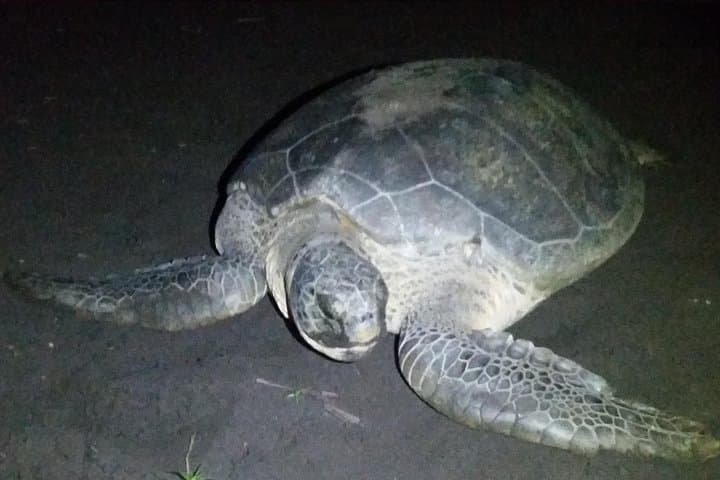
The beach is a dark ribbon under a Caribbean sky; the ocean hisses and dares you closer while a guide's red light sketches the silhouette of an enormous back moving up the sand. On a Tortuguero turtle tour you stand low and quiet as leatherbacks and green turtles negotiate the shore, each breath and drag of flipper a careful act of ancient purpose.
The beach is a dark ribbon under a Caribbean sky; the ocean hisses and dares you closer while a guide's red light sketches the silhouette of an enormous back moving up the sand. On a Tortuguero turtle tour you stand low and quiet as leatherbacks and green turtles negotiate the shore, each breath and drag of flipper a careful act of ancient purpose.
Tortuguero National Park is one of the hemisphere's most important turtle nesting areas. Formed by coastal sediments and braided rivers, the park’s beaches and inland canals have shaped local culture for generations—fishing, canal transport and community-led conservation define life here. The park protects primary nesting beaches and channels that funnel life between sea and rainforest.
Tours focus on observation and protection: guides explain species differences, nesting stages and why timing matters. Expect a two-hour window after dark; if turtles finish quickly the group returns early to avoid disturbing other nests. Nighttime conditions are sandy, uneven and humid, with the salt air and distant frog calls filling the gaps between turtle movements.
Practical notes: bookings are usually timed around high tides and nesting seasons (green turtles peak mid-summer; leatherbacks earlier in the year). Wear closed-toe shoes, bring a red-filter flashlight or use the guide’s light, and leave cameras on low or off—no flash. Follow the guide’s distance and noise rules, respect roped areas, and consider a daytime canal visit to round out the experience. This is fieldwork in a fragile wild setting: attentive behavior preserves the very animals you came to watch.